
Breaking the Kitchen Triangle: Modern Kitchen Layouts That Work Better
/
Have you ever walked into your kitchen and thought, something just isn't working anymore?
Maybe you constantly find yourself bumping into your spouse while making dinner. Perhaps there's never enough counter space when you're baking for the holidays. Maybe guests gather exactly where you're trying to cook, or you feel like you're taking far too many steps to prepare a simple meal.
The funny thing is that many homeowners assume the problem is a lack of space.
In our experience, that's often not the case.
More often than not, the real issue is that the kitchen was designed for a completely different era and a completely different way of living.
Many of the kitchens we renovate throughout Durham Region were designed decades ago. At the time, they worked perfectly. Families cooked differently. Homes were laid out differently. Entertaining was different.
Today's families use their kitchens in ways designers never imagined back in the 1960s and 1970s or even 1980s.
For decades, kitchen designers relied heavily on a concept known as the kitchen work triangle. It was considered the gold standard for creating an efficient kitchen layout, and in many situations it still has value today.
The challenge is that modern kitchens need to do much more than support a single person preparing meals.
Today's kitchens are gathering spaces, homework stations, entertainment hubs, baking centres, coffee bars, and sometimes even home offices.
So if the traditional kitchen triangle isn't always the best solution anymore, what is?
More importantly, how do you determine which kitchen layout is right for your family, your home, and the way you live?
Let's explore some of the most popular kitchen layouts, who they're best suited for, and how modern design principles can help create a kitchen that works beautifully for years to come.
What Is the Kitchen Work Triangle?
The kitchen work triangle is one of the oldest and most widely recognized principles in kitchen design.
The idea is simple.
Draw an imaginary triangle between the three areas used most often during meal preparation:
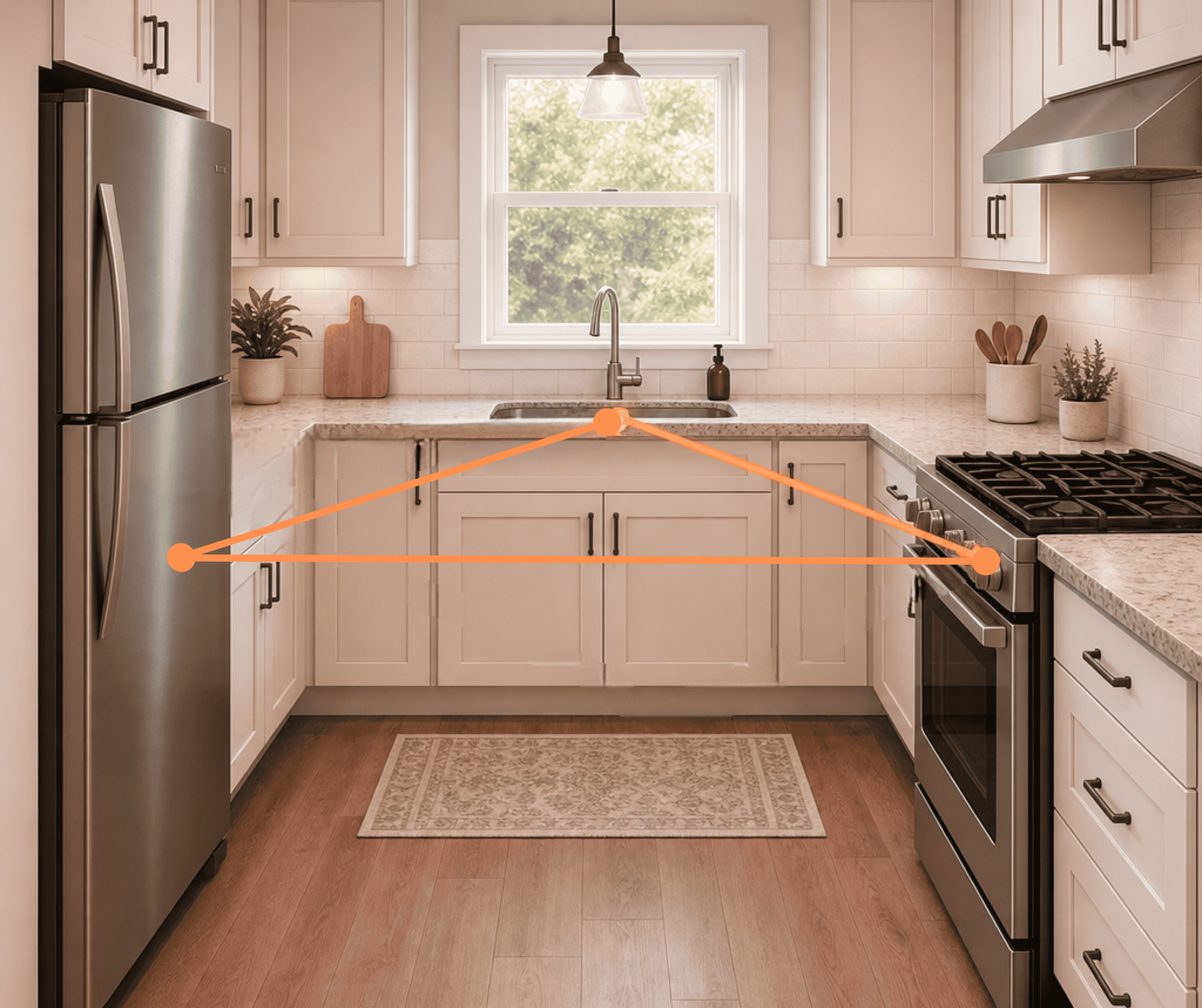
The refrigerator
The sink
The stove
The goal was to minimize unnecessary steps and create an efficient workspace for the person preparing meals.
For many years, this approach made perfect sense.
After all, kitchens were often smaller spaces tucked away from the rest of the home. Usually only one person was cooking at a time, and efficiency was the primary goal. By keeping the refrigerator, sink, and stove within easy reach of one another, homeowners could move comfortably through the kitchen without wasting time or energy.
And honestly? The kitchen work triangle still works remarkably well in many homes.
In fact, some kitchens naturally follow the work triangle without homeowners even realizing it. Smaller kitchens, galley kitchens, and many traditional layouts can function beautifully when these three key areas are positioned thoughtfully.
Think about your own kitchen for a moment. If you're the primary cook and you can move easily between the refrigerator, sink, and stove without constantly crossing the room, there's a good chance your kitchen already benefits from the work triangle concept.
The problem isn't that the kitchen work triangle stopped working.
The problem is that many families are asking their kitchens to do far more than they were originally designed to do.
Today's kitchens often need to accommodate multiple cooks, family gatherings, baking projects, coffee stations, homework sessions, and even the occasional Zoom meeting.
As our lifestyles have changed, so has the way we think about kitchen design.
Rather than asking whether the kitchen work triangle is right or wrong, a better question is:
Does your current kitchen layout support the way your family actually lives?
That question is often what drives a successful kitchen renovation. Once you understand how you use your kitchen—and how you'd like to use it in the future—it becomes much easier to determine which layout will work best for your home.
When a Kitchen Layout Stops Working for Your Family
One of the biggest misconceptions homeowners have is that kitchen layouts fail because they were poorly designed.
In reality, most kitchen layouts stop working because life changes.
A kitchen that worked perfectly for a young family may feel frustratingly inefficient for empty nesters, avid entertainers, or homeowners who now spend much more time cooking at home.
Perhaps your kitchen was designed when your children were young and now they're adults. Maybe you've retired and spend more time cooking than you did twenty years ago. Perhaps grandchildren visit regularly, you've discovered a love for baking, or you're entertaining more often than ever before.
The layout that worked beautifully years ago may no longer support the way you live today.
That's why choosing the right kitchen layout isn't about following a design rule. It's about understanding how you and your family actually use the space.
We recently met with homeowners whose kitchen technically followed the kitchen work triangle perfectly.
The problem?
Every family gathering resulted in six people trying to occupy the same work area.
The layout wasn't wrong.
It simply wasn't designed for the way they were using the space.
That's an important distinction.
Is the Kitchen Work Triangle Rule Outdated?
This is one of the most common questions homeowners ask. The answer may surprise you.
No.
The kitchen work triangle isn't outdated. At least not entirely. What has changed is the idea that every kitchen must follow it.
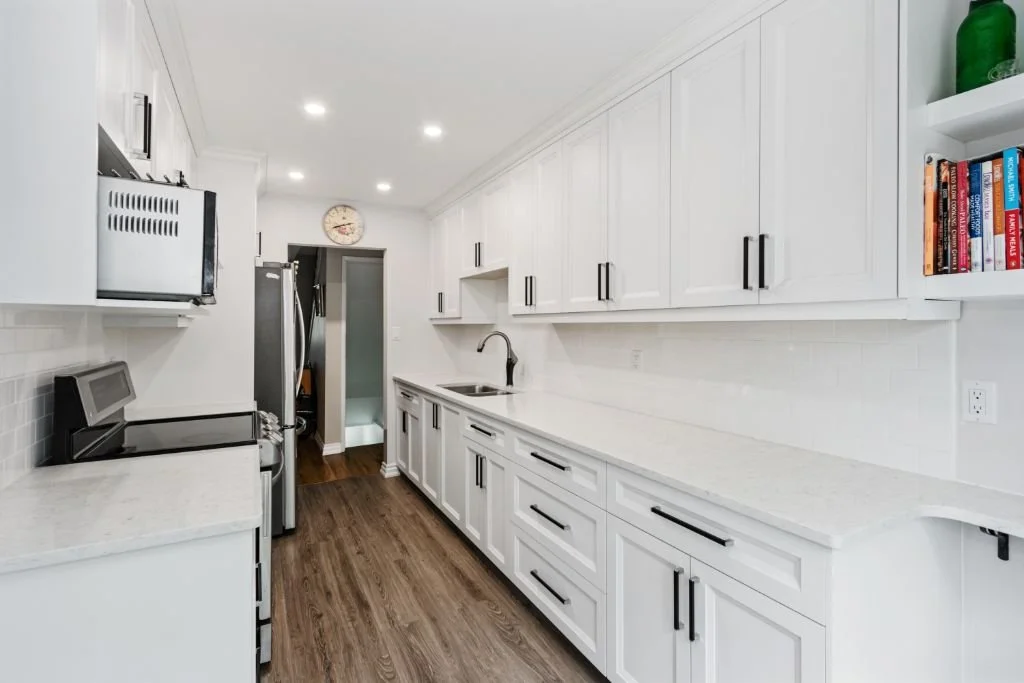
The kitchen work triangle is still a useful design tool, particularly in smaller kitchens and galley kitchen layouts where efficiency is critical.
However, modern kitchen design now considers many additional factors:
Multiple cooks
Kitchen islands
Entertaining
Work-from-home needs
Accessibility
Storage requirements
Technology integration
Family gathering spaces
Today's kitchens need to do much more than simply support cooking.
The kitchen work triangle has become one tool in the toolbox rather than the rule that dictates every kitchen layout.
What Is Replacing the Kitchen Work Triangle?
If you've been researching kitchen renovations, you've probably come across articles declaring that the kitchen triangle is dead.
We don't necessarily agree.
What's replacing the kitchen work triangle isn't a completely new rule.
It's a different way of thinking.
Modern kitchen design focuses on activity zones rather than a single triangle.
Instead of designing for one cook moving between three locations, today's kitchens are designed around the activities that take place within the space.
These are commonly known as kitchen work zones.
The Modern Kitchen Design Philosophy: Zones Over Triangles
Rather than concentrating everything around one work triangle, modern kitchen layouts often create dedicated zones.
The Prep Zone
This is where food preparation happens.
Ideally, it includes:
Generous counter space
Knife storage
Mixing bowls
Cutting boards
Garbage and recycling access
This area often becomes one of the most heavily used spaces in the kitchen.
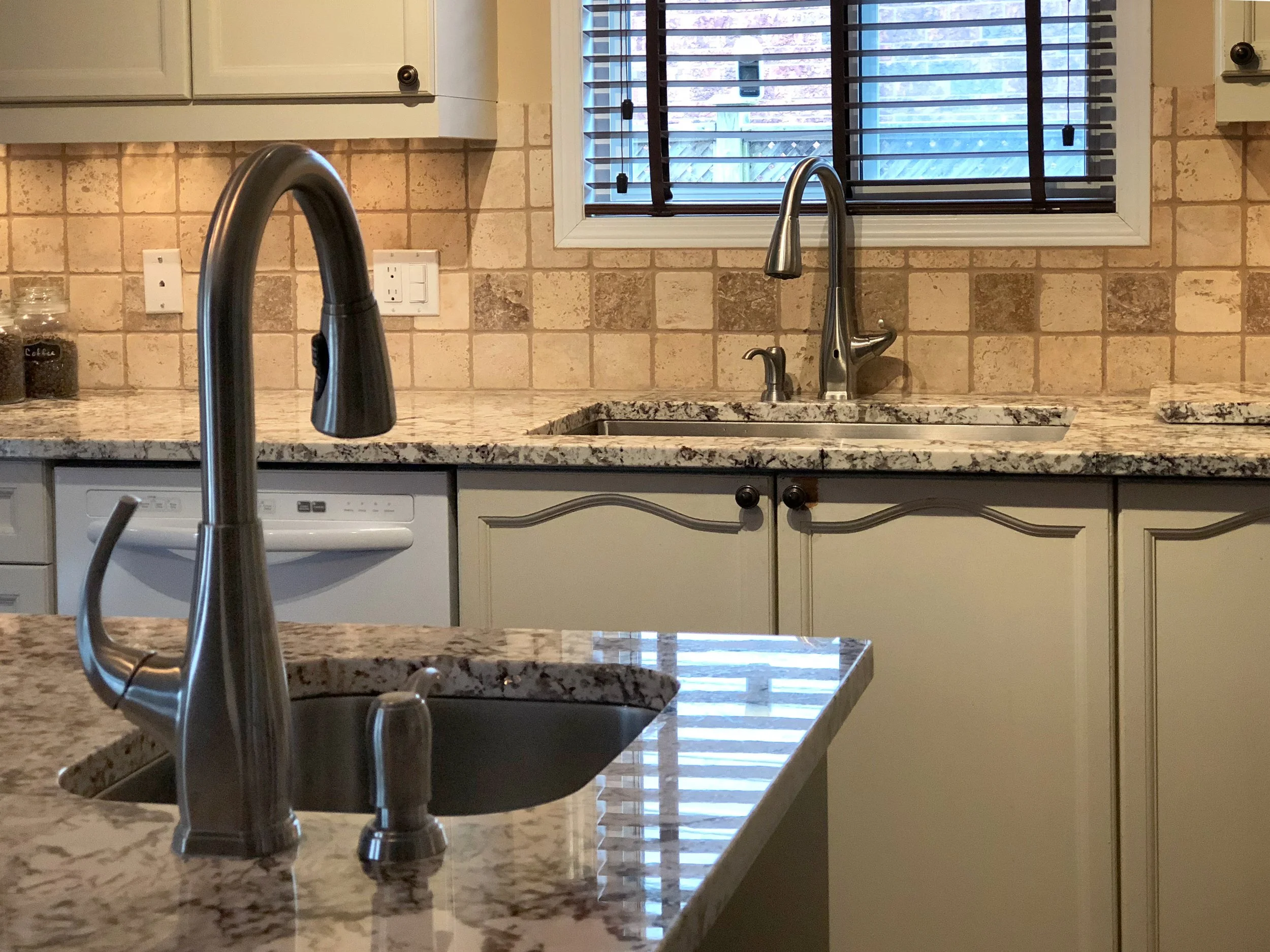
One feature that has become increasingly popular in the prep zone is a dedicated prep sink. Often installed in an island, a prep sink allows a second person to wash vegetables, fill pots, or assist with meal preparation without interfering with the primary cook working at the main sink.
We've designed many kitchens where a spouse, teenager, or grandchild can help prepare meals at the island or another area of the perimeter cabinets, while the main cook continues working elsewhere in the kitchen. It's a simple addition that can dramatically improve how a kitchen functions for families who enjoy cooking together.
The Cooking Zone
This zone includes:
Range or cooktop
Wall ovens
Microwave
Pots and pans
Cooking utensils
Spice storage
Keeping these items together creates a more efficient cooking experience.
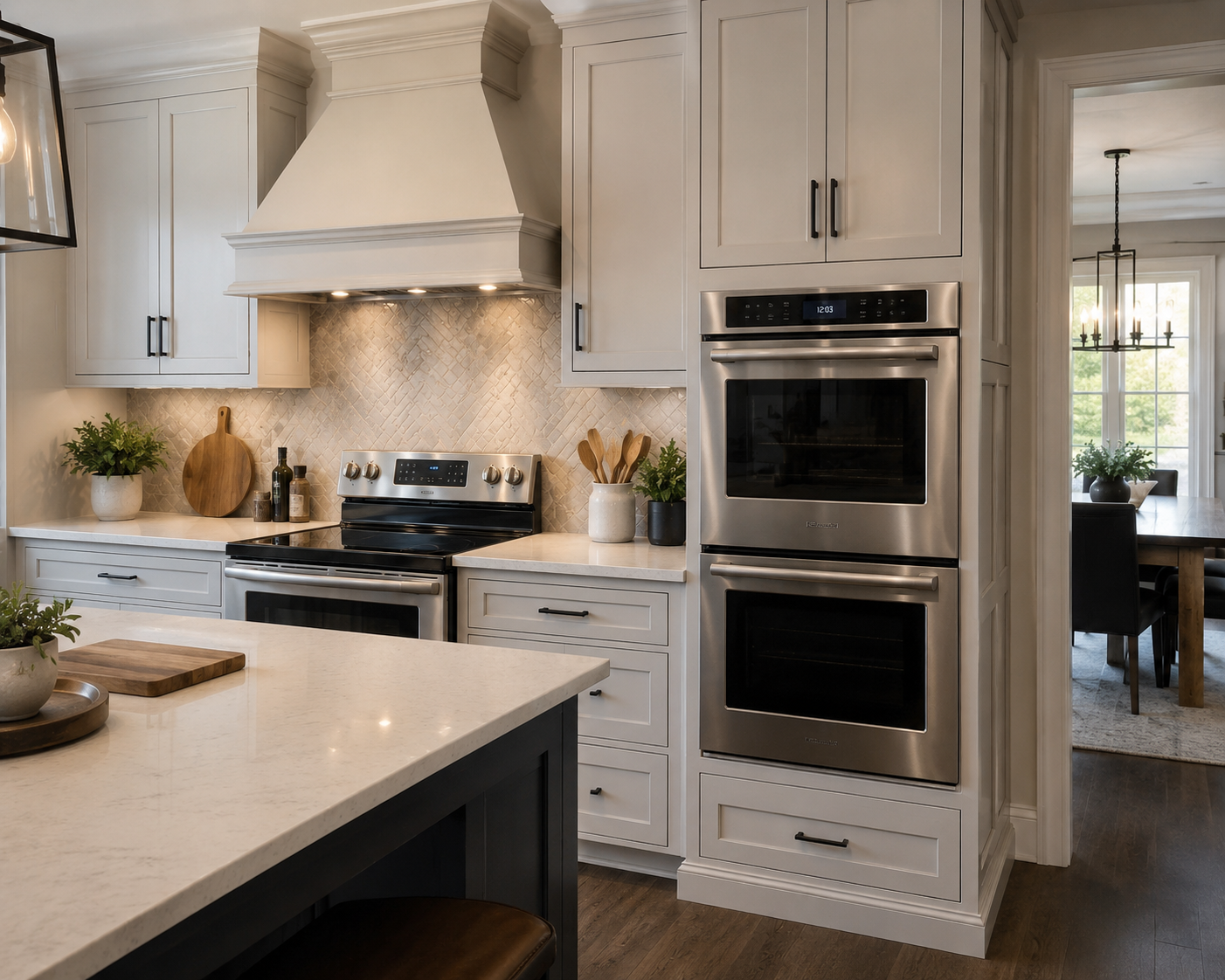
For many homeowners, a standard range provides all the cooking capacity they need. However, for families who entertain frequently or regularly host large holiday gatherings, additional cooking capacity can make a significant difference.
We've worked with many homeowners who choose to combine a range with a separate wall oven. While it may seem like a luxury at first, the benefits become obvious when you're preparing meals for a large group. Being able to bake casseroles, warm dinner rolls, or cook desserts in one oven while the main oven handles the turkey or ham can dramatically reduce stress during holiday meals.
For homeowners who regularly host Thanksgiving, Christmas, Easter, family reunions, or large dinner parties, a second oven is often one of the most appreciated features in the entire kitchen.
Storage also plays a critical role in creating an effective cooking zone.
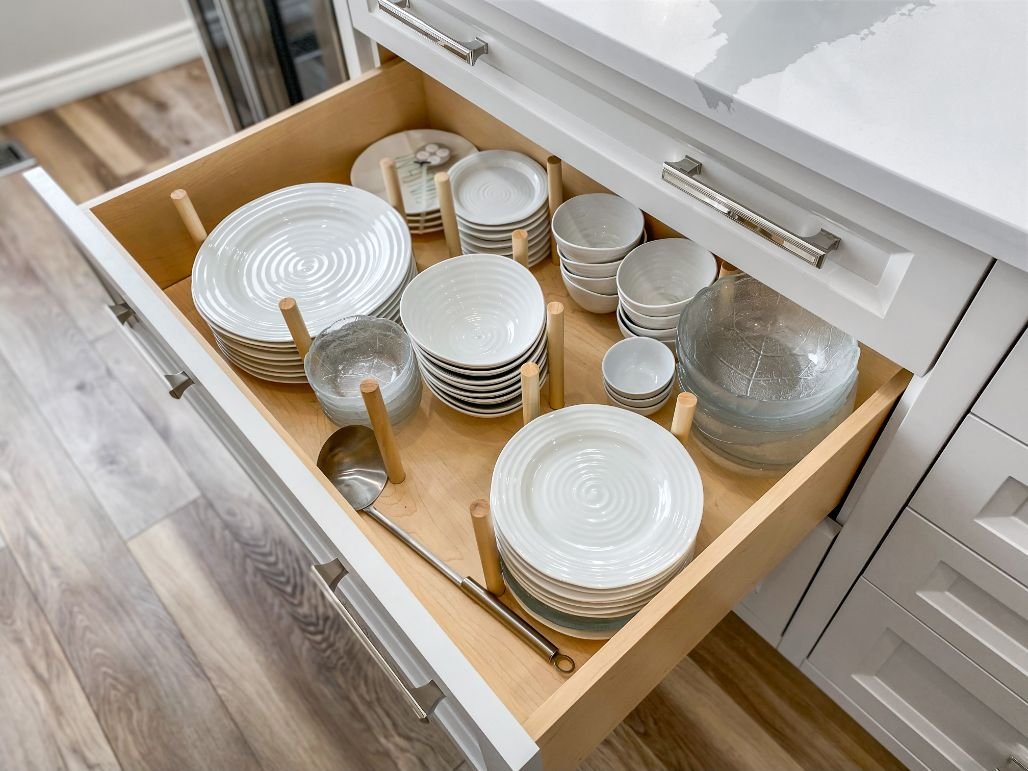
One of the most popular features we install today is deep pot-and-pan drawers. Instead of crouching down and digging through the back of a lower cabinet, homeowners can simply pull out a drawer and immediately access everything they need.
Not only are deep drawers easier to organize, but they're also easier on your back and far more accessible as you age.
The best cooking zones aren't just about where the appliances are located. They're about ensuring that everything needed for meal preparation—from cookware and baking sheets to utensils and spices—is conveniently located within easy reach.
A well-designed cooking zone allows you to focus on preparing the meal rather than searching for the tools and cookware needed to make it happen.

The Cleanup Zone
This area centres around:
Sink
Dishwasher
Garbage
Recycling
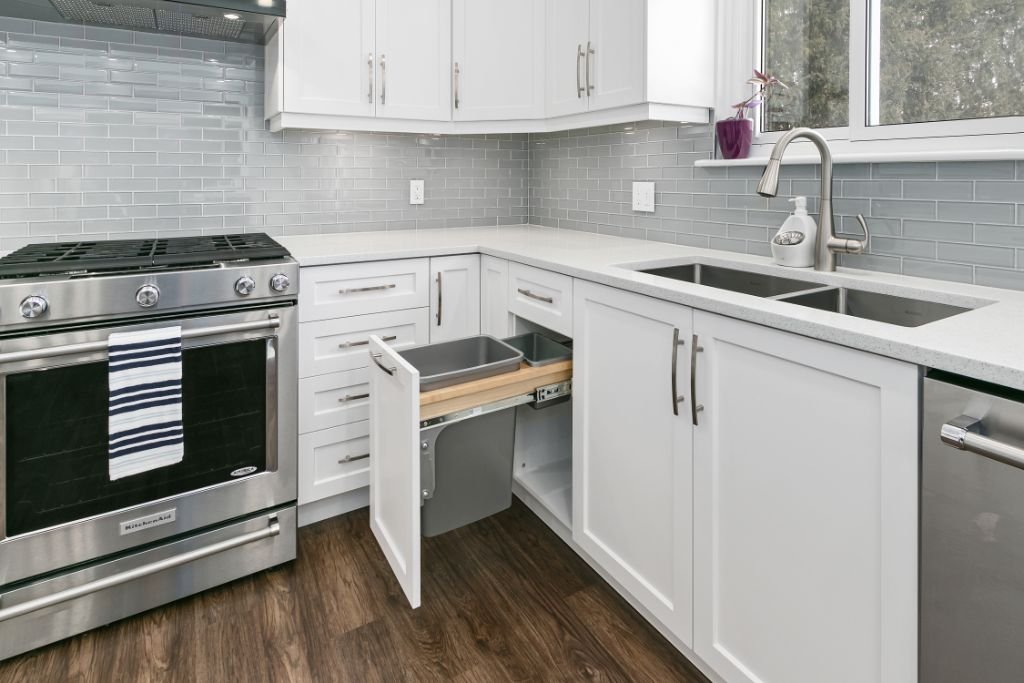
Separating cleanup activities from meal preparation often improves traffic flow dramatically.
One feature we frequently recommend in the cleanup zone is a pull-out garbage and recycling centre located near the sink. Not only does this keep unsightly bins off the floor, but it also makes everyday cleanup much more convenient. Whether you're scraping plates, rinsing vegetables, or cleaning up after a meal, having the garbage and recycling exactly where you need them helps keep the kitchen organized and reduces unnecessary trips across the room. It's a relatively simple feature that many homeowners tell us they wish they had added sooner.
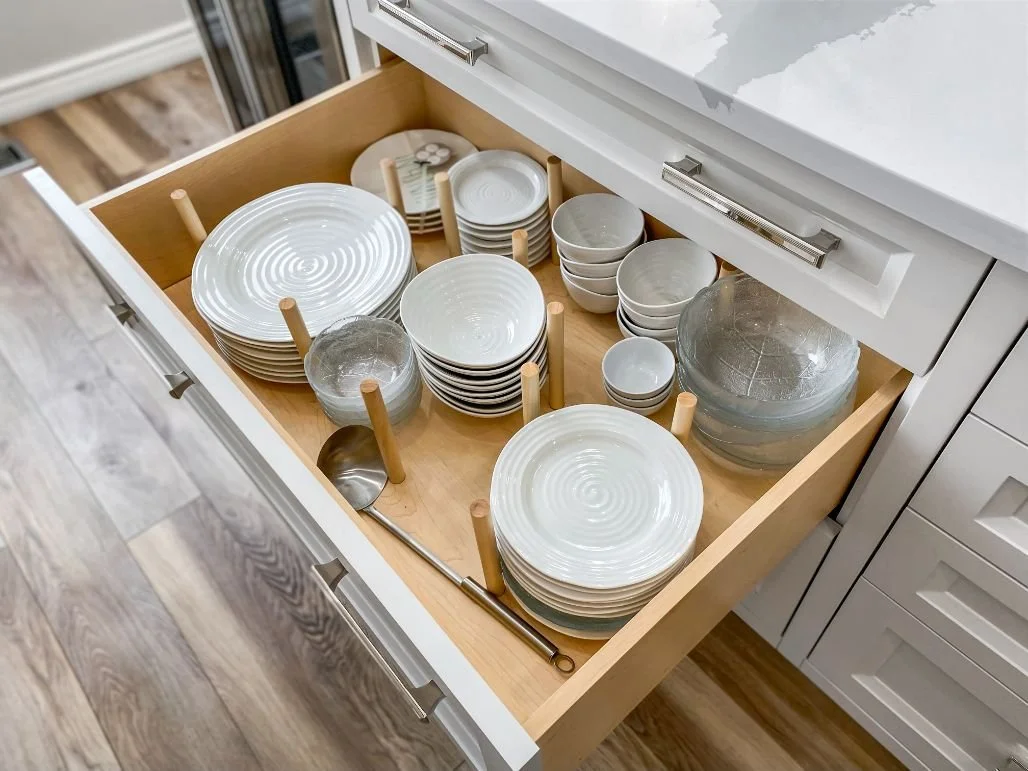
Dishwasher placement is another important consideration. Ideally, the dishwasher should be located close to both the sink and the dish and silverware storage area. This allows dishes to move efficiently from table to sink, into the dishwasher, and then back into storage without unnecessary steps.
The Storage Zone
The storage zone includes:
Pantry
Refrigerator
Food storage
Small appliances
A well-designed storage zone reduces clutter and makes everyday tasks easier.
Pull-Out Pantry Shelves: One of the Most Requested Storage Upgrades
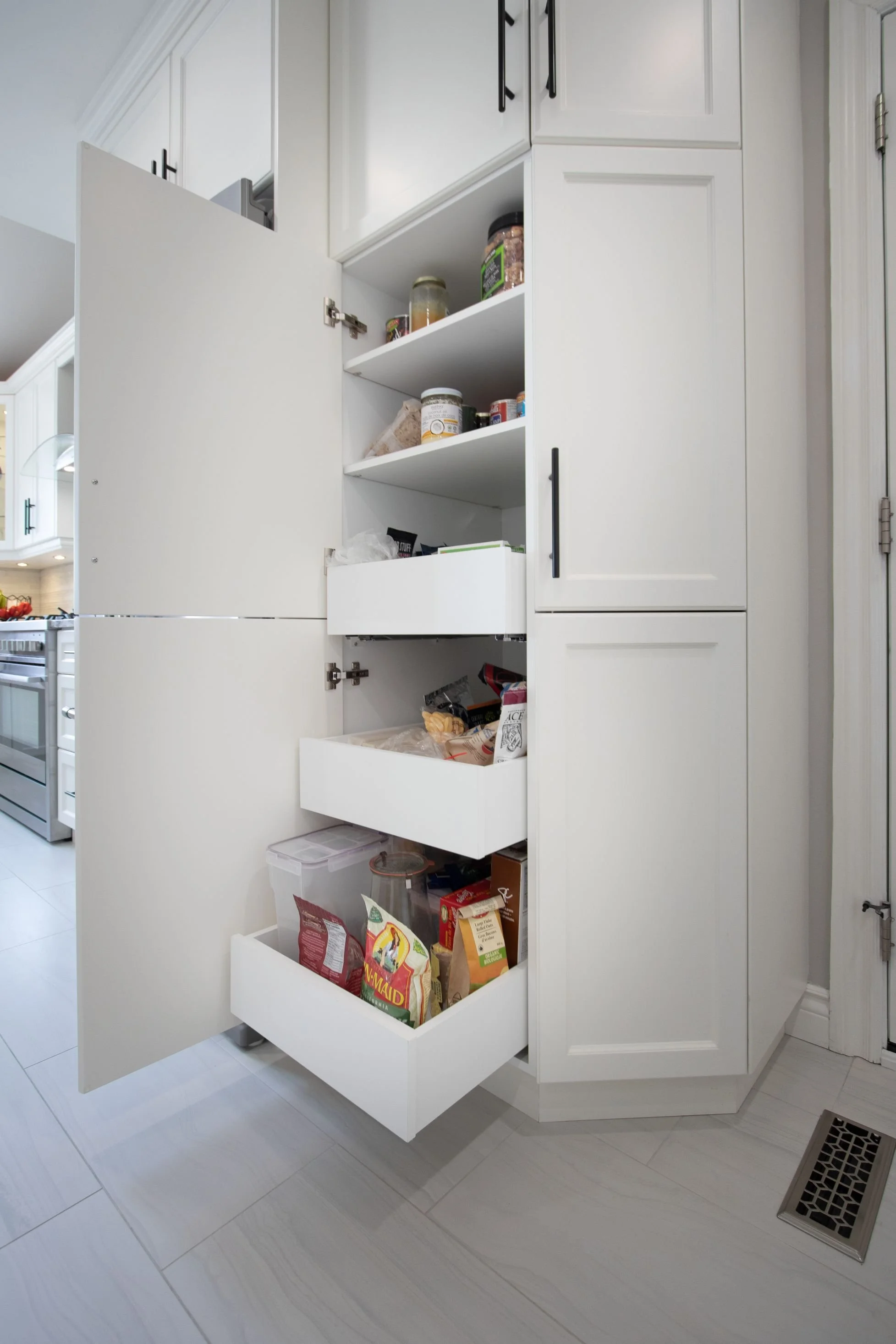
If there's one storage feature that homeowners consistently rave about after their renovation is complete, it's pull-out pantry shelving.
Years ago, most pantries were built with fixed or adjustable shelves. While they provided plenty of storage space, they often made it difficult to access items stored at the back. Finding a can of soup, a bag of rice, or a small spice container frequently meant unloading half the shelf just to reach what you needed.
Today's pantry designs often incorporate pull-out shelves in the bottom half of the pantry, making everything easily visible and accessible. Instead of kneeling on the floor and reaching into the back of a deep cabinet, the entire shelf slides out toward you.
As we get older, features like this become even more valuable. In fact, we recently met with a homeowner who told us she wanted drawers in every lower cabinet because she was tired of getting down on her hands and knees to search for items at the back of her cupboards.
While installing drawers everywhere wasn't necessarily the most practical or attractive solution, her frustration was completely understandable.
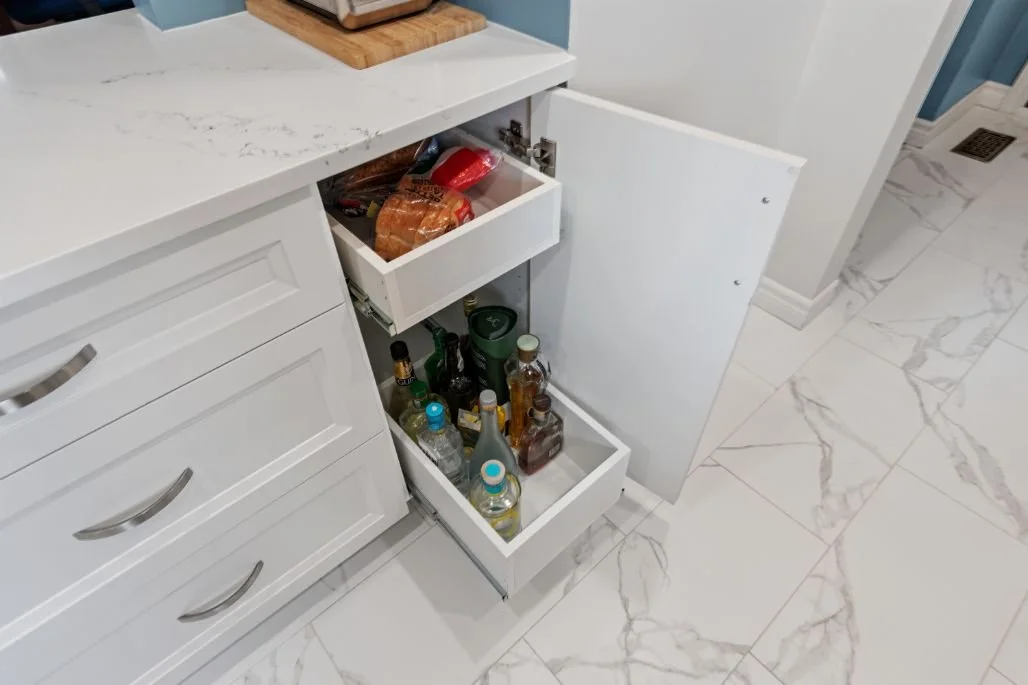
A great compromise is to combine some drawers with traditional base cabinetry that has pull-out shelves behind cabinet doors. From the outside, the kitchen maintains a balanced and timeless appearance. On the inside, you gain the convenience and accessibility of pull-outs exactly where they're needed most.
The best storage solutions aren't always the ones that hold the most items. They're the ones that make those items easy to find, easy to reach, and easy to put away.
One of the most common complaints we hear during kitchen consultations is, "I just don't have enough storage." The good news is that modern kitchen design offers countless ways to maximize every inch of available space. We've explored some of our favourite storage solutions in these articles:
The One Kitchen Upgrade That Changes the Way You Use the Space Everyday
12 Innovative Kitchen Storage Solutions You Haven’t Thought Of
11 Smart Kitchen Storage Solutions
The Beverage Zone
One of the fastest-growing trends in modern kitchen design is the dedicated beverage station.
Depending on your lifestyle, this may include:
Coffee makers
Espresso machines
Tea stations
Beverage refrigerators
Wine storage
Creating a dedicated beverage zone allows family members and guests to access drinks without interrupting the primary cooking area.
While coffee stations have become one of the most popular beverage zones in modern kitchens, they're certainly not the only option.
The best beverage centres are designed around how your family actually uses the space.
We once worked with a homeowner who loved entertaining. Rather than creating a traditional coffee station, we extended one of the upper cabinets all the way down to the countertop and incorporated a pull-out storage system behind the doors. The result was a hidden beverage station that neatly stored rum, vodka, mixers, and other entertaining essentials while keeping the countertop clutter-free.
Because the cabinet was located beside the island, guests could easily help themselves to a drink without disrupting the primary cooking area. When not in use, everything disappeared neatly behind closed doors.
Beverage zones can be designed around coffee, tea, wine, cocktails, or even a combination of all four. The goal is to create a dedicated space that keeps drinks and related supplies organized while preventing traffic from interfering with the main prep and cooking areas.
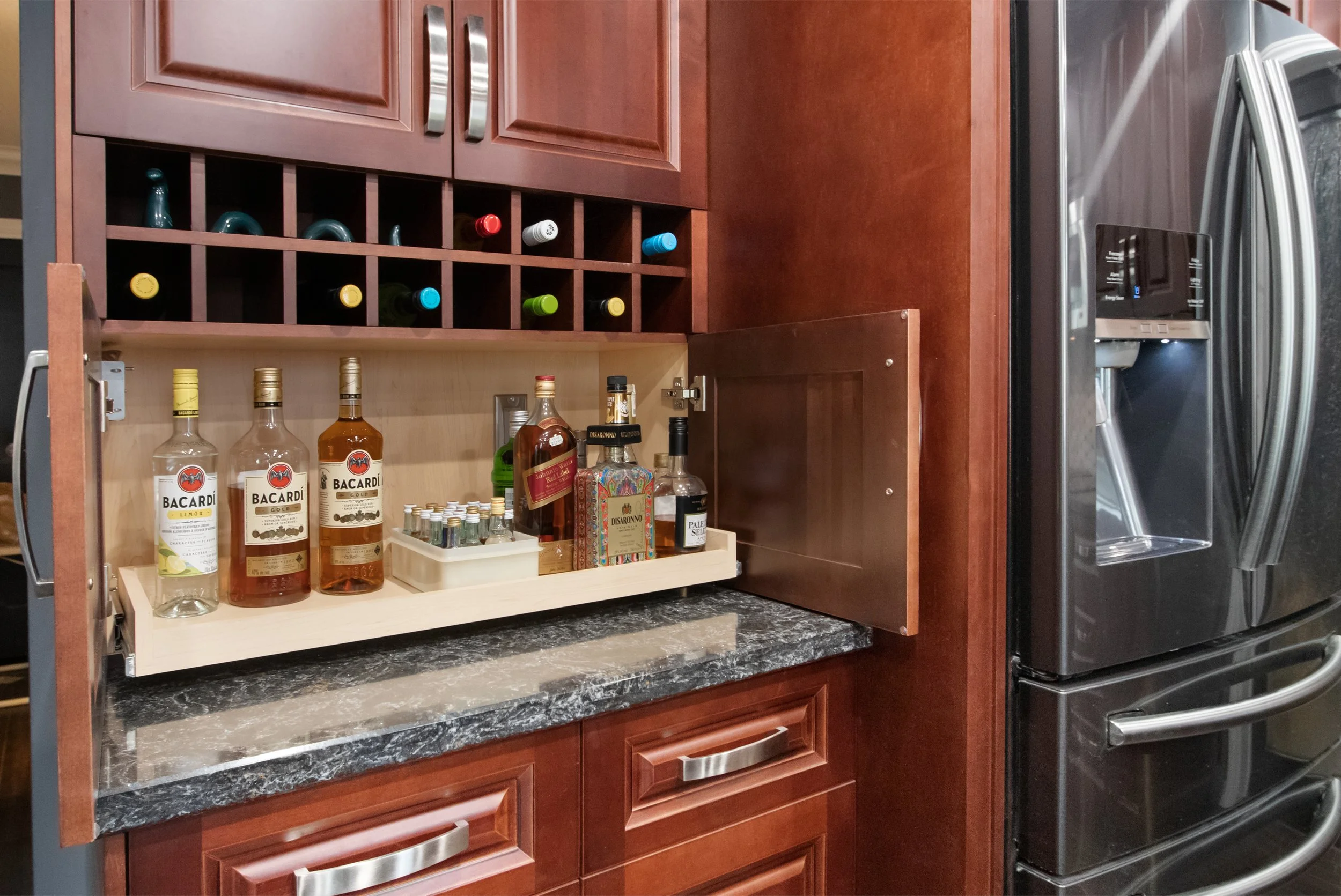
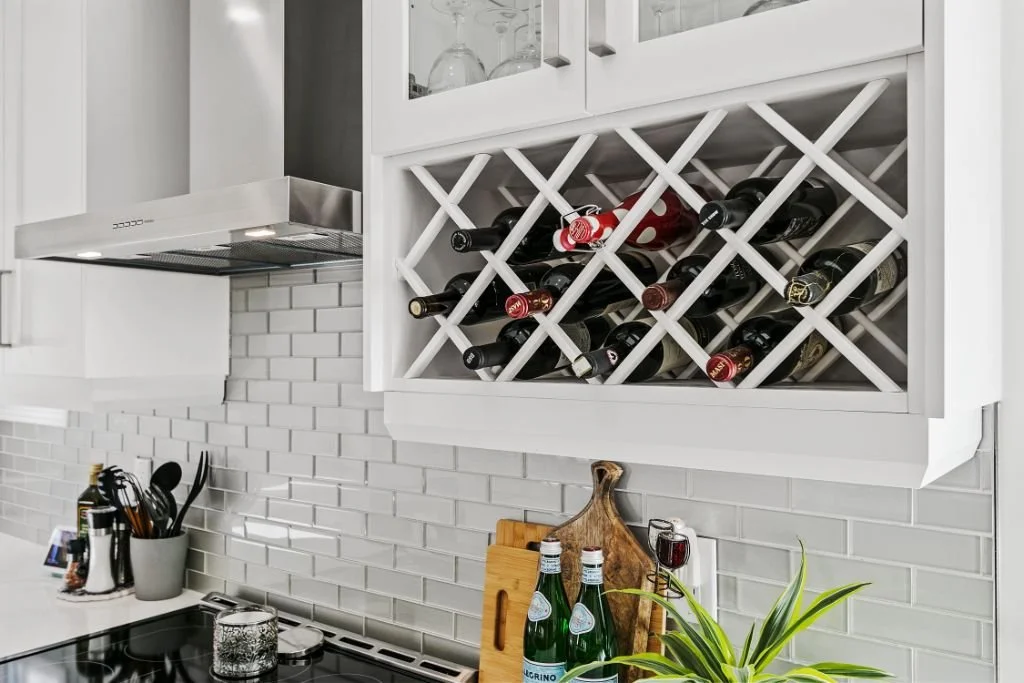
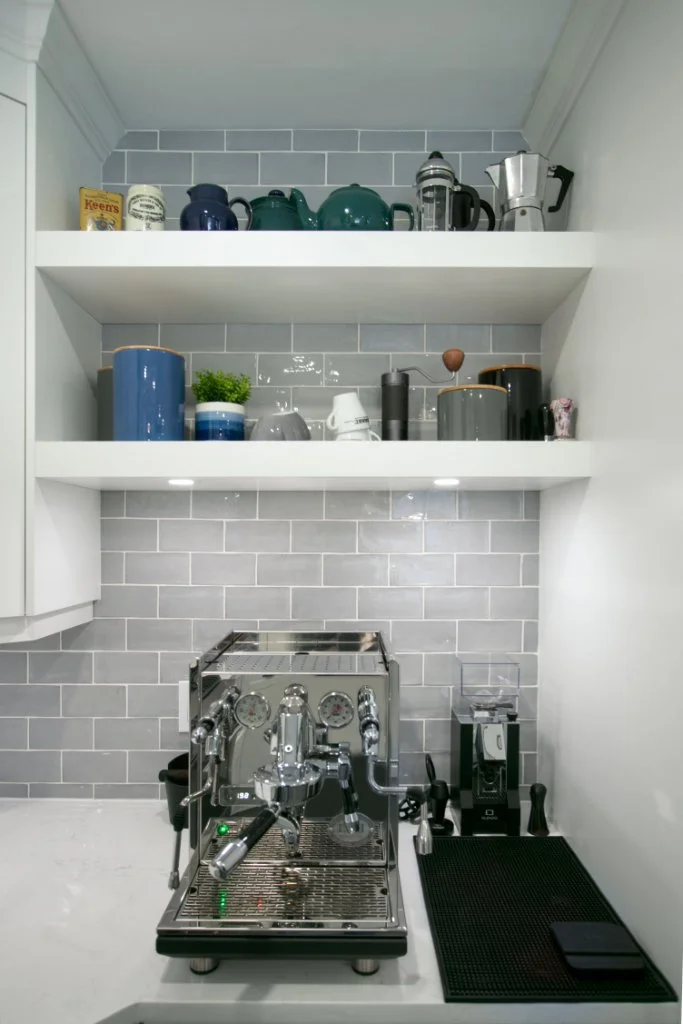
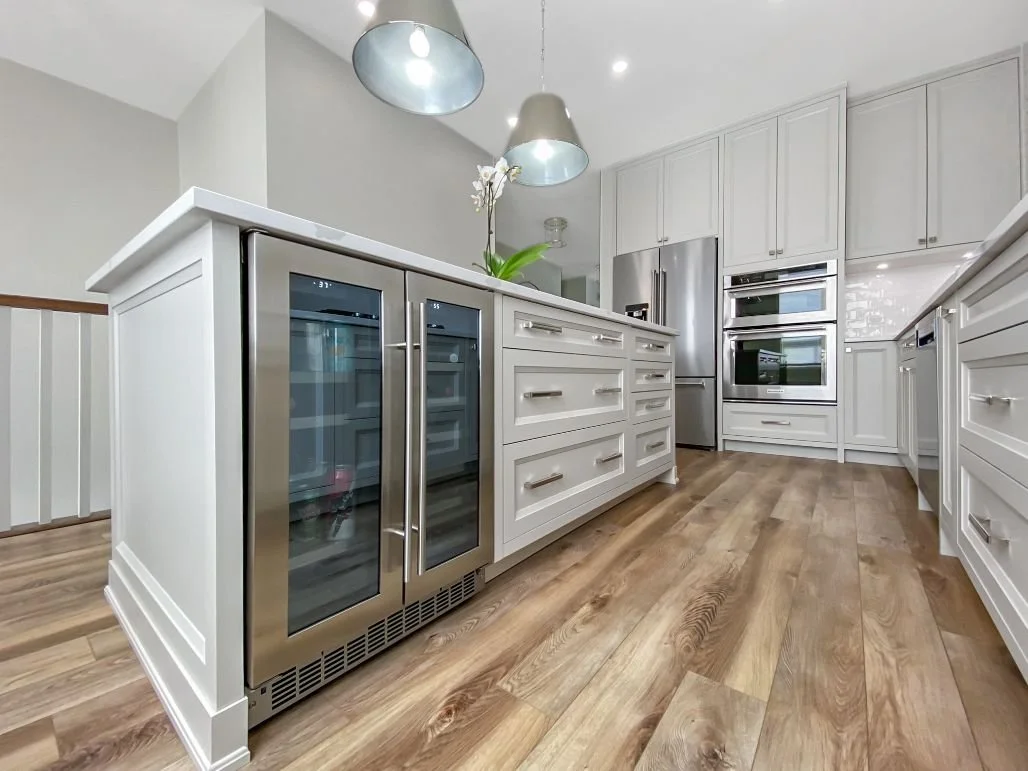
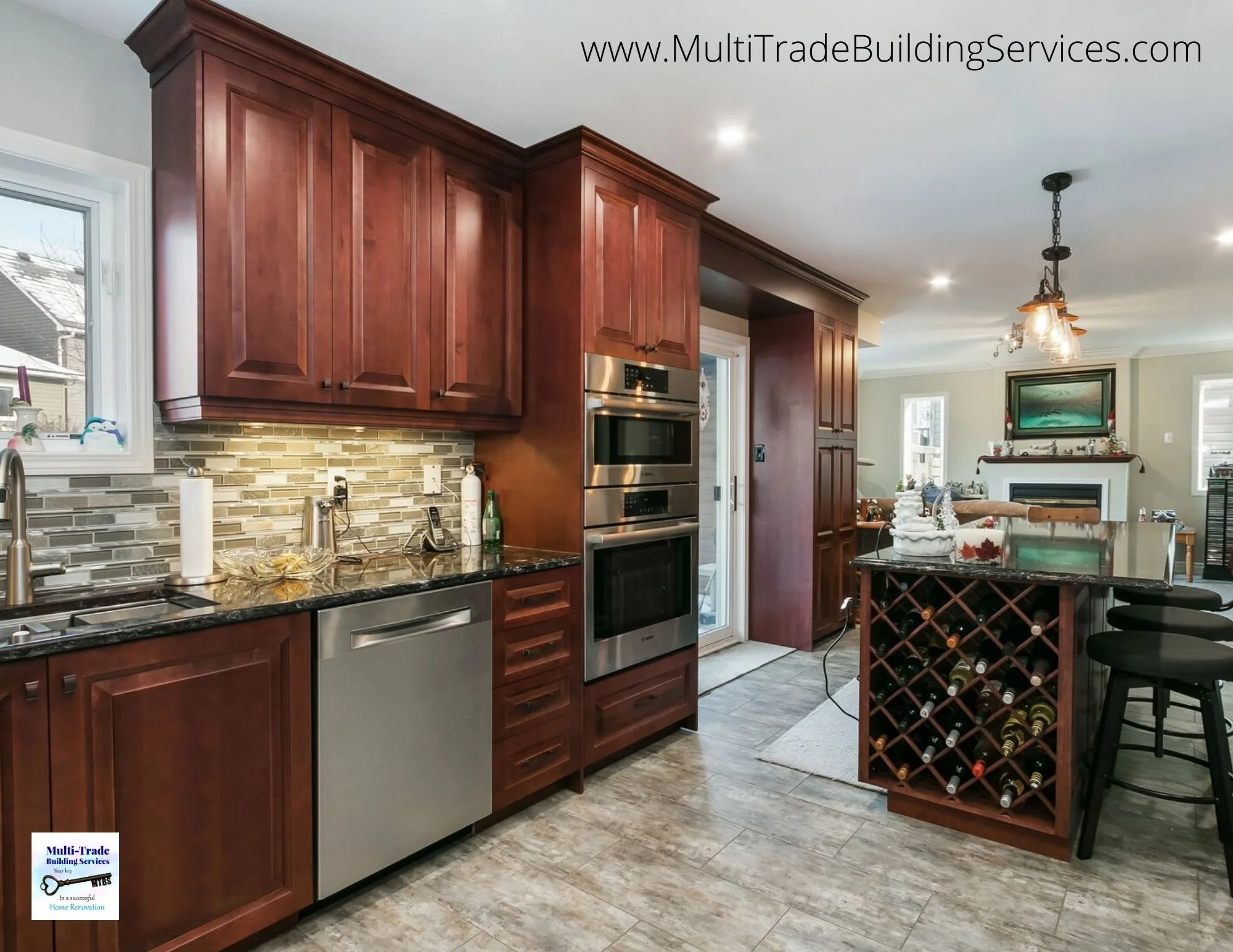
Whether you're brewing your first cup of the morning or entertaining guests after dinner, a thoughtfully designed coffee nook can add both function and personality to your kitchen. Check out The Joy of a Coffee Nook and How to Design One that Sparks Happiness
Planning a Kitchen Renovation in Durham Region?
The best kitchen layout isn't the one that's trending on Pinterest. It's the one that supports the way your family actually lives.
Whether you're considering an island, a peninsula, a more efficient work zone layout, or a complete kitchen transformation, taking the time to plan properly can save a tremendous amount of frustration later.
At Multi-Trade Building Services, we help homeowners throughout Durham Region create kitchens that are not only beautiful, but genuinely functional for the way they live every day.
If you're considering a kitchen renovation and would like to explore the possibilities, we'd be happy to chat.
Why the Kitchen Island Has Become the New Centre of the Home
Throughout this article, we've been discussing kitchen zones and how they help organize activities such as food preparation, cooking, cleanup, storage, and beverages.
The interesting thing about a kitchen island is that it doesn't typically belong to just one zone.
Instead, a well-designed island often supports several zones at the same time.
Additional prep space
Additional storage
Casual dining
Homework space
Entertaining space
Charging stations
Seating for guests
Think about how your family uses the kitchen.
Do people gather around the sink? Probably not.
Do they gather around the refrigerator? Definitely not.
They gather around the island.
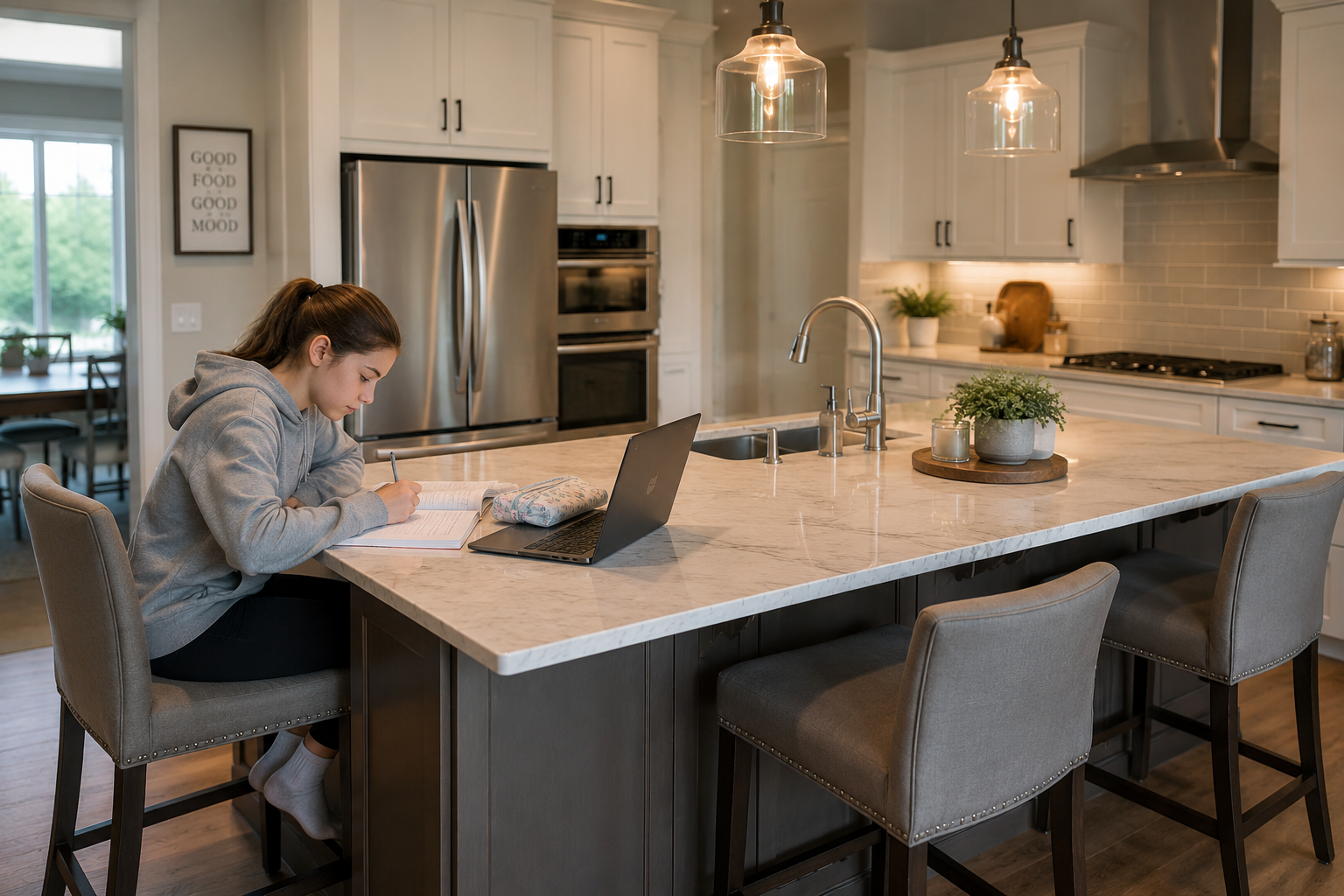
We've watched countless renovations where the island became the feature homeowners were most excited about—not because it looked beautiful, but because it transformed how the family interacted within the space.
That's something the original kitchen work triangle never anticipated.
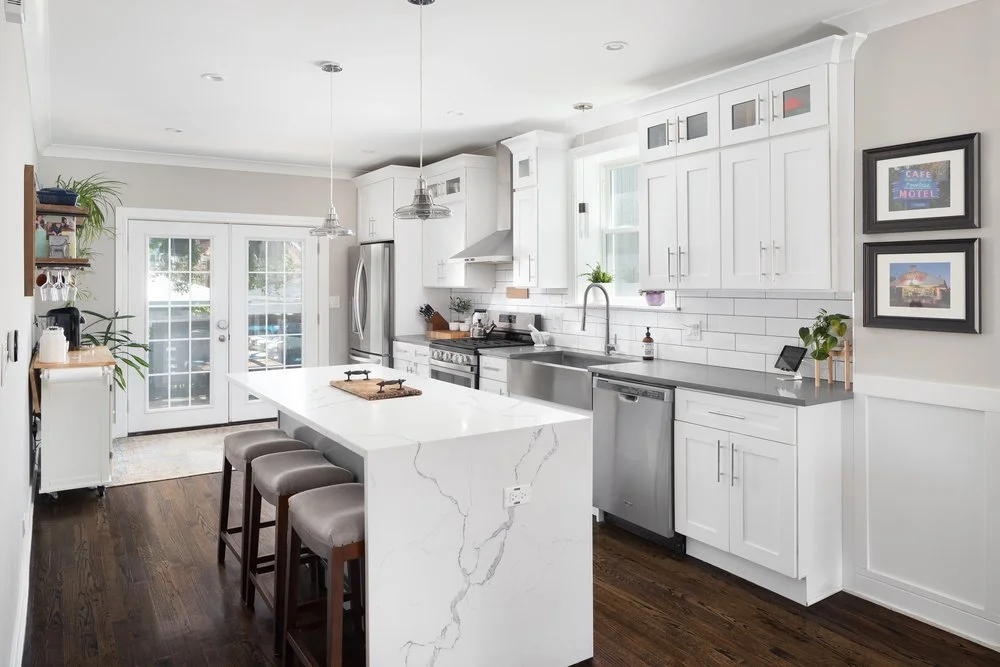
We also frequently design what we call a double-depth island. Instead of a single row of cabinets, the island is built using cabinetry accessible from both sides. This creates an island that can be approximately four feet deep, providing significantly more countertop space and a surprising amount of additional storage.
The extra depth creates room for a prep sink, gives multiple people space to work comfortably, and often provides storage that's accessible from adjacent dining or family room areas. For homeowners who enjoy cooking together, entertaining, or simply spreading out while preparing meals, a double-depth island can be a game changer.
Matching Your Kitchen Layout to Your Lifestyle
One of the biggest mistakes homeowners make during a kitchen renovation is designing for the kitchen they have rather than the life they actually live.
The truth is that no single kitchen layout is perfect for everyone.
A family that loves entertaining has different needs than an avid baker. Empty nesters often prioritize completely different features than a growing family with young children.
That's why we spend so much time learning how our clients use their kitchens before we ever start discussing cabinet styles or countertop colours.
Let's look at a few common lifestyles and the kitchen layouts that often work best for each.

The Entertaining Family
"We love having people over, but everybody ends up standing in my kitchen."
If you've ever said those words, you're not alone.
In fact, it's one of the most common frustrations we hear during kitchen consultations.
Today's kitchens have become gathering places. Friends congregate around food. Family members pull up chairs while meals are being prepared. Grandchildren often gather wherever the action is happening.
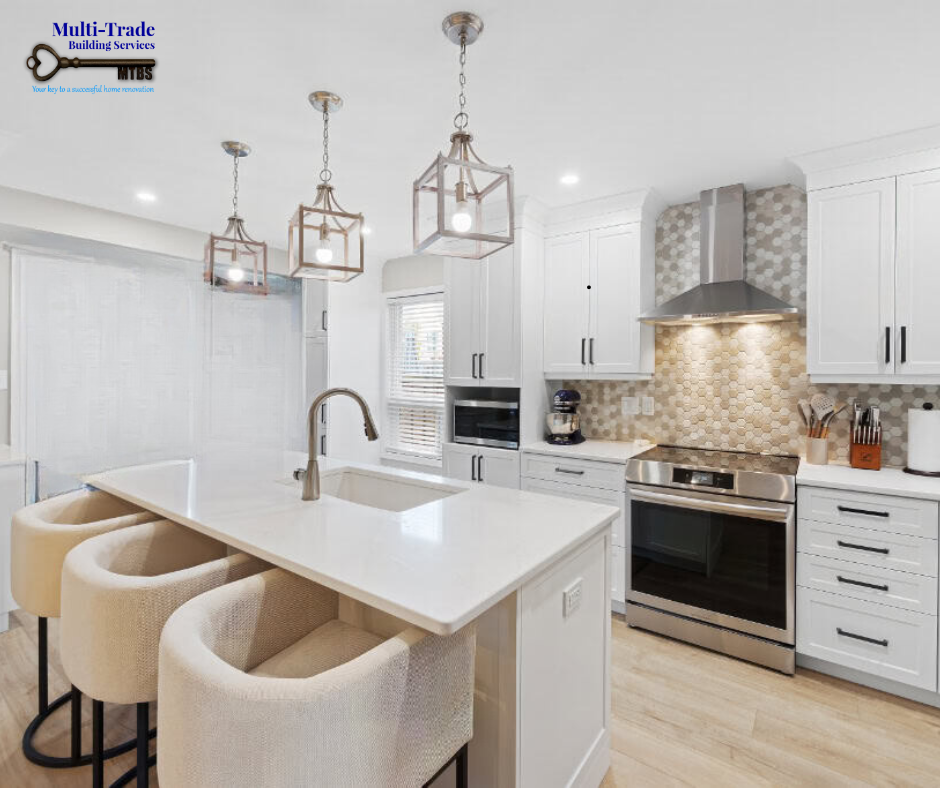
For homeowners who love entertaining, an island-centred kitchen is often one of the best solutions.
Best For:
• Entertaining friends and family
• Open-concept homes
• Grandchildren visiting regularly
• Casual dining
• Families who naturally gather in the kitchen
Advantages:
• Creates a natural gathering space
• Provides additional prep and serving space
• Allows the cook to remain part of the conversation
• Offers opportunities for seating and casual meals
• Supports multiple people using the kitchen at the same time
Potential Challenges:
• Requires adequate floor space
• Can become a traffic bottleneck if poorly planned
• Larger islands can increase renovation costs
A well-designed island often becomes the heart of the home. It gives guests a place to gather without crowding the cooking area and creates a natural focal point for everyday family life.
The Serious Cook or Baker
Some homeowners see the kitchen primarily as a gathering space.
Others see it as a workspace.
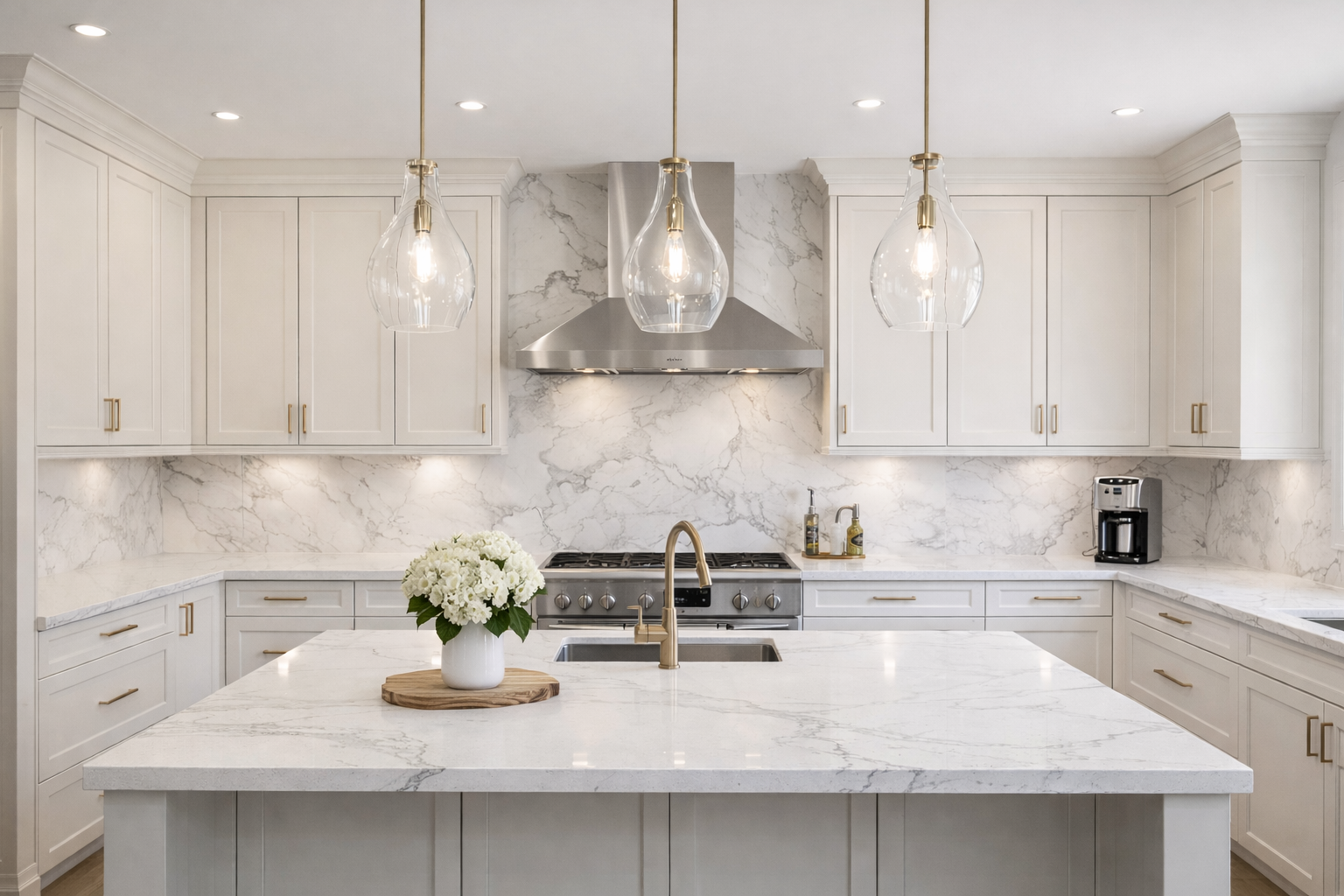
If you cook from scratch most days, bake regularly, prepare large meals, or simply enjoy spending time in the kitchen, efficiency often becomes a top priority.
For many serious cooks and bakers, a U-shaped kitchen can be an excellent choice.
Best For:
• Home cooks who prepare meals daily
• Avid bakers
• Homeowners who prioritize efficiency
• Households where cooking is a major hobby
Advantages:
• Exceptional counter space
• Excellent storage capacity
• Multiple dedicated work areas
• Everything remains within easy reach
• Supports efficient movement throughout the kitchen
Potential Challenges:
• Can feel enclosed in smaller spaces
• May limit opportunities for seating or gathering areas
• Not always ideal for large groups congregating in the kitchen
Many serious cooks appreciate having clearly defined prep, cooking, and cleanup areas while keeping everything close at hand. When designed properly, a U-shaped kitchen can feel incredibly efficient and enjoyable to work in.
The Empty Nesters
One of the most common mistakes homeowners make is designing their kitchen based on how they lived twenty years ago instead of how they live today.
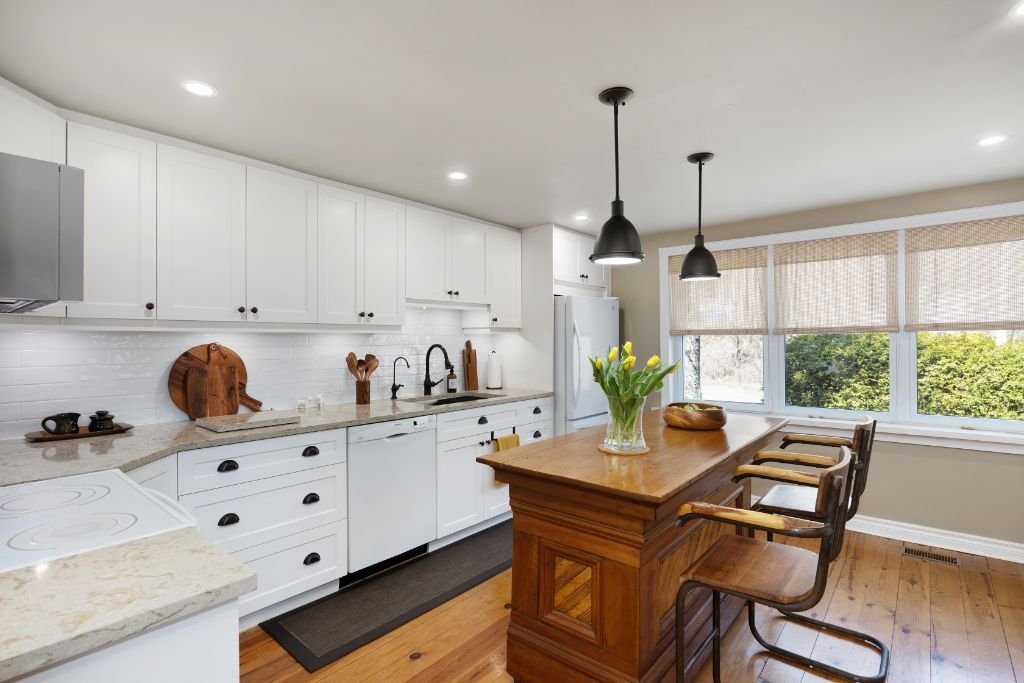
Perhaps the kids have moved out. Maybe you're retired or approaching retirement. You may be spending more time cooking, entertaining friends, or enjoying quiet evenings at home than ever before.
For many empty nesters, an L-shaped kitchen can be an excellent solution.
Best For:
• Couples
• Empty nesters
• Aging in place
• Open-concept homes
• Homeowners who value flexibility
Advantages:
• Open sightlines throughout the home
• Fewer obstacles and easier movement
• Excellent flexibility for future needs
• Room for an island if space permits
• Creates a spacious, open feeling
Potential Challenges:
• May provide less storage than a U-shaped kitchen
• Can require thoughtful planning to maintain efficient workflow
One of the reasons we often recommend L-shaped kitchens for empty nesters is that they can adapt as needs change over time. Wider walkways, accessible storage, pull-out shelves, drawers instead of lower cabinets, and thoughtful appliance placement can make the kitchen easier to use both today and years from now.
A well-designed kitchen should grow with you. Features that improve convenience today often become valuable accessibility features later, allowing homeowners to remain comfortable in the home they love for as long as possible.
The Smaller Home
Galley kitchens don't always get the attention they deserve.
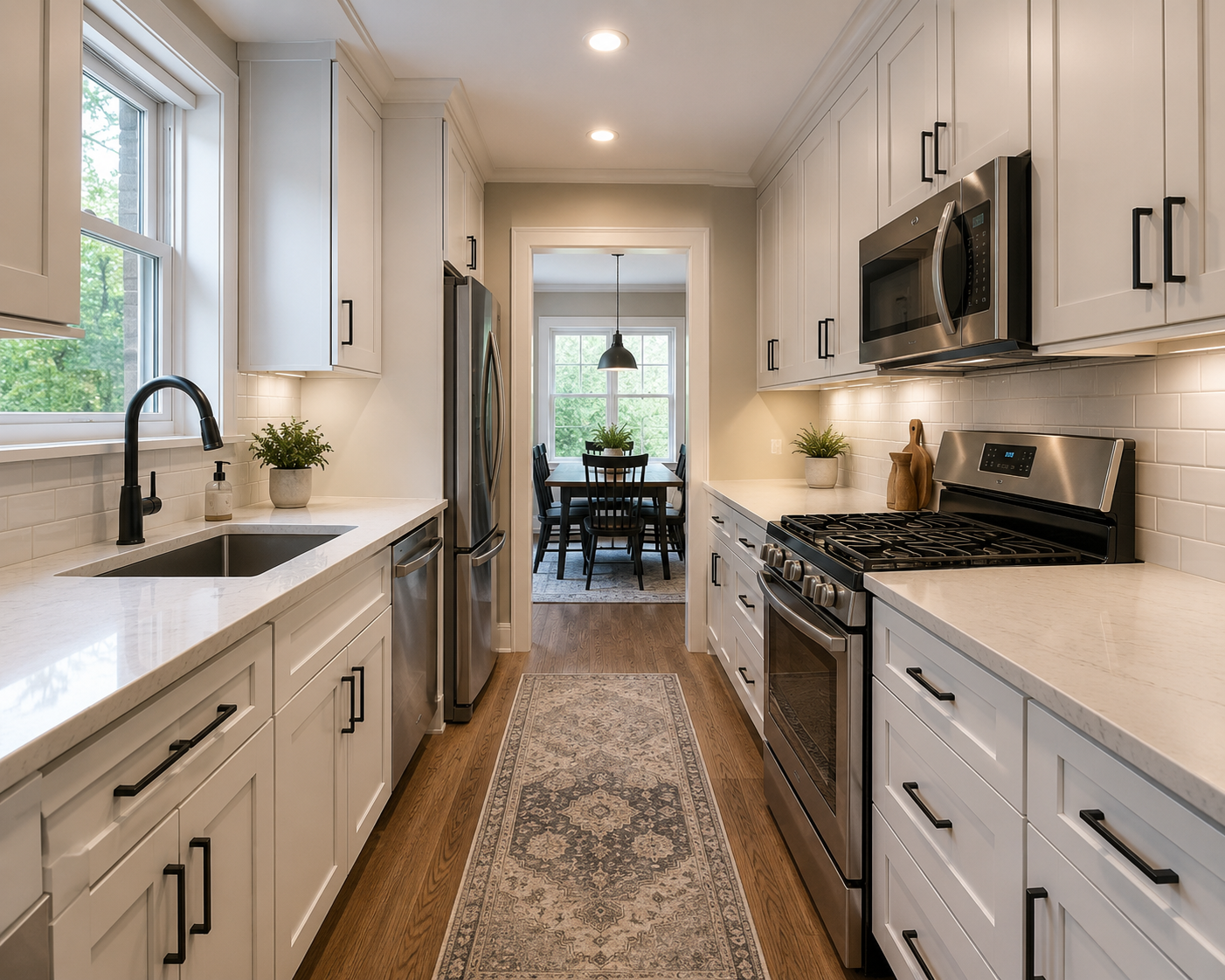
In fact, many design articles dismiss them entirely in favour of larger open-concept layouts. We think that's a mistake.
When designed properly, a galley kitchen can be one of the most efficient layouts available.
Best For:
• Condos
• Bungalows
• Smaller homes
• Homeowners who prioritize efficiency
• One or two cooks
Advantages:
• Extremely efficient workflow
• Everything is within easy reach
• Maximizes available space
• Often costs less than major structural reconfigurations
• Can provide surprising amounts of storage
Potential Challenges:
• Limited space for multiple cooks
• Less room for gathering and entertaining
• Traffic flow can become challenging in busy households
Many homeowners assume that bigger automatically means better. In reality, a thoughtfully designed galley kitchen can outperform a much larger kitchen with a poor layout.
The key is making every inch count. Smart storage solutions, pull-out shelves, deep drawers, carefully planned work zones, and proper lighting can transform a compact kitchen into an incredibly functional workspace.
If your home has a smaller footprint, don't assume your only option is to remove walls or build an addition. Sometimes the best solution is simply making better use of the space you already have.
The Family That Doesn't Want (or Can't Fit) an Island
Kitchen islands receive a lot of attention these days, and for good reason. They provide additional workspace, storage, seating, and gathering space.
But here's something many homeowners don't realize:
Not every kitchen should have an island.
In fact, one of the biggest design mistakes we see is trying to force an island into a space that simply isn't large enough to accommodate one comfortably.

That's where a peninsula can be an excellent alternative.
A peninsula functions much like an island but remains connected to the surrounding cabinetry on one side.
Best For:
• Smaller kitchens
• Homes with limited floor space
• Additional seating
• Extra prep space
• Homeowners looking to control renovation costs
Advantages:
• Provides many of the benefits of an island
• Adds storage and countertop space
• Can accommodate seating for family and guests
• Helps define open-concept spaces
• Requires less floor space than an island
Potential Challenges:
• Less accessible from all sides than an island
• Can create traffic bottlenecks if poorly planned
We've designed many kitchens where homeowners initially requested an island, only to discover that a peninsula actually provided a better solution. In some cases, the peninsula offered more usable countertop space, more storage, and better traffic flow than a small island would have.
The goal isn't to follow trends. The goal is to create a kitchen that functions beautifully for your family.
Sometimes that's an island. Sometimes it's a peninsula. The best choice is the one that supports the way you live.
Does the Kitchen Work Triangle Still Work in Small Kitchens?
Absolutely.
In fact, this is where the kitchen work triangle often remains most valuable.
In smaller homes, condos, apartments, and older bungalows, efficiency becomes even more important.
A well-planned kitchen work triangle can help reduce unnecessary movement and make a compact kitchen feel more functional.
The key is understanding when the triangle serves the space and when it begins limiting the space.
That's where professional planning becomes so important.
How We Design a Kitchen Layout Around Your Lifestyle
One of the biggest mistakes homeowners make is assuming kitchen design begins with cabinet selections.
It doesn't. At least it shouldn't.
Before we discuss cabinet styles, countertop colours, or backsplash tile, we want to understand how you actually live.
We ask questions such as:
Who does the cooking?
How many people use the kitchen at one time?
Do you entertain frequently?
Are grandchildren often visiting?
Do you bake?
Do you work from the kitchen island?
Are there accessibility concerns today or in the future?
Do you want a coffee station?
Do you need more storage?
The answers help determine the best kitchen layout for your family.
Because no two households are exactly alike.
The perfect kitchen for one homeowner may be completely wrong for another.
Thinking About a Kitchen Renovation?
If your kitchen feels crowded, inefficient, frustrating, or simply no longer suits your family's needs, it may be time to rethink the layout.
Sometimes the solution isn't more square footage.
Sometimes it's better planning.
At Multi-Trade Building Services, we help homeowners throughout Durham Region and Clarington create kitchens that work beautifully for the way they live today while preparing for the years ahead.
Because when your kitchen is designed around your lifestyle instead of outdated rules, something remarkable happens.
The space simply works.
And when your kitchen works better, life gets a little easier too.
Ready to Create a Kitchen That Works for the Way You Live?
If you're considering a kitchen renovation in Oshawa, Whitby, Ajax, Pickering, Courtice, Bowmanville, Newcastle, or the surrounding areas, we'd love to chat.
Together, we'll explore your options, identify opportunities to improve functionality, and design a kitchen that's every bit as practical as it is beautiful.

Whether you're looking for more storage, a dedicated coffee station, or inspiration for your upcoming renovation, these articles can help you create a kitchen that works beautifully for the way your family lives.
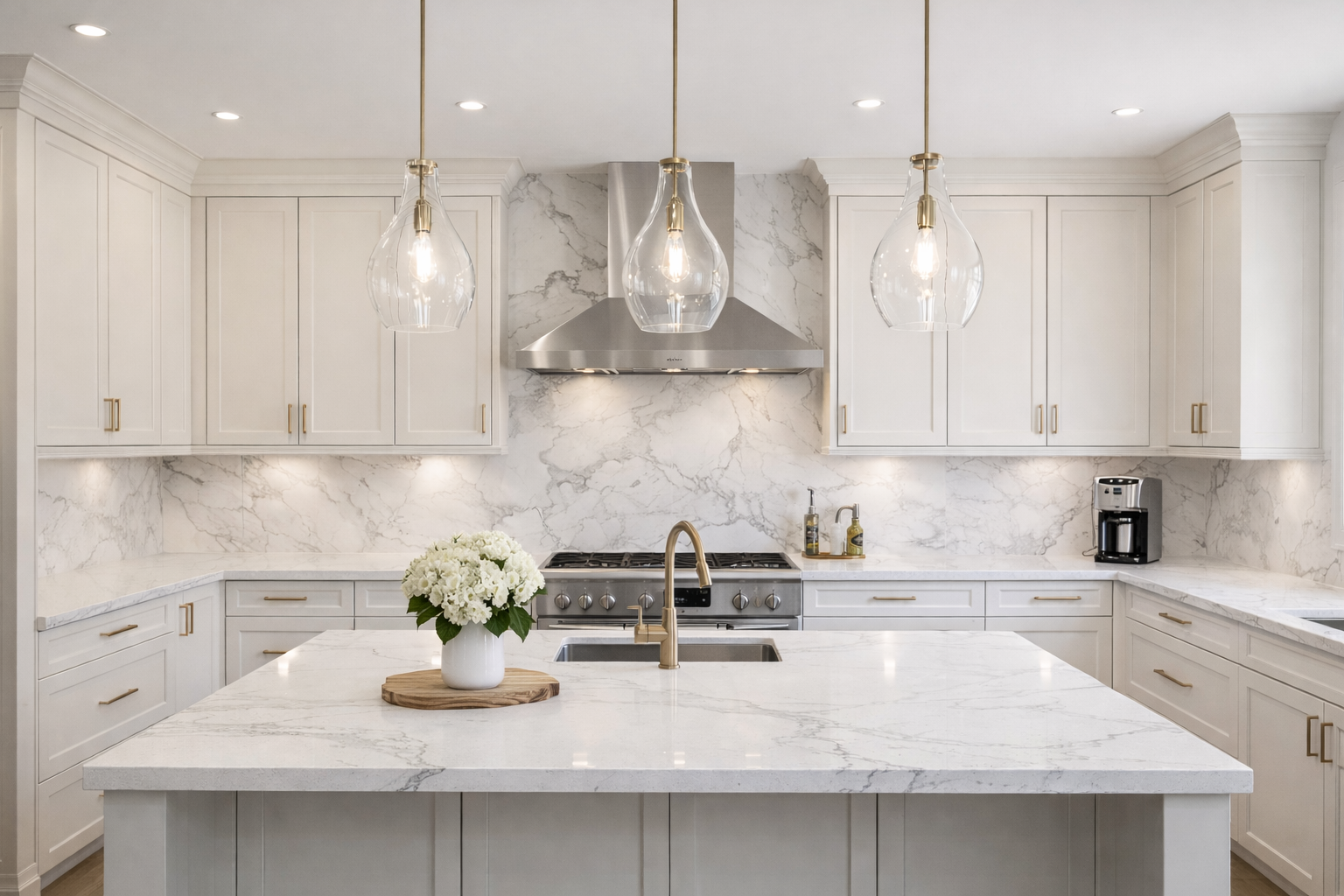
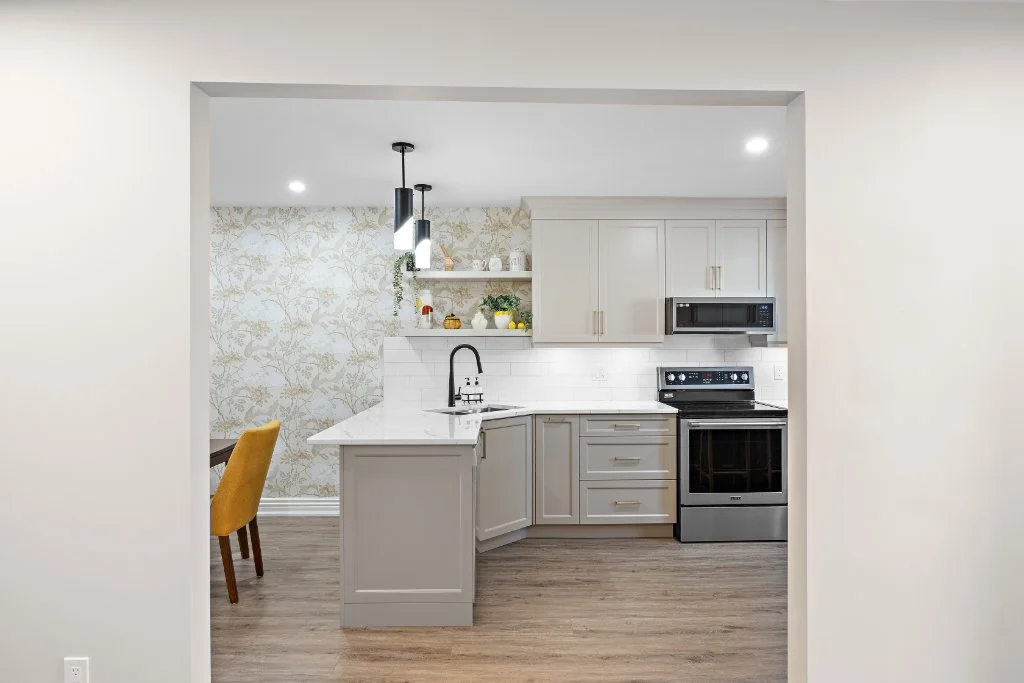
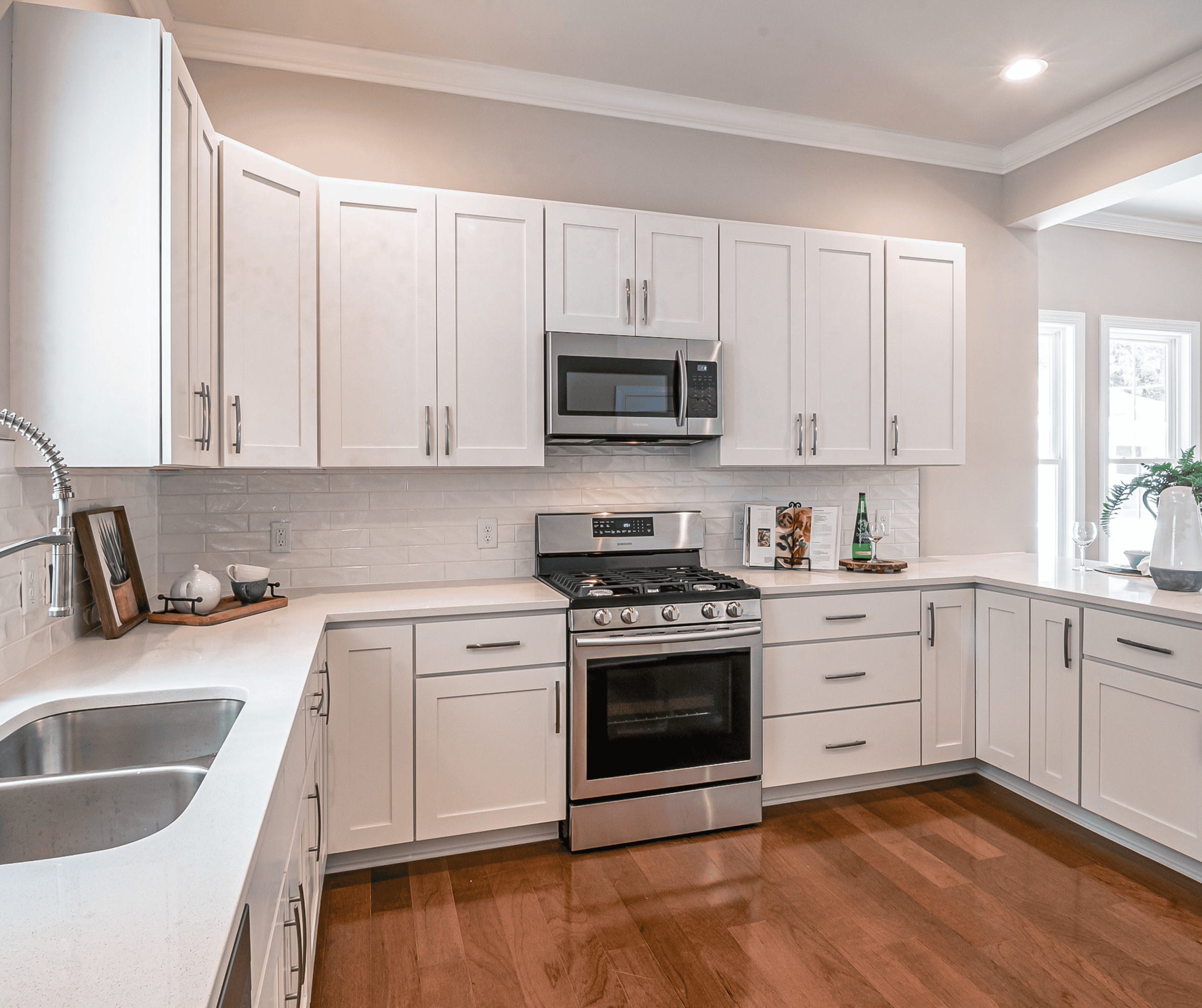
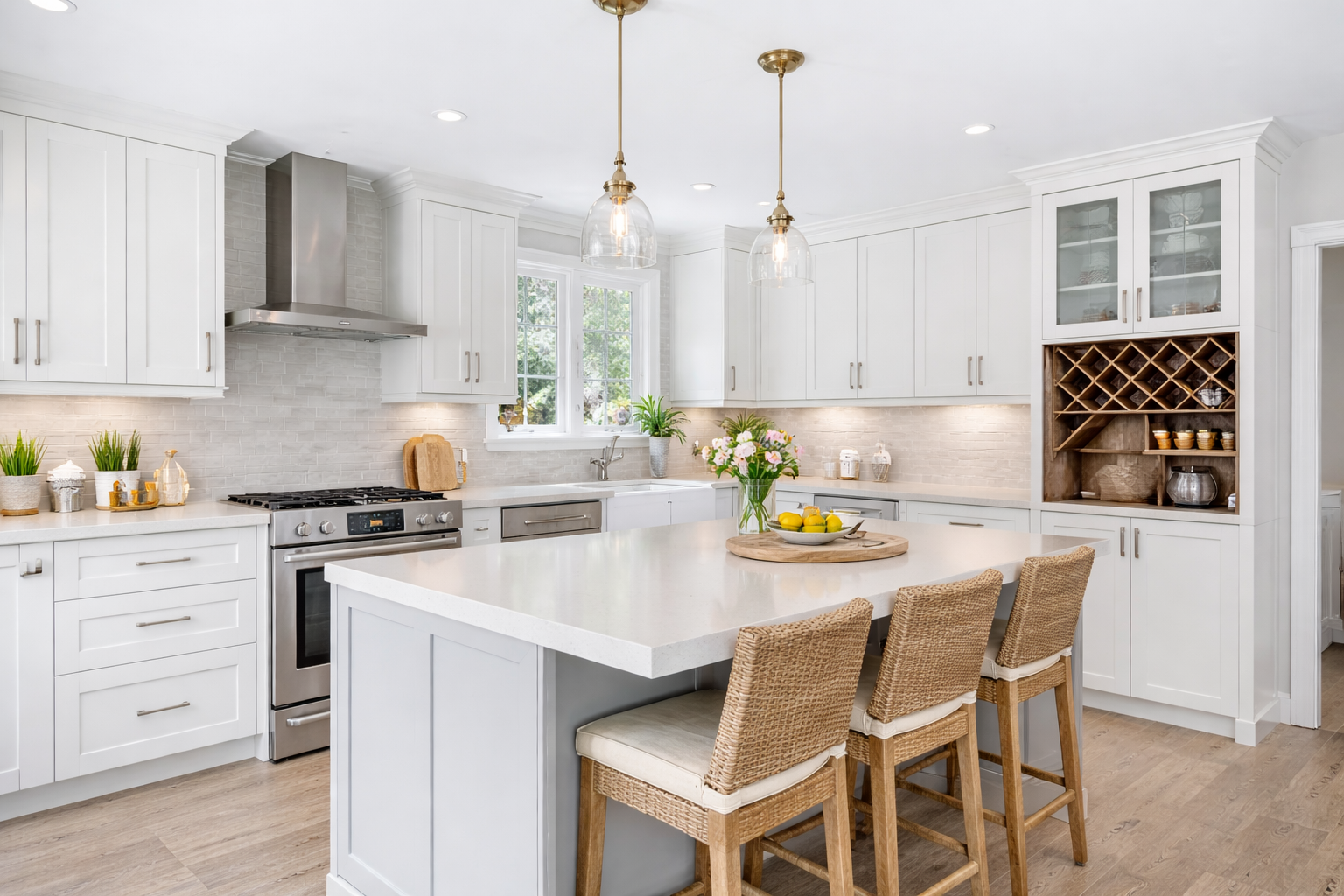
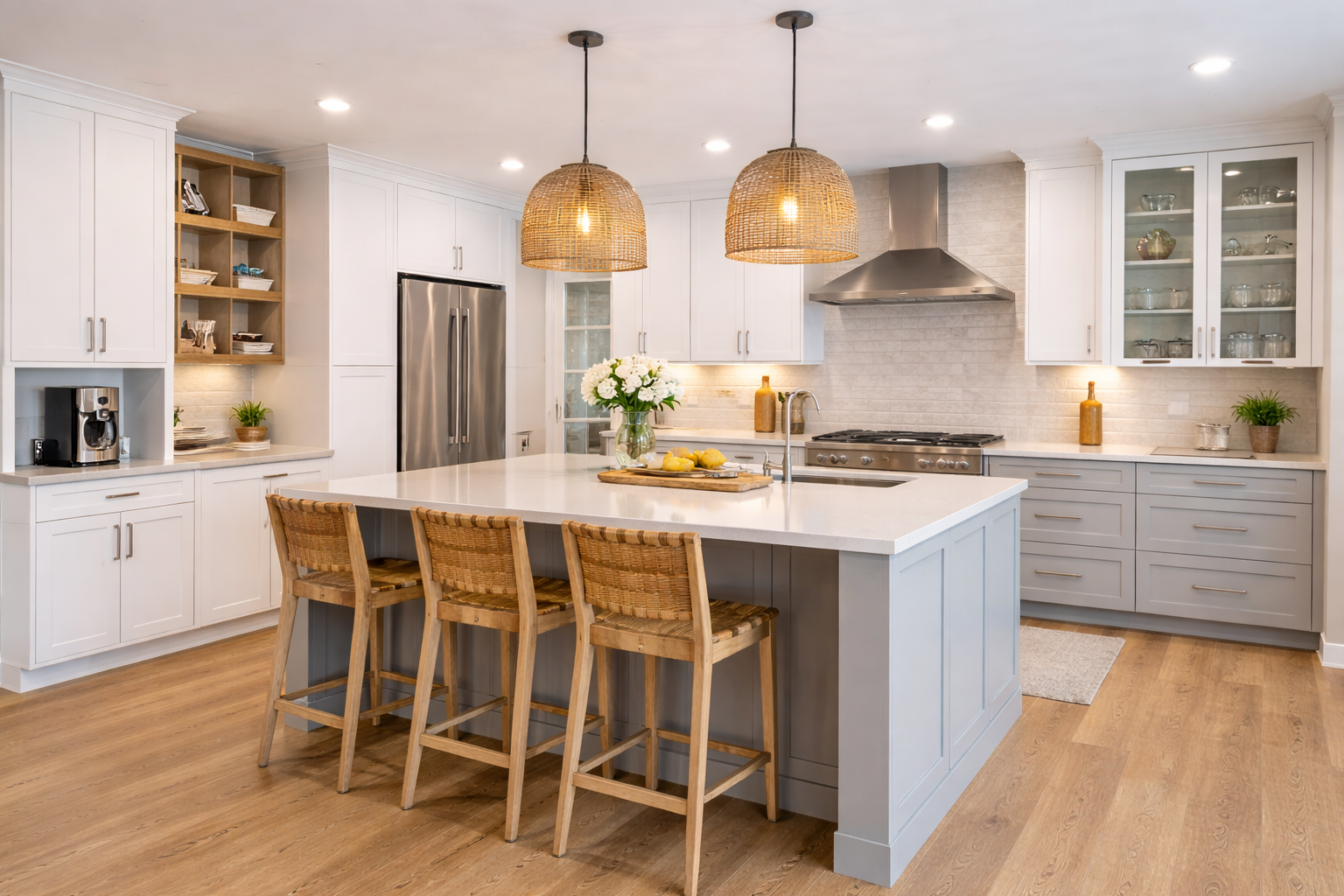
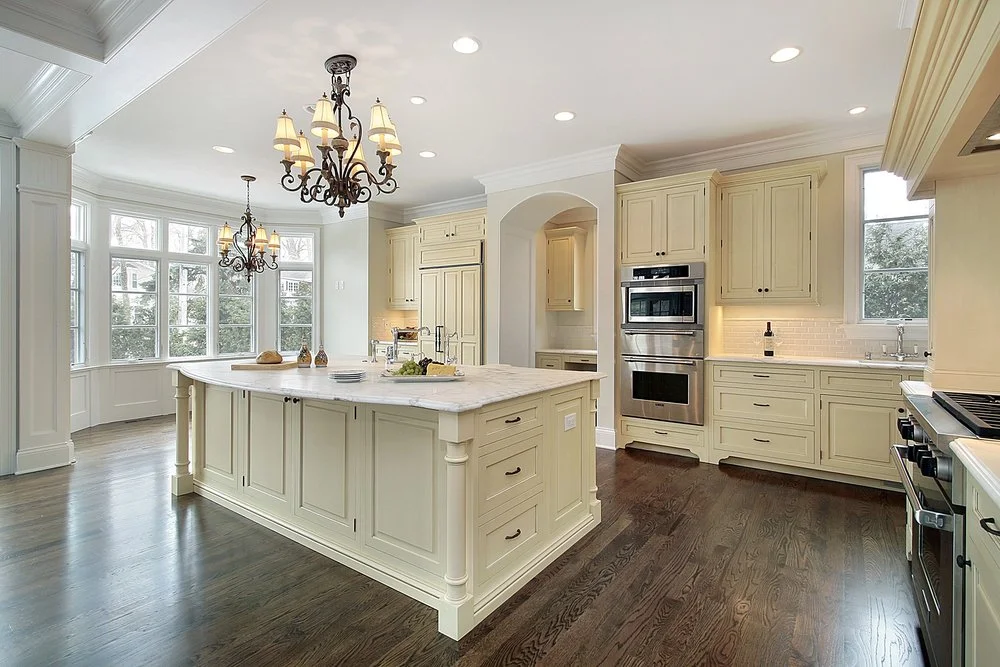
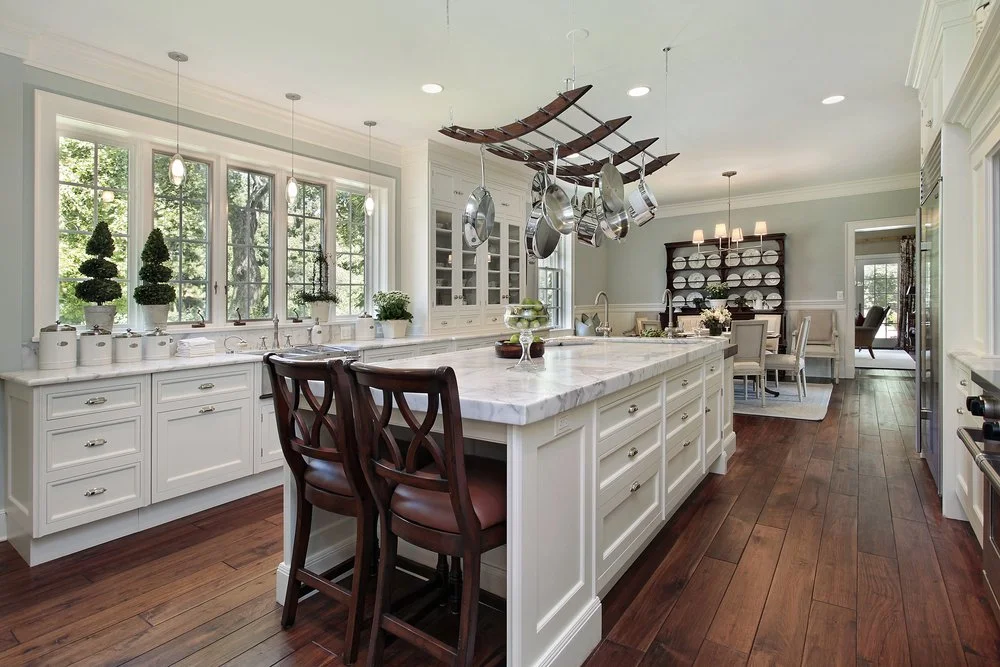


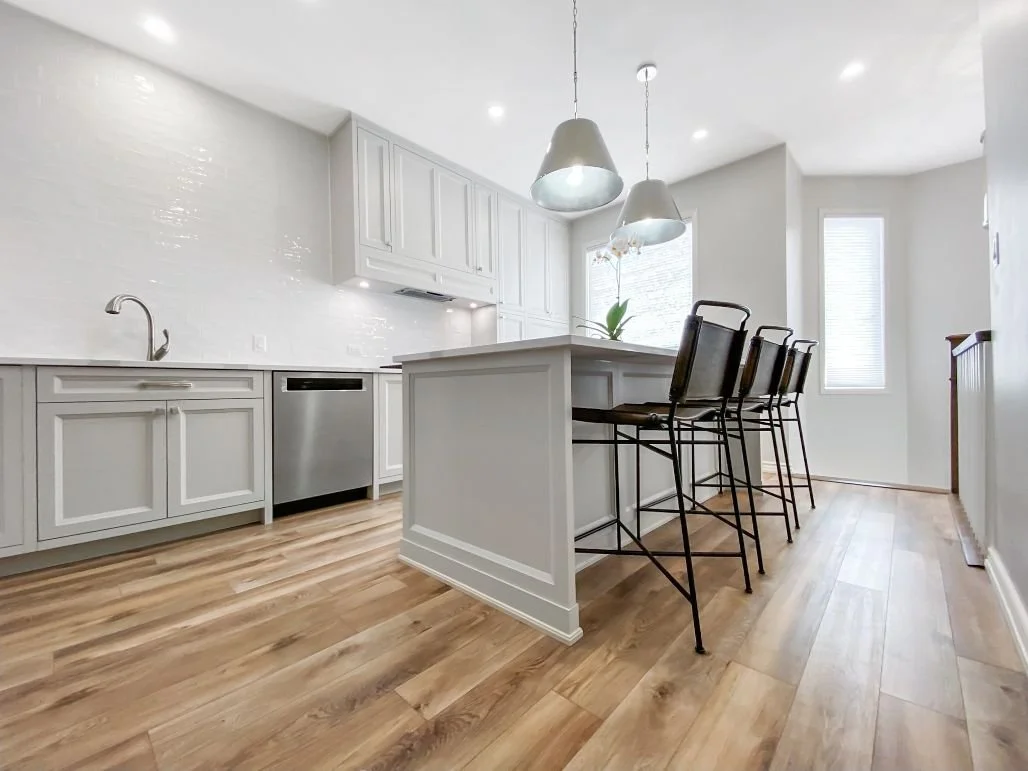

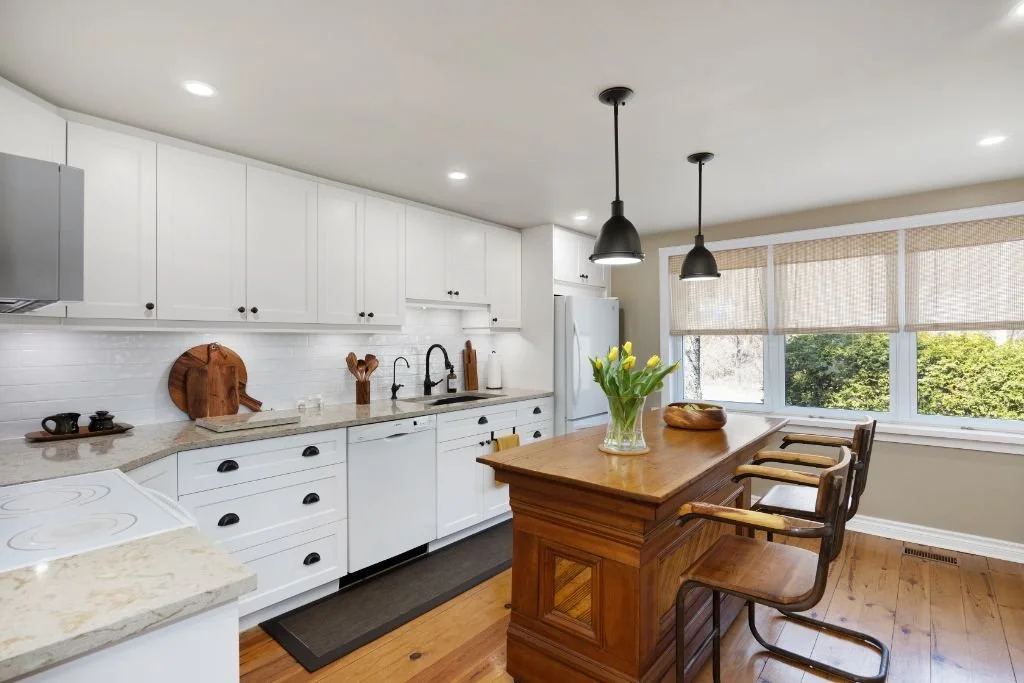




Choosing kitchen cabinets can quickly become overwhelming. Shaker, Slim Shaker, slab, raised panel — what’s the difference, and which style will still look beautiful years from now? We break down the most popular kitchen cabinet styles, materials and finishes to help you choose cabinetry you’ll love for years to come.