
The One Kitchen Upgrade That Changes How You Use the Space Every Day
/
There’s a particular kind of frustration that shows up in kitchens, and it’s hard to explain because nothing is obviously wrong.
The kitchen might be a good size. The cabinets might be in decent shape. You may have even told yourself more than once that it’s a “nice kitchen” and that there’s no real reason to complain.
And yet, using it feels harder than it should.
Prefer to listen?
You find yourself stacking things temporarily on the counter because putting them away feels awkward. You hesitate for half a second before opening certain cabinets, already anticipating the shuffle that’s about to happen. You clear space before you can even begin cooking, even though, logically, there should be enough room.
None of this is dramatic.
None of it feels renovation-worthy on its own.
But it adds up.
Over time, the kitchen starts to demand more effort than you expect from a space you use every single day. Not in a loud way. In a quiet, constant way that you eventually stop questioning because you assume this is just how kitchens are.
When homeowners start thinking about a kitchen renovation, it’s often this feeling they’re responding to, even if they don’t yet have the language for it. They know they want the space to feel easier, calmer, and more intuitive to use. They just don’t always know what, exactly, is getting in the way.
And that’s where things get interesting.
Because the upgrade that changes how a kitchen is used every single day isn’t always the one people expect.
The Detail Most Kitchen Renovations Overlook
Kitchens aren’t like living rooms or dining rooms. They’re not used occasionally or ceremonially. They’re used constantly, often without much thought.
Morning coffee. Packing lunches. A quick snack. Dinner prep. Cleanup. A late-night glass of water. Then it starts all over again the next day.
Because of that, even small inefficiencies become noticeable over time. A cabinet that’s slightly awkward to access doesn’t feel like a big deal once. But when you interact with it dozens of times a week, it starts to shape how the whole space feels.
You begin adjusting yourself to the kitchen instead of the kitchen adjusting to you.
You bend when you don’t want to. You reach deeper than you should have to. You rearrange things just to get through the task at hand.
And eventually, you stop questioning it. You tell yourself that’s just how kitchens are.
They’re not.
At a certain point, when we really step back and look at how kitchens are used day after day, a pattern becomes impossible to ignore.
The problem usually isn’t the size of the kitchen. It isn’t the style of the cabinets. And it’s rarely the appliances.
It’s how the kitchen stores things.
More specifically, it’s how easily you can reach, see, and put away the items you use all the time.
When storage doesn’t work well, the entire kitchen feels harder to use. You end up bending more than you should, moving things just to get to other things, and relying on countertops as temporary landing zones because putting items away feels inconvenient. None of this stands out as a single, obvious flaw, but together, it shapes how the kitchen feels every time you use it.
This is why kitchens that look perfectly fine on the surface can still feel frustrating in daily life. The issue isn’t what you see when you walk into the room. It’s what happens every time you open a cabinet.
Once storage is designed to work with you instead of against you, everything else starts to feel easier. Cooking flows better. Cleanup takes less effort. The kitchen stops feeling like something you have to manage and starts feeling like a space that supports you.
That’s why, whether someone is planning a full kitchen renovation or rethinking how their existing kitchen functions, storage is the upgrade that changes how the space is used every single day.
The Quiet Problem With Traditional Cabinets
If you open your lower cabinets and see shelves disappearing into a dark back corner, you already understand the issue.
Things go in easily. They come out with effort.
Items get stacked in front of other items. Pots hide behind appliances. Lids slide sideways. You forget what you own because you can’t actually see it all at once.
This isn’t a clutter problem. It’s an access problem.
Shelves were never designed for the way we actually use kitchens. They assume you’ll remember what’s in the back and enjoy crouching to retrieve it. They assume lightweight items and tidy stacking. They assume more patience than most people have on a weeknight.
That’s where better cabinet functionality quietly changes everything.
What Happens When Storage Comes to You
The single biggest shift we see in kitchens is what happens when storage moves toward the user instead of asking the user to move toward it.
Pull-out drawers and organizers don’t just look nice. They fundamentally change the relationship between you and the space.
When you open a deep drawer, you can see everything at once. Nothing is hidden. Nothing needs to be removed to access something else. You don’t have to remember what’s lurking in the back because there is no back.
That may sound like a small thing, but the effect is cumulative.
Unloading the dishwasher becomes faster and less annoying. Cooking feels smoother because you’re not interrupting yourself to hunt for tools. Cleanup is easier because everything has a logical place to go back to.
The kitchen starts to feel calmer, not because it’s emptier, but because it’s more predictable.
Start With What’s Not Working (Your Kitchen Is Already Telling You)
Before talking about drawers or pantries or pull-outs, the most important step is surprisingly simple: pay attention to where your kitchen is already frustrating you.
The cabinets that make you sigh before opening them.
The spots where things get stacked temporarily because putting them away feels awkward.
The areas you instinctively avoid when you’re in a hurry.
Those moments are not user error. They’re clues.
When we help homeowners plan a kitchen renovation, we’re not starting with catalogues or layouts. We’re starting with questions like: Where do you bend the most? Where do things pile up? What do you take out more than once a day?
Because once you identify what’s not working, the storage solutions almost suggest themselves.

Deep Drawers: The Most Flexible Storage You’ll Ever Add
If there’s one cabinet upgrade that consistently changes how people feel about their kitchen, it’s deep drawers.
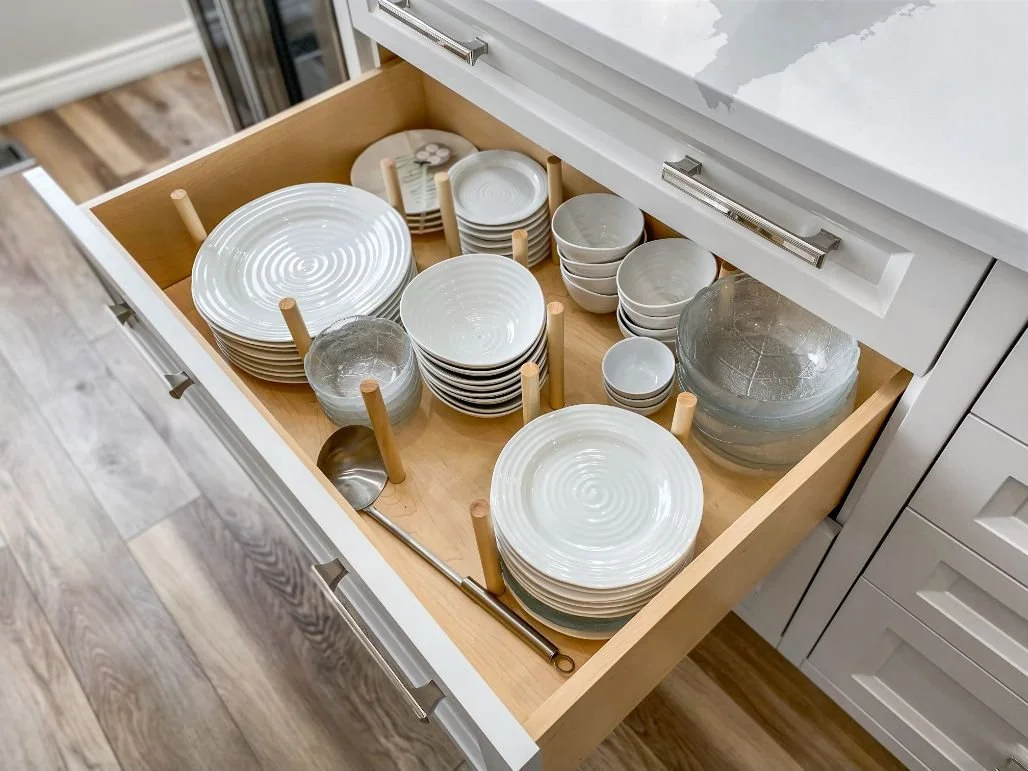
They’re often described as “pot and pan drawers,” and yes, they’re fantastic for that. Heavy cookware becomes easy to access, lids stop toppling over, and bending down becomes far less frequent.
But the real magic of deep drawers is how flexible they are.
With simple peg systems, those same drawers can store dishes just as effectively. Plates stand upright and stay put. Bowls don’t slide. Everything is visible at a glance. For many homeowners, this becomes a game-changer when unloading the dishwasher.
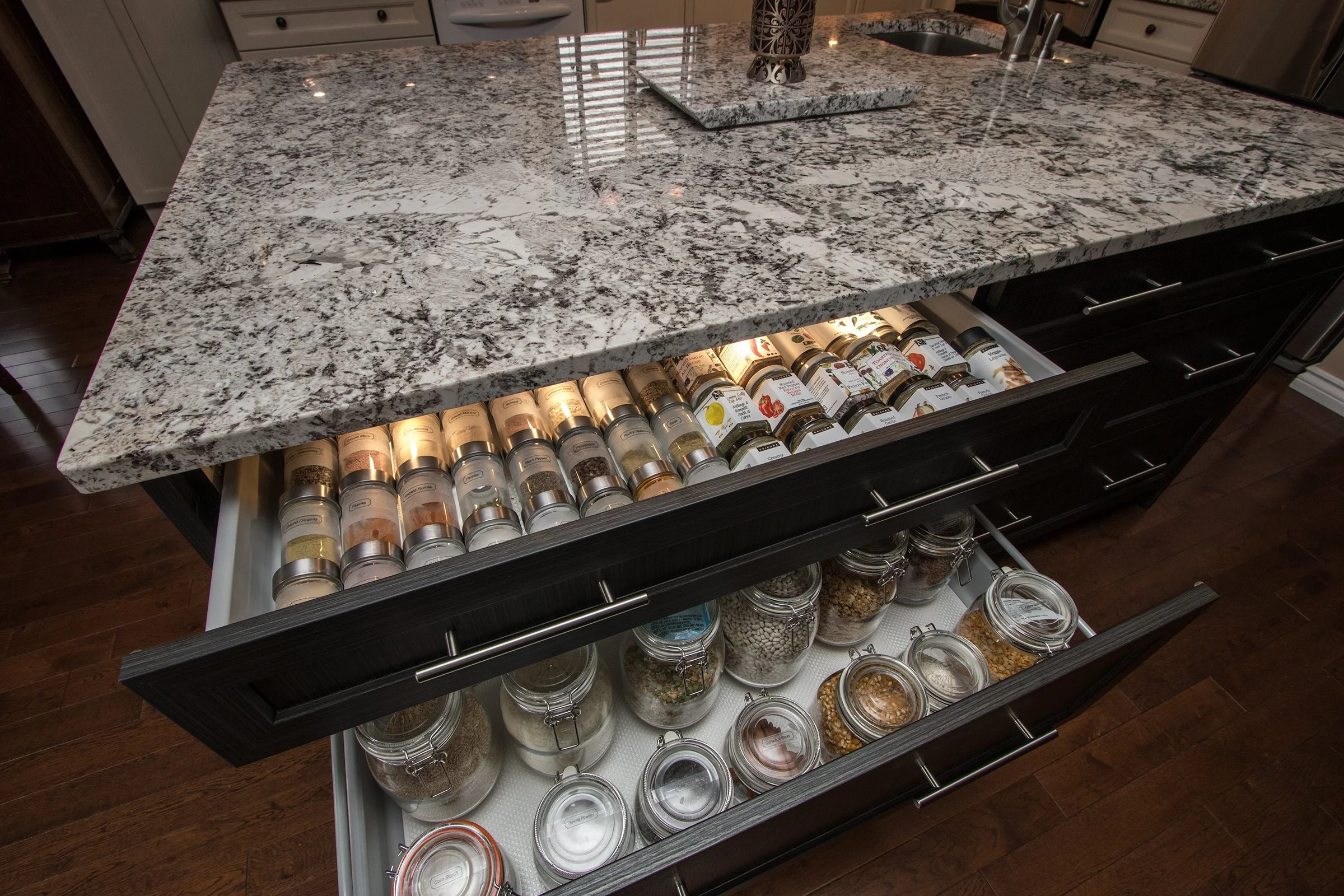
And if pantry space is limited, deep drawers can even take on that role. Mason jars filled with flour, sugar, rice, or rolled oats work beautifully here. You can see what you have, reach it easily, and avoid overbuying because nothing disappears into the back of a cabinet.
Deep drawers aren’t a single-purpose solution. They’re adaptable, and that’s exactly why they work so well in real kitchens.
If you’re starting to think about a kitchen renovation and want the space to feel easier to live in, not just newer to look at, these are exactly the kinds of conversations we love having with homeowners. Thoughtful planning makes all the difference.
Why Drawer Placement Matters More Than You Think
One of the most overlooked details in kitchen planning is where drawers are placed, not just whether you have them.
A simple example: drawers located beside the dishwasher.
When cutlery and dish drawers are positioned right where the dishwasher opens, unloading becomes almost effortless. You’re not walking across the kitchen with armfuls of forks or stacking items temporarily because their storage is too far away.
It sounds like a small thing, but it’s one of those upgrades that you feel every single day. It turns a routine task into something smooth instead of mildly annoying.
Good kitchen storage isn’t just about having the right components. It’s about putting them where they make the most sense for how you move through the space.
Rethinking the Pantry: What Actually Works (and Why)
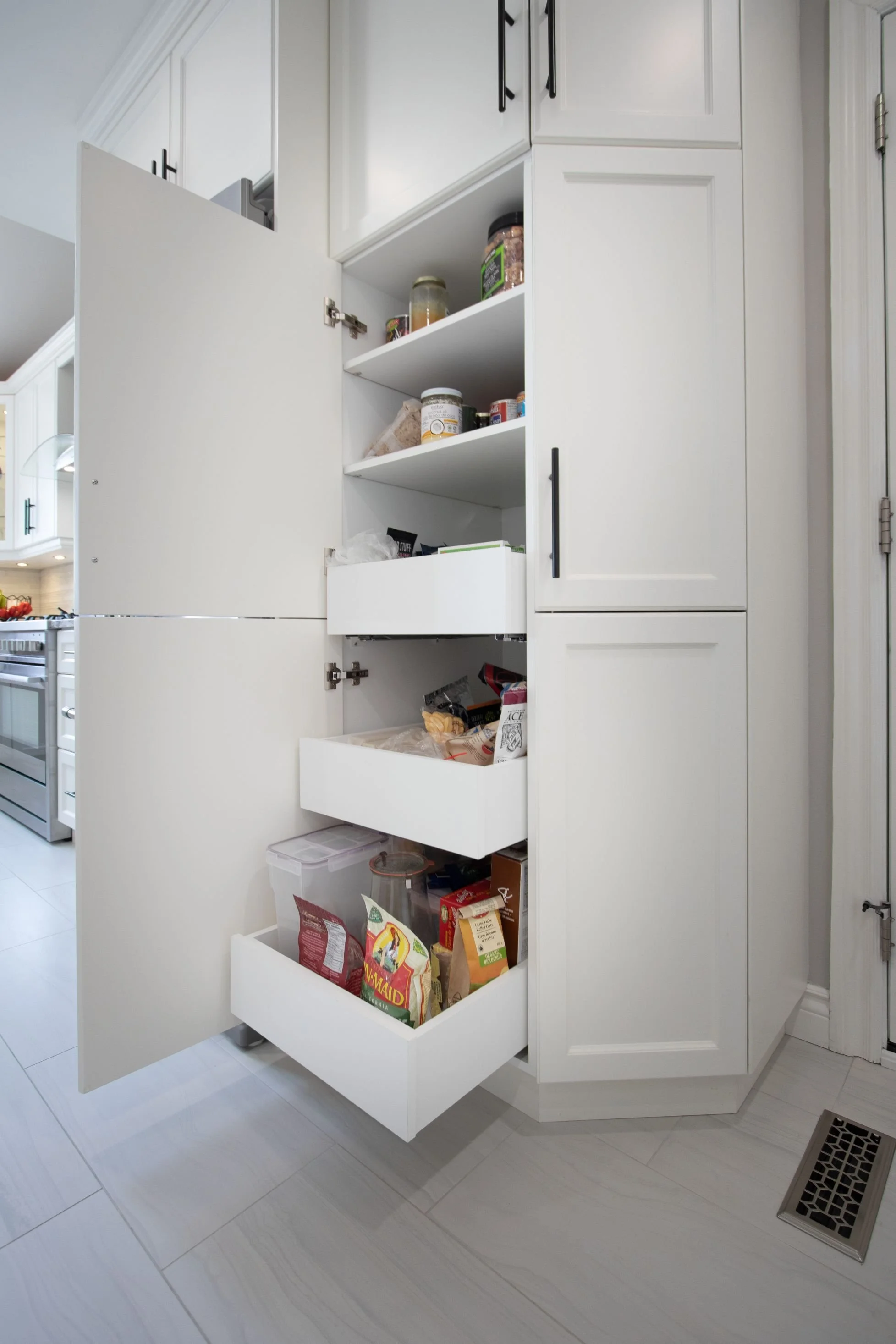
When people start talking about adding a pantry to their kitchen, they often picture one very specific thing: a tall cabinet that opens up to reveal shelves full of neatly organized food.
And while that image isn’t wrong, it’s only one of several ways a pantry can work. In reality, there are a few different pantry options, each with its own advantages, limitations, and price point. Understanding those differences before a renovation begins makes it much easier to choose a solution that truly works for your space and your budget.
The Full Pull-Out Pantry
This is the pantry most people fall in love with at first sight. The entire pantry pulls out as one unit, bringing every shelf with it so you can see everything at once. Nothing is hidden, nothing gets lost, and access is incredibly easy.
From a functionality standpoint, it’s hard to beat. From a budget standpoint, it’s important to be honest.
These systems are one of the most expensive pantry options available. They look fantastic and they function beautifully, but they come at a premium. For some homeowners, the ease of use and wow factor make it worth it. For others, there are more cost-effective ways to get excellent functionality without using up such a large portion of the budget.
The key is knowing this option exists, understanding its benefits, and making a conscious decision about whether it fits your priorities.
The Full-Depth Pantry With Pull-Outs Where They Matter
A very popular and practical option is a full-depth pantry, typically 24 inches deep, though 20- or even 18-inch-deep pantries can work extremely well depending on the layout.
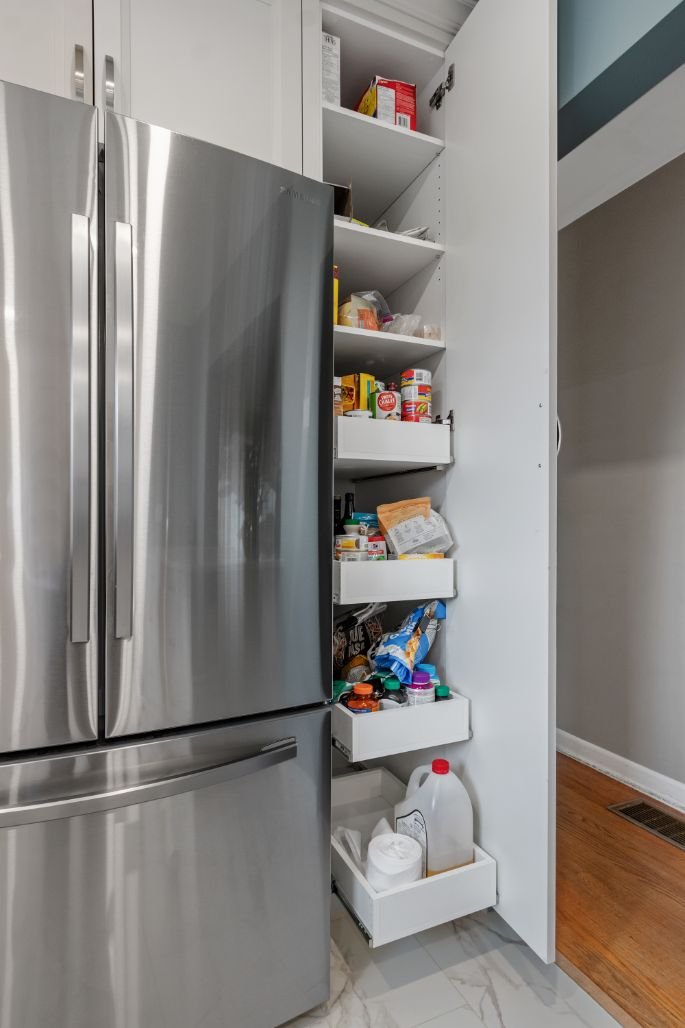
The smartest upgrade within this style of pantry is adding pull-outs in the bottom half, with adjustable shelves above.
There’s a good reason for this combination. Lower pull-outs allow you to easily access heavier items and see everything without bending or rummaging. You can pull the drawer out and immediately know what you have. Upper sections, on the other hand, are better left as adjustable shelves. Pull-outs above shoulder height don’t actually improve visibility because you can’t see into them properly, so shelves make more sense there.
This approach strikes a great balance. You get the benefits of pull-outs where they matter most, better visibility, easier access, and less bending, without the cost of a fully pull-out pantry system.
For many kitchens, this ends up being the sweet spot between function and budget.
The Narrow Pantry: Small but Mighty
Not every kitchen has room for a full-depth pantry, and that doesn’t mean a pantry is off the table.
A 12-inch-deep pantry, can still make a noticeable difference. These slim pantries are excellent for canned goods, baking supplies, spices, and everyday staples. They often fit into spaces that might otherwise go unused and provide a surprising amount of storage.
Because everything is closer to the front, visibility is actually quite good, and they’re often more affordable than larger pantry systems. For many homeowners, this type of pantry solves a storage problem without requiring a major layout change.
The Walk-In Pantry (If You Have the Space)
If your layout allows for it, a walk-in pantry can be a game-changer.
Walk-in pantries feel like a room within a room. They often include shelving, sometimes counter space, and plenty of flexibility. They’re incredibly practical for families who like to keep small appliances, bulk items, or prep space out of the main kitchen area.
They’re not feasible in every home, but when they work, they work beautifully. They also tend to make the main kitchen feel calmer and less cluttered because so much can live just out of sight.
And Sometimes… the Pantry Isn’t in the Kitchen at All
One of the most creative and successful pantry solutions we’ve seen wasn’t technically in the kitchen at all.
In a home where kitchen space was limited but storage was desperately needed, the pantry was placed in an adjacent dining room. It was designed to match the existing furniture in the space, so it felt intentional and cohesive rather than like an afterthought. The result was a beautiful, highly functional pantry that solved the storage problem without compromising the kitchen layout.
In another renovation, we built a pantry in the laundry room. The laundry room was just off the kitchen which meant only a few short steps to get to pantry items. The kitchen was far too small to hold an pantry but there was plenty of room in the laundry room.
The takeaway here is simple: a pantry doesn’t have to live inside the kitchen walls to work. It just has to be accessible and thoughtfully designed.
Spices: Small Items, Big Daily Frustration
Spices are one of those things that quietly cause more frustration than they should.
Upper cabinets often mean reaching to the back, moving bottles around, and forgetting what you even own. Over time, duplicates appear, and the cabinet becomes cluttered without anyone quite knowing how it happened.
There are several smart ways to handle spices during a renovation.
A narrow spice pull-out beside the cooktop keeps everything visible and within arm’s reach. Another great option is using the top shallow drawer above deep drawers. With angled or tiered inserts, spice jars sit slightly raised, making labels easy to read without laying everything flat.
It’s a small adjustment, but for something you reach for constantly, it can completely change how cooking feels.
The Small Storage Decisions That Make a Big Daily Difference
Once the major storage elements are planned, it’s often the smaller, quieter decisions that end up having the biggest impact on how a kitchen feels to use every day.
Take the space under the sink. It’s traditionally one of the most awkward cabinets in the kitchen, yet it’s where cleaning supplies usually live. Adding pull-outs here transforms a frustrating, hard-to-reach space into one that’s actually usable. Instead of reaching blindly to the back or pulling everything out to find one item, everything comes forward and stays visible.

Garbage, recycling, and compost storage is another area that benefits enormously from thoughtful planning. Many homeowners choose a pull-out system that accommodates two or even all three, keeping them contained, organized, and out of sight. These can be sized generously, especially in households where composting is part of daily life, and when done well, they make cleanup faster and more hygienic.
Then there are tray dividers, which are easy to overlook but incredibly practical. Baking sheets, cutting boards, and serving trays need vertical storage to stay organized, and one of the best places for this is often an upper cabinet above the fridge. When that cabinet is made deeper, it becomes the perfect home for items that are used regularly but don’t need to be accessed constantly. It’s a smart way to take advantage of space that might otherwise be underutilized.
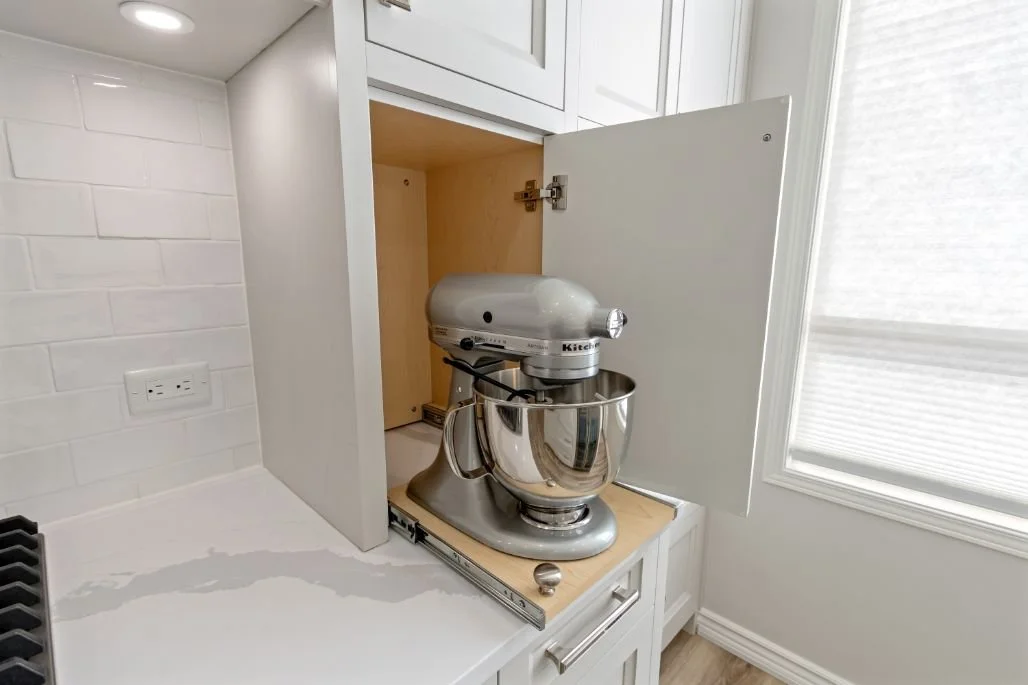
Appliance garages are another thoughtful solution, particularly in kitchens where countertop space is at a premium. They allow small appliances to stay accessible without living permanently on the counter. When planned properly, they reduce visual clutter while still supporting how the kitchen is actually used.
Charging drawers for phones and tablets are becoming increasingly popular, and for good reason. They provide a dedicated, tucked-away place to charge devices without cords draped across the counter. For families especially, this can bring a surprising sense of order to a space that tends to collect electronics.
Vertical storage near prep zones is another small decision that makes cooking feel easier. Narrow pull-outs or vertical compartments for oils, vinegars, and frequently used items keep everything within arm’s reach, right where it’s needed. It’s a subtle shift, but it reduces back-and-forth movement and makes the kitchen feel more intuitive.

And finally, wine storage is worth considering early if entertaining is part of how you use your kitchen. Whether it’s integrated into the bottom of an upper cabinet, built into the end of an island, or incorporated elsewhere in the layout, thoughtful wine storage prevents bottles from ending up in awkward, temporary places.
None of these elements are flashy on their own. But together, they’re what make a kitchen feel intentionally designed rather than simply assembled. They reflect an understanding of daily habits, not just floor plans.
When Storage Is Planned Well, Everything Else Gets Easier
One of the things people often notice after a kitchen renovation isn’t something they can point to right away. It’s not always about how the kitchen looks, even though that matters too. It’s about how the space starts to feel once it’s being used every day.
Cooking feels easier. Putting things away doesn’t require rearranging. You’re not working around the space anymore.
And that shift doesn’t usually happen because of a single feature. It happens because the kitchen has been planned thoughtfully, with real habits in mind. Where things are stored. How often they’re used. How far you have to reach, bend, or move just to complete everyday tasks.
This is where experience makes a difference.
Knowing which storage upgrades will genuinely improve daily life, and which ones simply look good on paper, comes from seeing how kitchens are actually lived in. It’s not about doing more. It’s about doing the right things, in the right places.
When storage works well, the kitchen doesn’t demand attention. It quietly supports you. And that’s when people start saying things like, “It just feels better in here,” without necessarily knowing why.
That’s the goal.
If you’re interested in more information about kitchen storage, check out these blogs:
12 Innovatoive Kitchen Storage Solutions You Haven’t Thought Of
11 Smart Kitchen Storage Solutions
If you’re planning a kitchen renovation and want a space that truly works for how you live, we’d love to help. Reach out to start the conversation and let’s design a kitchen that feels better every single day.

If you’re thinking about a kitchen renovation, these articles dive deeper into planning, design, and real-life decisions that can make the process smoother. A little insight upfront can make a big difference in how your kitchen looks and feels in the end.
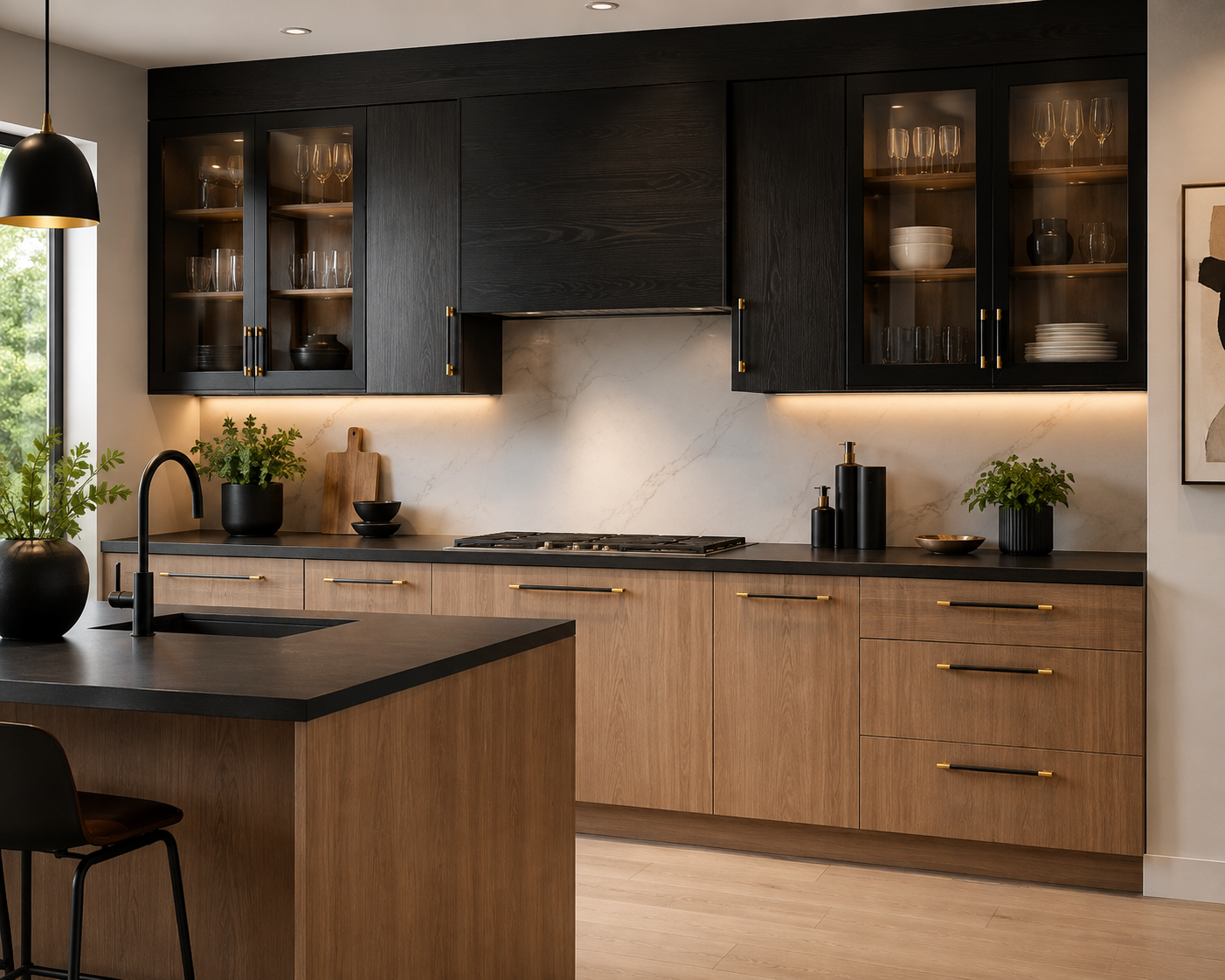
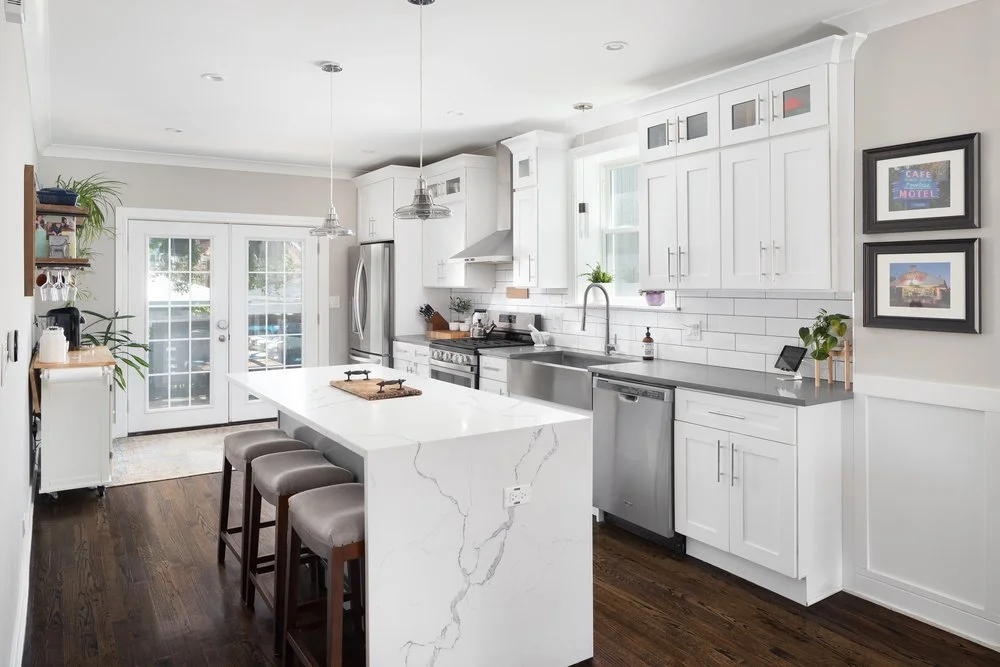



A kitchen island can be one of the best additions to your kitchen—but only when it’s designed around the way you actually live. From making it too big to overlooking seating, storage and walkways, small planning mistakes can make a big difference. Before you finalize your kitchen renovation, discover 10 common kitchen island mistakes and how to avoid them.