

Where Should Your Laundry Room Go? Main Floor vs. Second Floor (and When the Basement Still Makes Sense)
/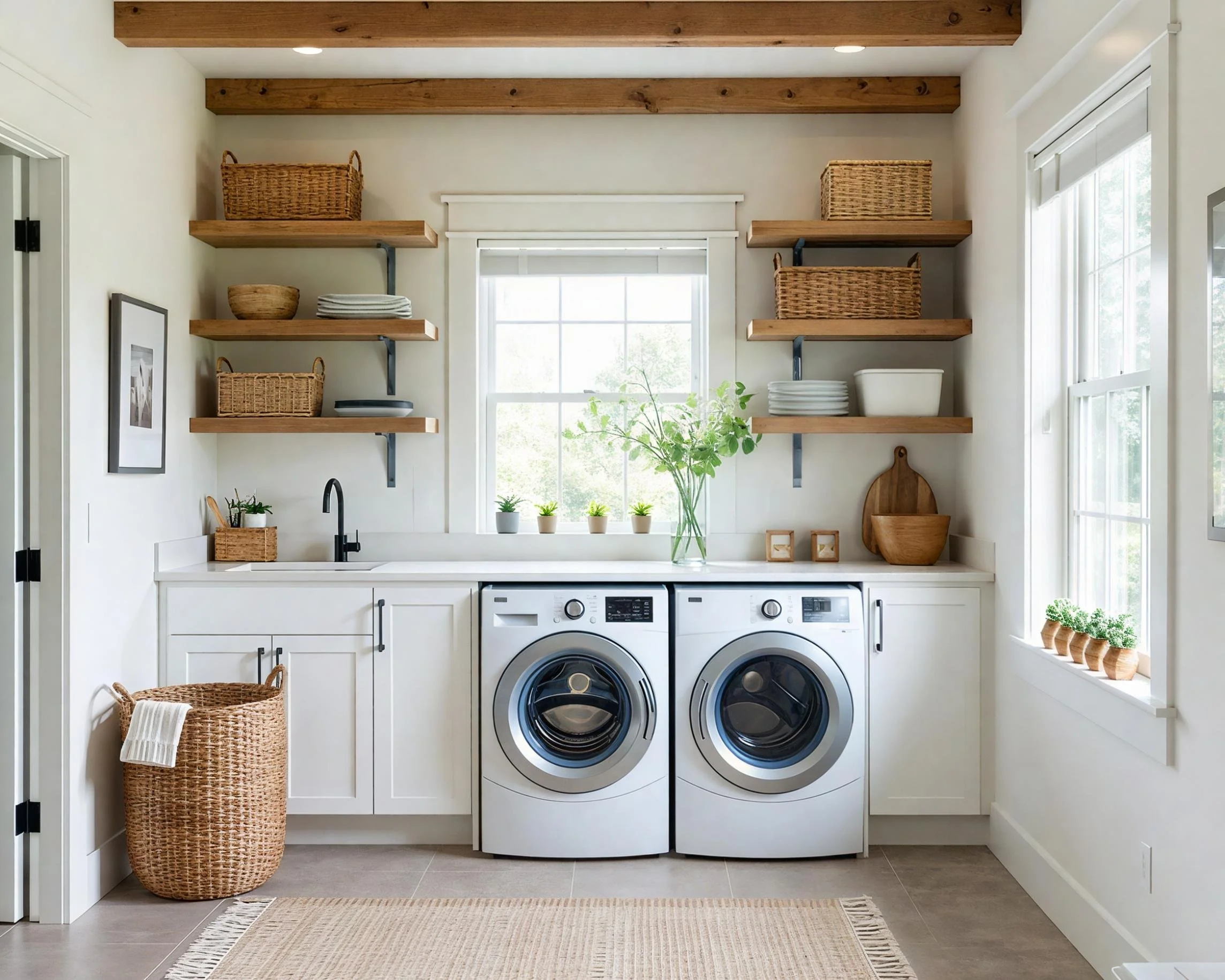
If you could put your laundry room anywhere in your home, where would you put it?
For years, the answer seemed obvious: get it out of the basement.
In many older homes, the washer and dryer were automatically relegated to a corner of the basement, often beside the furnace, utility sink and a collection of things nobody quite remembers putting down there. Newer homes began moving laundry rooms to the main floor, which certainly seemed like an improvement.
And in many cases, it is.
But homeowners often point out something interesting to us:
“All of our clothes are upstairs. Why am I carrying everything downstairs to wash it and then carrying it all back upstairs again?”
Good question.
Moving the laundry room from the basement to the main floor eliminates one flight of stairs, but it doesn't necessarily eliminate the problem.
That's why more homeowners are considering second-floor laundry rooms.
So, which location actually makes the most sense?
As with most renovation decisions, there isn't one right answer. It depends on your house, your family, your available space and how you actually do laundry.
Let's look at the options.
Is a Second-Floor Laundry Room Worth It?
For many families, absolutely.
Think about where most of your laundry comes from. Clothing is usually stored in bedrooms. Towels are usually stored in or near bathrooms. Sheets and bedding come from bedrooms.
And where are all of those rooms in most two-storey homes?
Upstairs.
A second-floor laundry room puts the washer and dryer close to where the laundry is generated and, more importantly, where most of it needs to go when it's clean.
Instead of hauling hampers down one or two flights of stairs and carrying them all the way back up again, you're moving laundry a relatively short distance.
This is usually the next question — and it's a good one.
If you have four bedrooms and four kids, you're probably not excited about sacrificing an entire bedroom to create a laundry room.
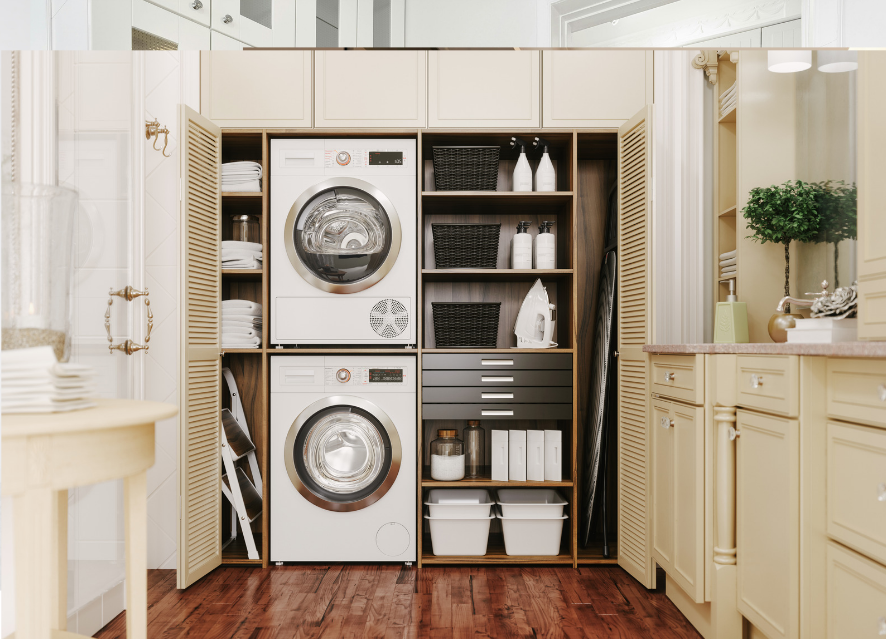
Fortunately, you may not have to.
A second-floor laundry area doesn't necessarily need to be a large room with cabinets, countertops and a sink. Sometimes the best solution is much smaller.
One possibility is converting an existing linen closet.
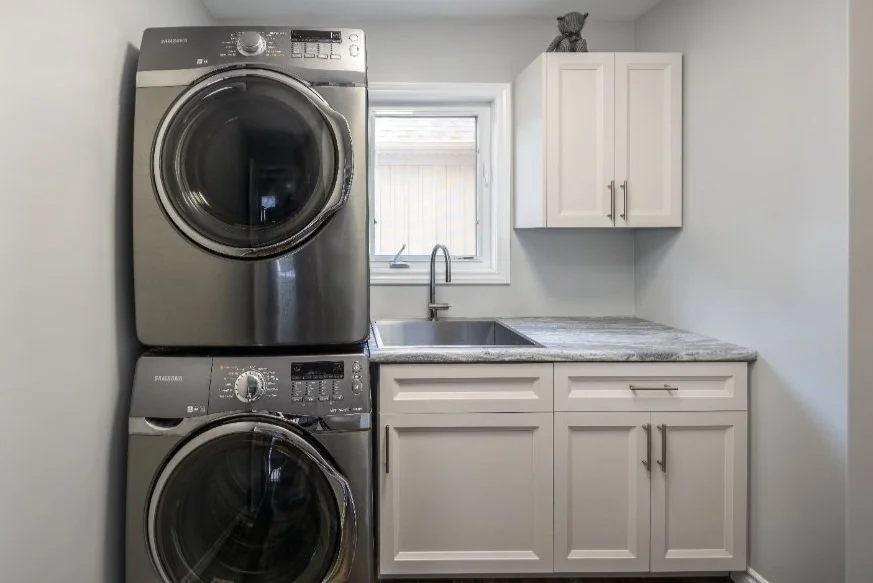
A stackable washer and dryer can require considerably less floor space than traditional side-by-side machines. Depending on the layout of the home and the location of plumbing, electrical and venting, an existing closet may be able to become a compact laundry area.
In other homes, it may make sense to borrow space from a large bedroom closet, hallway, oversized bathroom or another underused area.
Thinking about moving your laundry room to a more convenient location? Whether you're considering an upstairs laundry closet, a main-floor setup or simply making better use of the space you already have, we're always happy to help you explore the possibilities. Sometimes a small change can make a big difference in how your home works for you.
And sometimes there is a bedroom that isn't serving much of a purpose anymore.
If your children have moved out and you're using one bedroom to store things you haven't looked at since 2017, converting part of that space into a comfortable laundry room might improve your day-to-day life far more than keeping an unused bedroom intact.
The important thing is not to start with:
“Where can we fit a washer and dryer?”
Start with:
“How could we make laundry easier in this house?”
Those are two very different renovation questions.
What Are the Downsides of Second-Floor Laundry?
There are some, and they're worth considering before making the move.
The biggest concern we hear is water.

What happens if the washing machine leaks?
A washing machine leaking in a basement is unpleasant.
A washing machine leaking on the second floor can potentially damage the flooring, the subfloor and the ceiling and walls below it.
That doesn't mean you shouldn't have second-floor laundry. It means the installation needs to be planned properly.
Depending on the circumstances, precautions can include a washing machine drain pan, appropriate drainage, accessible shut-off valves and leak-detection or automatic shut-off devices.
This is one of those renovations where what's behind the finished walls and underneath the machine matters every bit as much as how pretty the laundry room looks when it's finished.
What about noise and vibration?
That's another consideration.
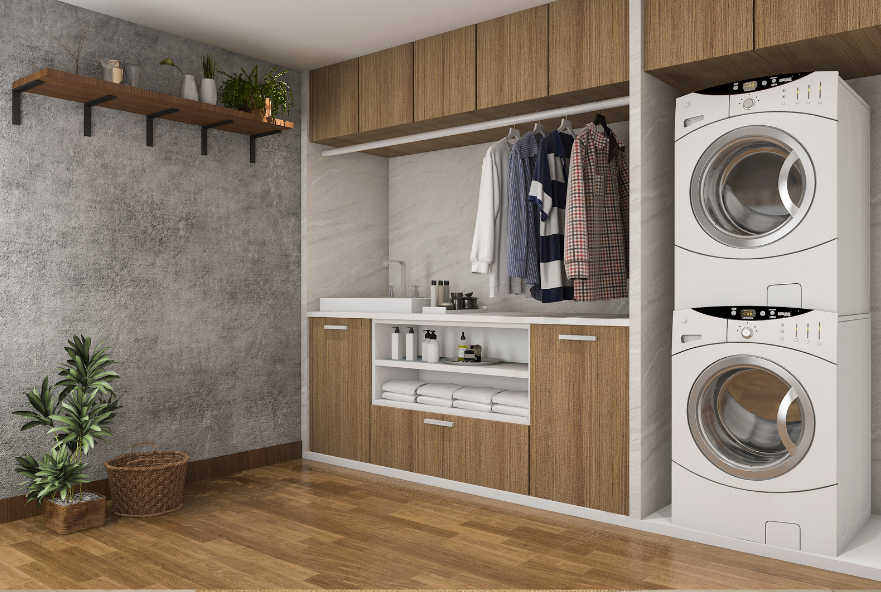
A washing machine spinning a load of towels can produce vibration, and you probably don't want your teenager's 11 p.m. laundry load making the primary bedroom feel like there's a helicopter landing beside it.
The existing floor structure, machine selection, location and installation can all make a difference.
If you're designing a second-floor laundry area, think about which rooms share walls with it and what's directly underneath it.
A laundry area beside a bathroom and over a kitchen may be a very different proposition from one immediately beside the primary bedroom and directly above the family room.
Is Main-Floor Laundry Still a Good Idea?
Definitely.
Second-floor laundry gets a lot of attention because of its convenience, but main-floor laundry can be the better choice for many households.
If your primary bedroom is on the main floor, putting the laundry upstairs wouldn't make much sense.
Main-floor laundry can also be a great option for homeowners who want to reduce how often they use stairs.
This is particularly worth thinking about if you're renovating a home you plan to stay in for many years.
The perfect layout for your family at 45 may not be the perfect layout at 65 or 75.
A main-floor laundry room can be part of planning a home that continues to work for you as life changes.
It can also be very convenient when the laundry room doubles as a mudroom near a side or garage entrance. Dirty work clothes, wet towels, muddy kids' clothes and other messes can go straight into the wash instead of travelling through the house.
So while main-floor laundry doesn't eliminate carrying bedroom laundry downstairs, it may offer other conveniences that matter more to your family.
What About Keeping the Laundry Room in the Basement?
We shouldn't automatically declare the basement the loser here.
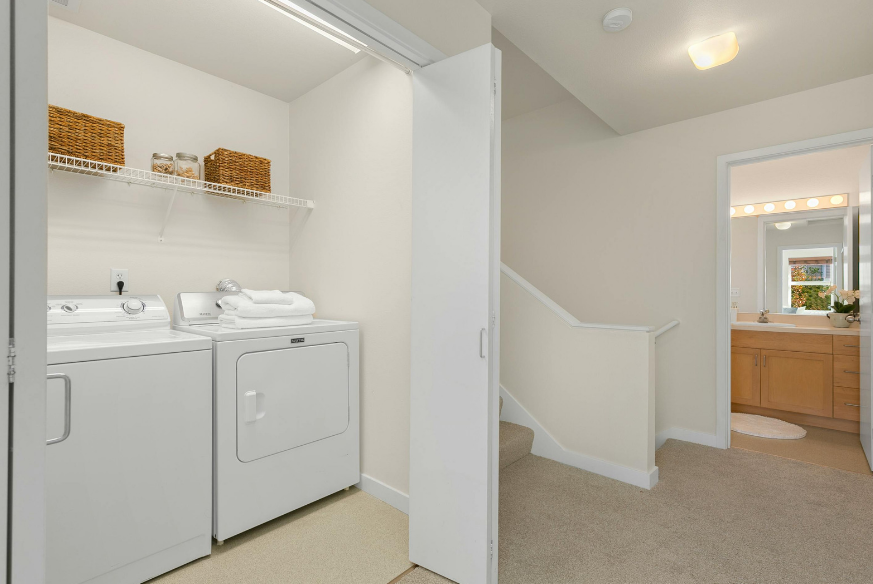
Sometimes leaving the laundry exactly where it is makes perfect sense.
If your washer and dryer are already in a functional basement laundry room, relocating them can involve plumbing, electrical, drainage, venting, framing, drywall and finishing work.
That's a significant renovation just to avoid some stairs.
If you're comfortable using the basement, the existing laundry area works well and you don't have another compelling reason to move it, spending that renovation budget somewhere else may make more sense.
You could also improve the basement laundry area instead.
Better lighting, shelving, cabinets, a countertop for folding, a utility sink and attractive flooring can turn a gloomy laundry corner into a much more pleasant workspace without relocating the plumbing to another floor.
And there is one undeniable advantage to basement laundry:
If something leaks, you're generally much happier discovering it in the basement than watching water come through your dining room ceiling.
Should You Move Your Laundry Room While You're Already Renovating?
This can be one of the best times to consider it.
If you're already renovating an upstairs bathroom, opening ceilings or walls, replacing flooring or making significant changes to the plumbing, ask whether this is an opportunity to improve the laundry setup at the same time.
Sometimes a project that would be expensive and disruptive on its own becomes much more practical when other renovation work is already happening.
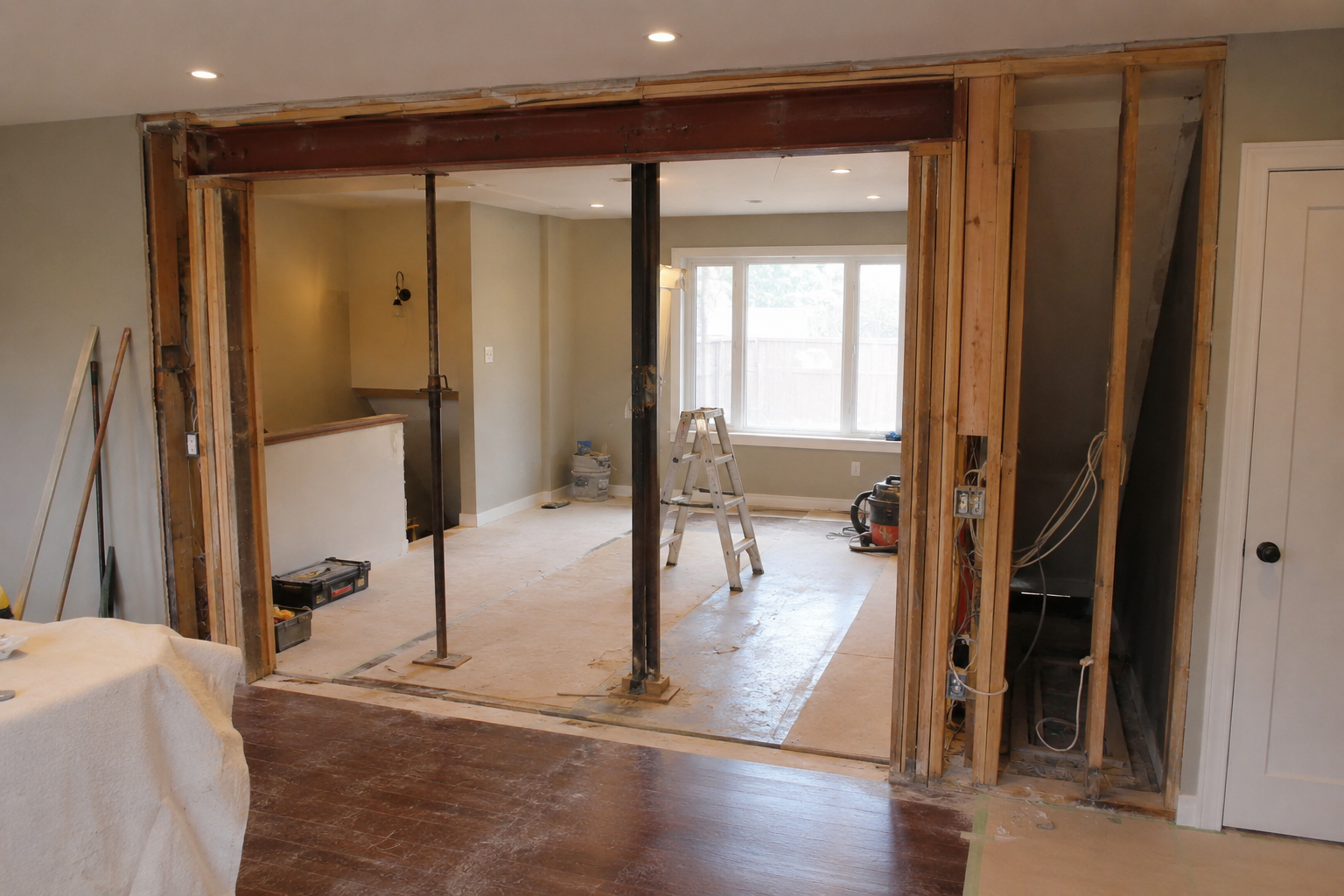
For example, if walls are already open, accessing plumbing, drainage or electrical systems may be considerably easier than returning two years later and opening finished spaces again.
That doesn't mean you should add work just because you're renovating.
It means it's worth looking at the house as a whole before closing everything back up.
Does a Laundry Room Need a Sink?
No.
Would one be nice? Absolutely.
But if space is limited, we wouldn't sacrifice a practical laundry location just because there isn't enough room for a sink.
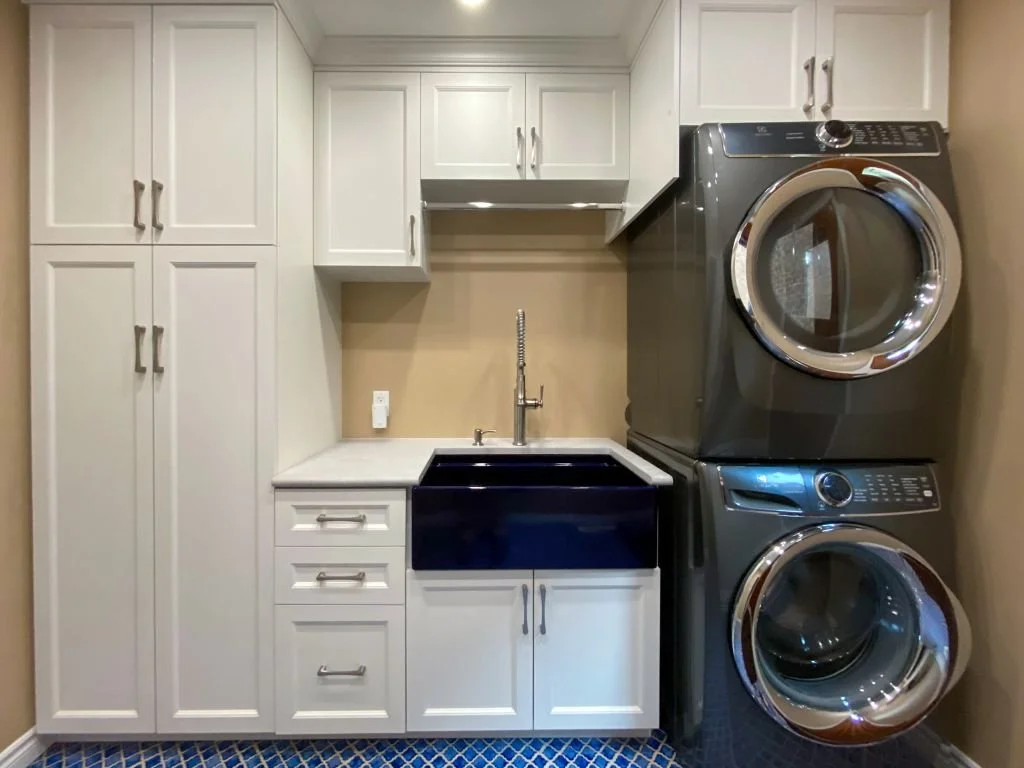
A compact second-floor laundry closet containing a stackable washer and dryer may make your life much easier even without cabinets, a sink or a folding counter.
If you do have the room, those extras can certainly make laundry more enjoyable.
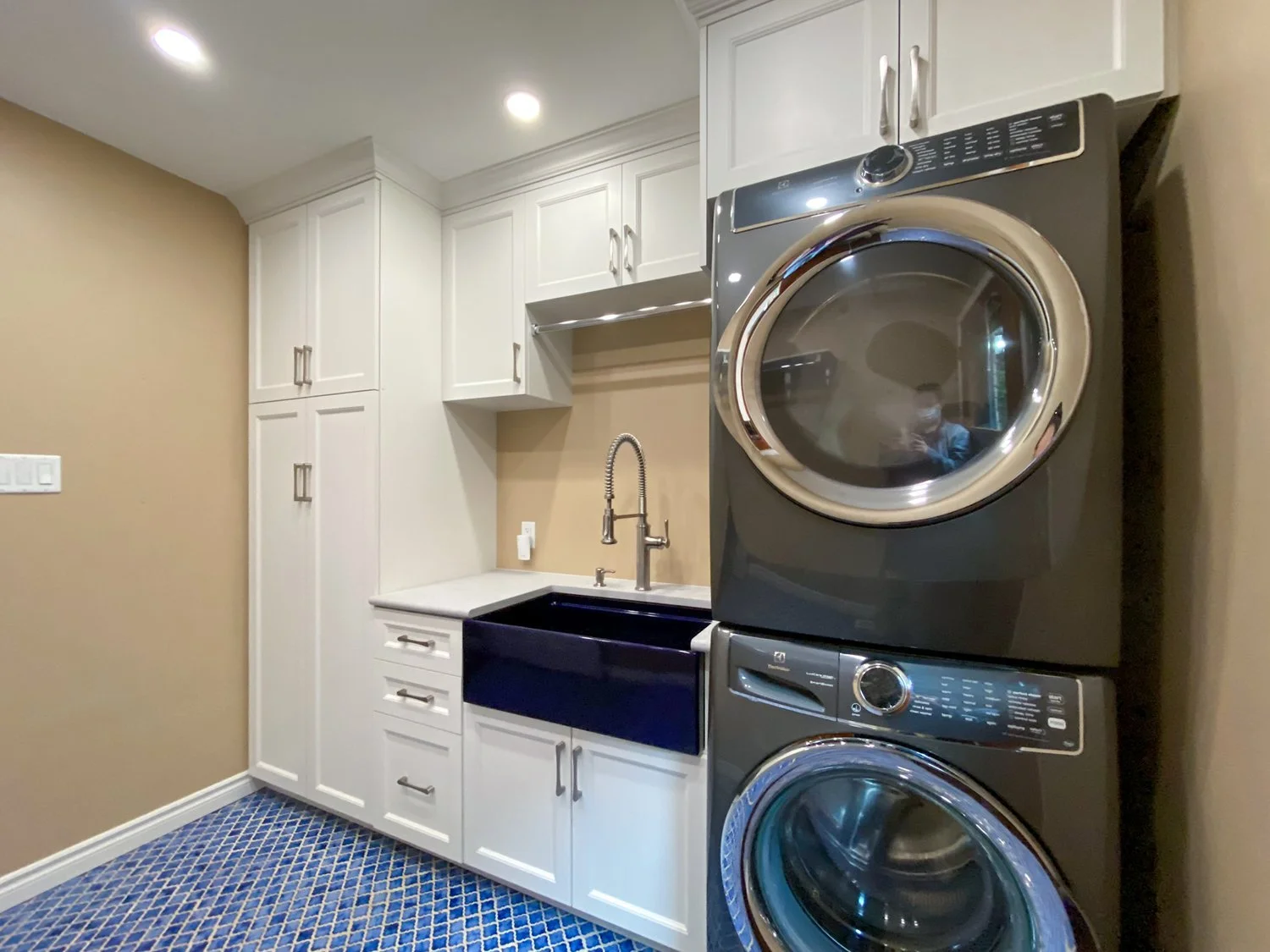
A counter gives you somewhere to fold clothes. Cabinets keep detergents and cleaning products out of sight. A hanging rod provides somewhere for clothes that shouldn't go into the dryer.
The goal is to decide which features will actually make a difference to you rather than trying to recreate a giant Pinterest laundry room in a house that doesn't have the space for one.
Side-by-Side or Stackable Washer and Dryer?
This is another decision that can completely change your options.
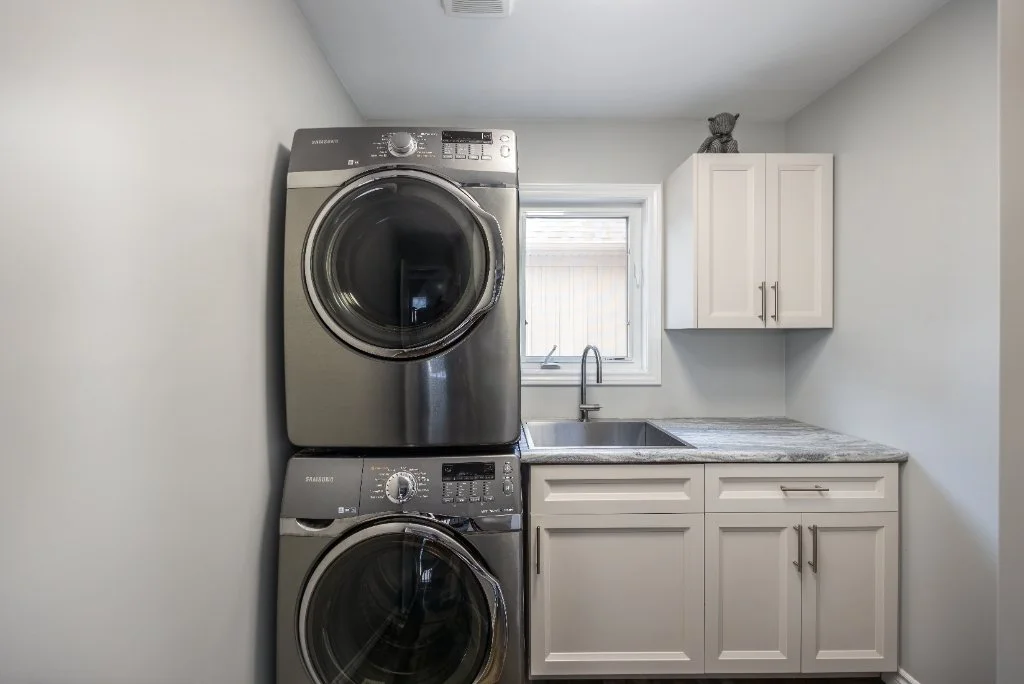
Side-by-side machines give you the opportunity to install a countertop above them, which creates a fantastic folding area. They're also easy to access and can work beautifully in a larger dedicated laundry room.
But don't dismiss stackable machines.
When floor space is at a premium, going vertical can be the difference between having second-floor laundry and not having it at all.
That linen closet you thought was too small?
It might suddenly become very interesting.
A stackable setup can also allow you to use the remaining space for shelves, a narrow cabinet or laundry supplies.
The best configuration isn't necessarily the biggest one. It's the one that makes the best use of the space you have.
What Is the Best Location for a Laundry Room?
Here's our favourite way to answer that question:
Follow the laundry.
Where does most of it come from?
Where does it need to go afterward?
Who does the laundry?
How often do they do it?
Are stairs currently a nuisance, or could they become one in the future?
Do you tend to wash several loads on one dedicated laundry day, or are you constantly throwing in smaller loads throughout the week?
Do you need somewhere for muddy clothes coming through the garage, or are 90% of your loads clothing, towels and bedding from upstairs?
Your answers will tell you far more than a floor plan trend ever will.
For a busy family with several children and all of the bedrooms upstairs, second-floor laundry could be a game changer.
For empty nesters with a main-floor primary bedroom who intend to stay in their home long term, main-floor laundry may be the obvious choice.
For someone who doesn't mind the basement and would rather spend the renovation budget on a new kitchen, leaving the washer and dryer downstairs may be perfectly sensible.
And Don't Forget the Part That Doesn't Show Up on the Floor Plan
Laundry is a chore.
There. We said it.
Some people find folding towels oddly therapeutic, but we're fairly confident nobody has ever jumped out of bed on Saturday morning shouting, “Fantastic! There are six loads of laundry waiting for me!”
A good renovation isn't only about increasing resale value or making a room look better.
Sometimes it's about removing one annoying little thing from your life.
If carrying heavy laundry baskets up and down the stairs is something you dread every week, that matters.
If clothes pile up because doing laundry feels like an expedition to the basement, that matters too.
If having the washer and dryer ten steps from the bedrooms means you can throw in a load, fold it and actually put it away without baskets living on the stairs for the next three days, that's a real improvement to how your home works.
Those small conveniences add up.
Before You Move the Washer and Dryer…
Relocating a laundry room isn't simply a matter of finding an empty closet and plugging in the machines.
You'll need to consider water supply, drainage, electrical requirements, dryer venting, floor structure, ventilation, access, noise and protection against potential leaks.
That's why it's worth looking at the entire space before deciding where the machines should go.
Sometimes the location you initially imagine turns out to be perfect.
Sometimes moving them six feet in another direction makes the project considerably easier.
And sometimes, after looking at all the options, improving the laundry room you already have turns out to be the smartest choice.
The right laundry room isn't necessarily on the second floor, the main floor or in the basement.
It's in the location that makes your home easier to live in.
And really, isn't that what a good renovation is supposed to do?
Ready to Make Laundry Day a Little Easier?
Your laundry room should work for you, not the other way around! Whether you're thinking about moving your washer and dryer upstairs, creating a convenient main-floor laundry area or improving the space you already have, the right layout can make everyday life so much easier.
At Multi-Trade Building Services, we can help you explore your options and find a practical solution that fits your home, your needs and your budget.
Let's talk about how we can make your laundry room work better for you!

From clever space-saving ideas to practical renovation tips, we've got plenty of inspiration to share. Take a look at some of our other articles below—you might just discover your next great home improvement idea!






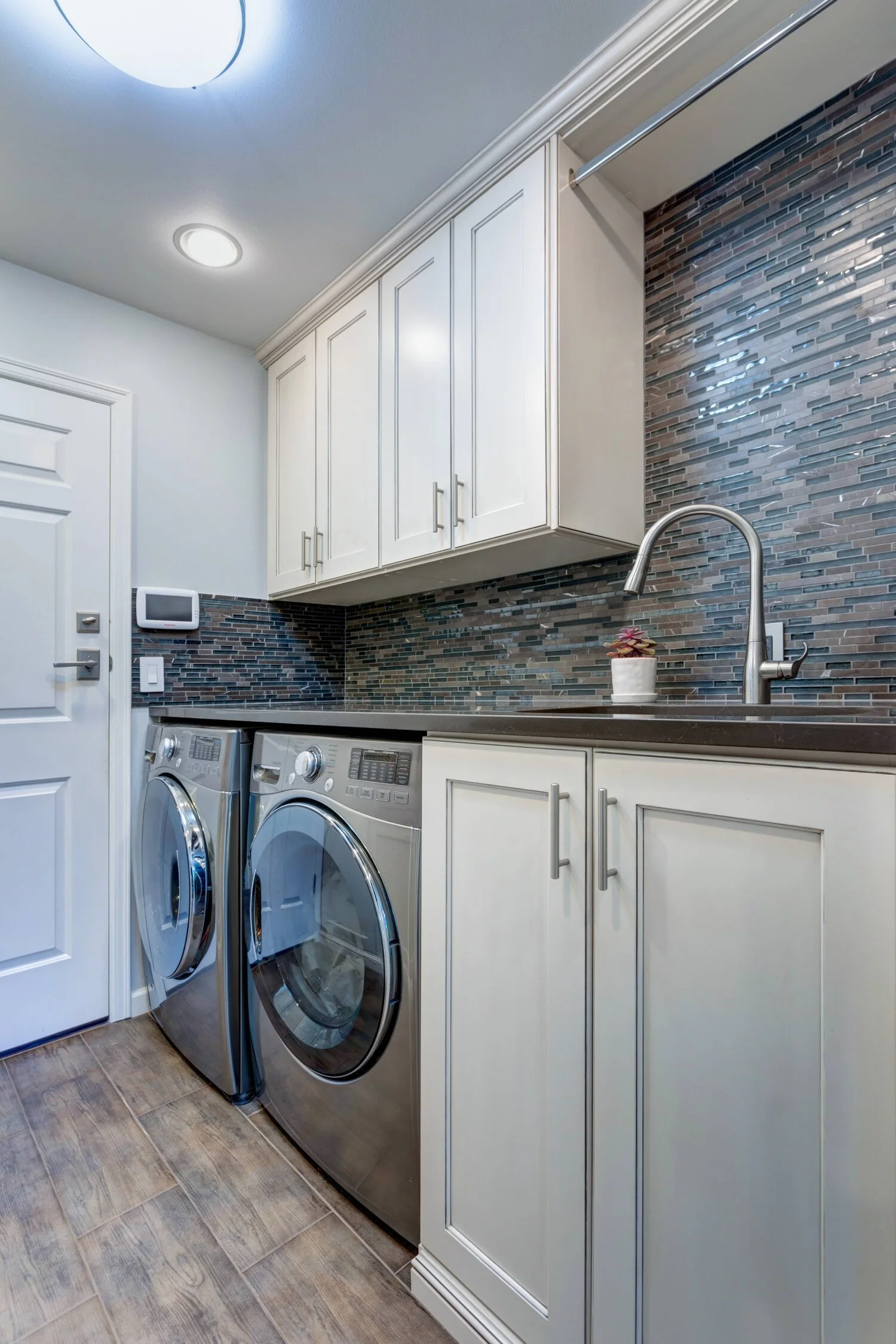










Tired of hauling laundry baskets up and down the stairs? Moving your laundry room could make everyday life a whole lot easier—but is upstairs really the best place for it? From second-floor laundry closets to main-floor convenience and basement upgrades, we explore the pros, cons and practical considerations to help you decide what makes the most sense for your home.