
Can’t Afford the Whole Renovation? How to Renovate in Phases Without Wasting Money
/
You know what you want.
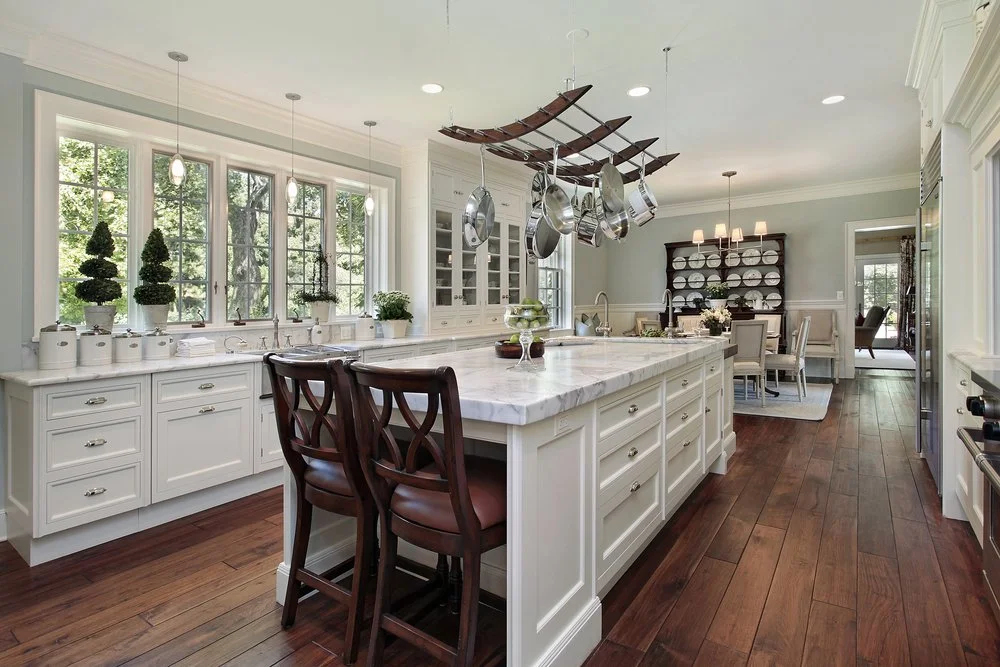
The kitchen cabinets are dated. The countertop has bothered you since the day you moved in. The lighting is terrible. You’ve been saving photos of beautiful kitchens for two years, and you can practically picture exactly what yours could look like.
Then you start getting prices.
And suddenly there’s a rather large gap between the kitchen you’ve been dreaming about and the amount of money you’re comfortable spending right now.
Does that mean you have to give up on the renovation?
Absolutely not.
Sometimes the answer isn’t to make the dream smaller. It’s to make the timeline longer.
We meet plenty of homeowners who have what we jokingly call champagne dreams on a beer budget. There’s nothing wrong with that. You can still have the quartz countertop, beautiful cabinetry, great lighting and gorgeous backsplash you’ve been dreaming about.
You just may not be able to have all of it this year.
The trick is knowing how to renovate in phases without wasting money along the way.
Because there’s a smart way to phase a renovation — and there’s a very expensive way to do it.
Can You Really Renovate a Kitchen in Stages?
Yes. In fact, there are several parts of a kitchen renovation that can often be postponed without causing a problem.
But this is where planning becomes incredibly important.
Imagine sitting across the table from us and saying:
“I hate my countertop. I can afford to replace it now, so I think I’m going to do that. Then in a couple of years, I’ll replace all the cabinets.”
We'd probably tell you to hold off on that countertop.
Not because you shouldn't have the countertop you want, but because replacing it now could mean buying it twice.
Your new countertop will be templated and fabricated specifically for your existing cabinet layout. If your future kitchen changes that layout — perhaps the sink moves, the peninsula disappears, cabinets change size or you add an island — that beautiful countertop probably isn't going to work anymore.
You could spend thousands of dollars today only to remove it when the cabinetry is replaced.
That's exactly what we're trying to avoid when we talk about renovating in phases.
Phasing isn't just dividing a renovation into smaller bills. It means developing the entire plan first and then deciding which portions can safely be completed independently.
That's a very different thing.
Start With the Final Plan — Even If You Can't Build It Yet
This may be the single most important piece of advice in this entire article.
Before beginning Phase One, figure out what Phase Five is supposed to look like.
You don't necessarily need every paint colour or cabinet knob selected. But you should understand the big picture.
Where will the cabinets eventually go? Are you changing the layout? Will appliances move? Will a wall eventually come down? Do you want an island? Will plumbing have to move? Will you eventually add pot lights? Are you planning different flooring?
Think of it like building a road.
You need to know where you're ultimately going before you start paving sections of it.
Otherwise, you can end up spending money today that has to be undone tomorrow.
What Should Be Done First in a Phased Kitchen Renovation?
Every kitchen is different, but anything involving the bones of the room generally needs to be considered early.
That includes structural changes, framing, major plumbing changes, electrical requirements and changes to the basic layout.
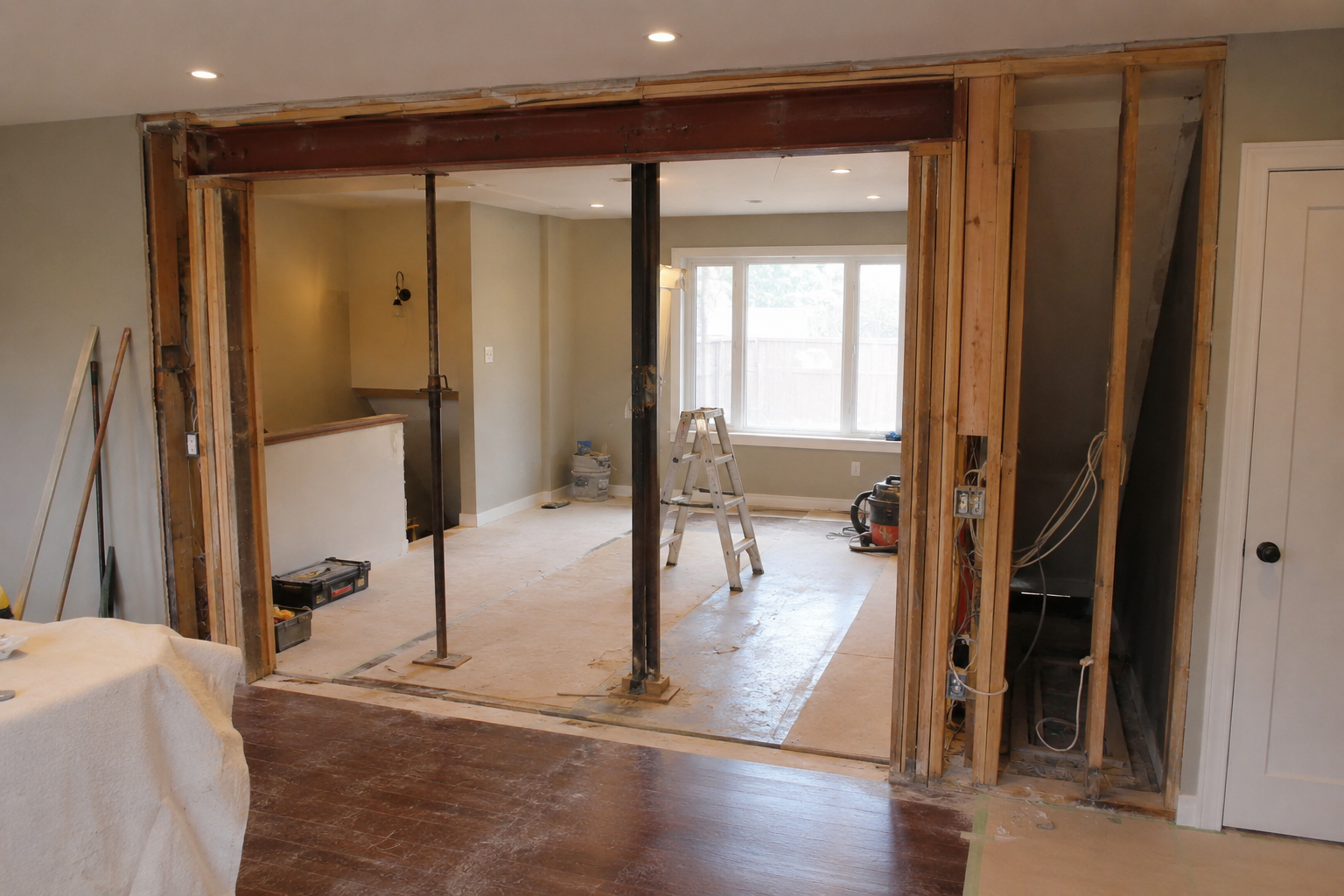
Suppose your dream kitchen eventually includes removing a wall between the kitchen and dining room.
Painting the existing kitchen today isn't much of a problem. You may get a couple of years of enjoyment from that relatively inexpensive improvement.
Installing $8,000 worth of new flooring around the existing kitchen footprint could be another story.
If the future wall removal and cabinet layout affect that flooring, you've potentially created an expensive problem for yourself.
This is why we don't like looking at individual renovation decisions in isolation.
The question isn't simply:
“Can we do this now?”
It's:
“If we do this now, will anything we plan to do later require us to undo it?”
That second question can save you a lot of money.
What Parts of a Kitchen Renovation Can Usually Wait?
Here's the good news: quite a few things can often become later phases.
A backsplash is a perfect example.
If the budget is getting tight after cabinetry and countertops, you don't necessarily have to abandon the backsplash you really want and install a cheaper tile just to finish the room.
Paint the wall.
Live with it for six months.
Save some more money.
Then install the backsplash you actually wanted.
In many kitchens, decorative lighting can also wait. Perhaps the electrical preparation for future pendant lights is completed while the ceiling is open, but the beautiful fixtures themselves are purchased later.
Cabinet hardware can be upgraded later. Decorative accessories certainly can. Some finishing details can wait.
Even under-cabinet lighting may be something that can be phased — provided the necessary wiring and planning are completed at the appropriate stage.
And that's an important distinction.
Sometimes you don't have to buy the final item now.
But you may need to prepare for it now.
Planning a Renovation?

Looking for a more detailed roadmap?
Our 43-page guide, The Homeowner's Guide to Surviving a Renovation, walks you through the entire renovation process from planning and budgeting to construction, inspections, and final completion.
📘 Available now for a limited time at the special introductory price of $4.99
Rough-In Now. Finish Later.
This is one of the best strategies for phased renovations.
Let's say you know you eventually want pendant lights above your island, but the fixtures you love aren't in this year's budget.
Rather than ignoring them completely, it may make sense to complete the electrical work required for those future lights while we're already doing electrical work and while access is easy.
Then the decorative fixtures can come later.
The same principle can apply to plumbing, electrical, ventilation and other behind-the-wall work.
If we know what you're eventually planning, we can often prepare for it during an earlier phase.
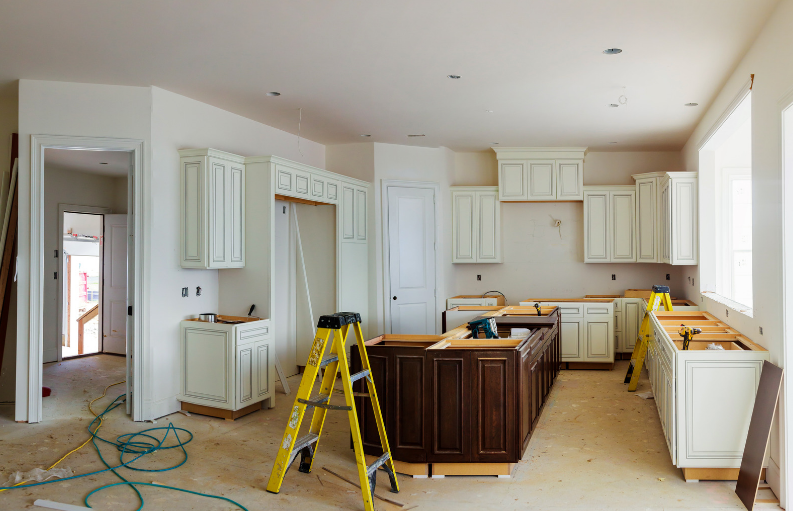
That's usually much easier — and much less expensive — than opening finished walls again two years from now.
This is why telling your contractor about your eventual plans matters, even when those items aren't included in the current budget.
Thinking about renovating but not quite ready to tackle everything at once? A little planning now can help you make smart improvements at a pace that works for your budget—while keeping each step moving you closer to the home you ultimately want.
What Shouldn't You Do Out of Order?
This is where phased renovations can go wrong very quickly.
Some renovation components depend heavily on what comes before them.
Countertops generally depend on the cabinetry beneath them.
Backsplashes usually make sense after countertops.
Cabinetry may depend on flooring decisions and the overall room layout.
Plumbing and electrical work may need to happen before drywall and finished surfaces.
Trim comes after the things it is trimming.
And painting something that is about to be demolished probably isn't the greatest use of your renovation budget.
That doesn't mean there's one universal renovation sequence that works for every home. There isn't.
It means we need to look at dependencies.
If Item B depends on Item A, don't spend money finishing Item B while you're still planning to change Item A.
Bathrooms Can Be One of the Easiest Renovations to Do in Phases
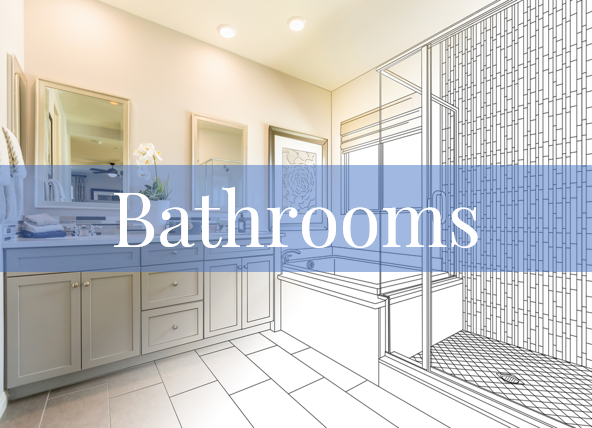
We’ve talked quite a bit about kitchens, but bathrooms are actually one of the easiest rooms to renovate in stages — as long as those stages are chosen carefully.
And sometimes the reason for phasing a bathroom isn't simply financial.
Maybe you have big plans for your bathroom eventually, but your mom lives with you and she's having knee replacement surgery in three months. Getting her leg over the side of the existing bathtub is about to become difficult — or perhaps impossible.
You don't necessarily have to find the money for an entire bathroom renovation right now.
You can deal with the thing that matters most.
Remove the bathtub. Convert that area to a properly built walk-in shower. Make the bathroom safer and more accessible for your mom.
Then stop.
The existing vanity can stay. The toilet can stay. The flooring may be able to stay, depending on how the shower conversion affects it. The walls don't necessarily need to be freshly painted just because one part of the bathroom was renovated.
A year or two from now, perhaps Phase Two happens. That's when we replace the vanity and countertop, update the toilet, replace the flooring, paint the room, change the mirror and finish the other cosmetic improvements you've been dreaming about.
The important thing is that the walk-in shower you paid for in Phase One is still part of the finished bathroom. We aren't tearing it apart to complete Phase Two.
Sometimes You Don't Even Need a Three-Year Plan
We actually had a client whose bathroom renovation happened almost exactly this way — although she didn't originally tell us she was embarking on a multi-year renovation.
She initially called us because her toilet was leaking.
Since we were already coming in to deal with the toilet, she decided this was a good opportunity to begin making some changes she'd been thinking about. She wanted the old toilet replaced, and she absolutely hated the inexpensive vanity light in the bathroom.
So that was Phase One.
We replaced the toilet, removed the old vanity light and installed three pot lights.
And then we left.
No new vanity. No new shower. No new flooring. No complete bathroom renovation.
About a year later, she called us again.
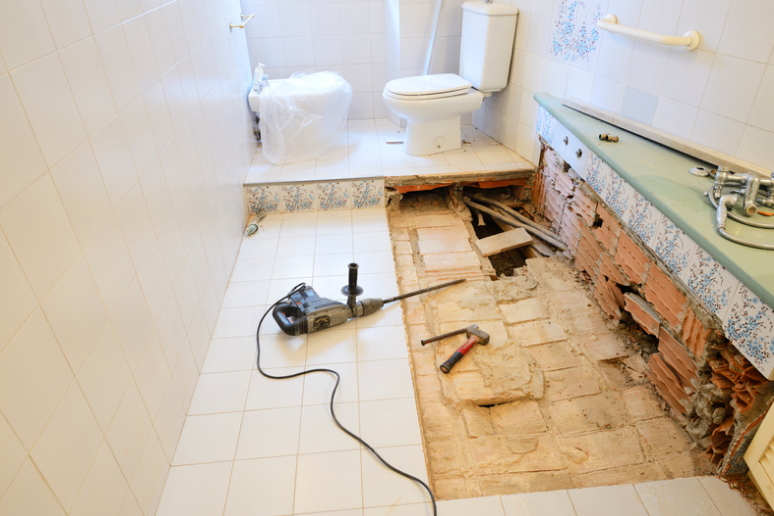
This time, she was ready to tackle the bathtub, so we converted the existing tub area into a walk-in shower.
That was Phase Two.
Roughly two years after that, she called us back again. This time we replaced the vanity and mirror and painted the bathroom.
Phase Three.
By the end, she had essentially renovated her bathroom over several years without ever having to fund the entire project at once.
The interesting part?
We didn't even know during that first visit that this was going to become a three-phase bathroom renovation.
And in this particular situation, it didn't matter.
The toilet could be replaced independently.
The pot lights could be installed independently.
The tub-to-shower conversion could be completed independently.
The vanity, mirror and painting could all wait.
Each project improved the bathroom without creating something that would have to be demolished simply because she was ready for the next phase.
That's phased renovating at its best.
But Bathroom Phasing Still Requires Some Forward Thinking
There is one caution here.
Just because bathrooms can be relatively easy to renovate in phases doesn't mean every bathroom project should automatically be divided up.
If you know you're going to completely change the bathroom layout, move the toilet, relocate the shower, change plumbing locations or alter walls, we want to know that before Phase One begins.
The same principle we've been talking about throughout this article still applies:
Will the work we're doing today interfere with the work you want to do tomorrow?
If the answer is no, there may be absolutely nothing wrong with moving ahead.
And sometimes there is another very good reason for doing one bathroom phase sooner rather than later: you need it now.
A leaking toilet needs attention.
An inaccessible bathtub may need to become a walk-in shower before someone's surgery.
Poor lighting may genuinely make the room difficult to use.
A failing exhaust fan can contribute to moisture problems and shouldn't necessarily wait several years just because a larger renovation is somewhere on the wish list.
Not every phase has to be dictated by what looks prettiest or what makes the biggest visual transformation.
Sometimes Phase One is simply:
What would make this bathroom safer, more functional or more comfortable for us right now?
Then we make sure the answer to that question doesn't prevent you from creating the bathroom you really want later.
What About Renovating a Basement in Phases?
Basements are another place where phased renovations can work extremely well.
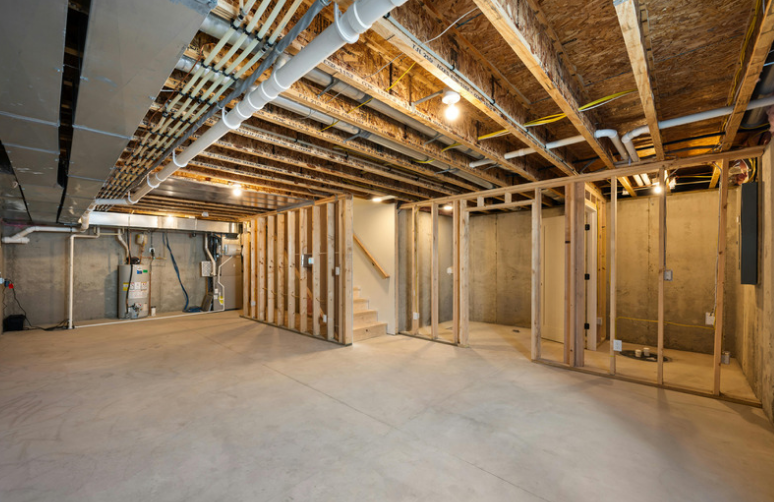
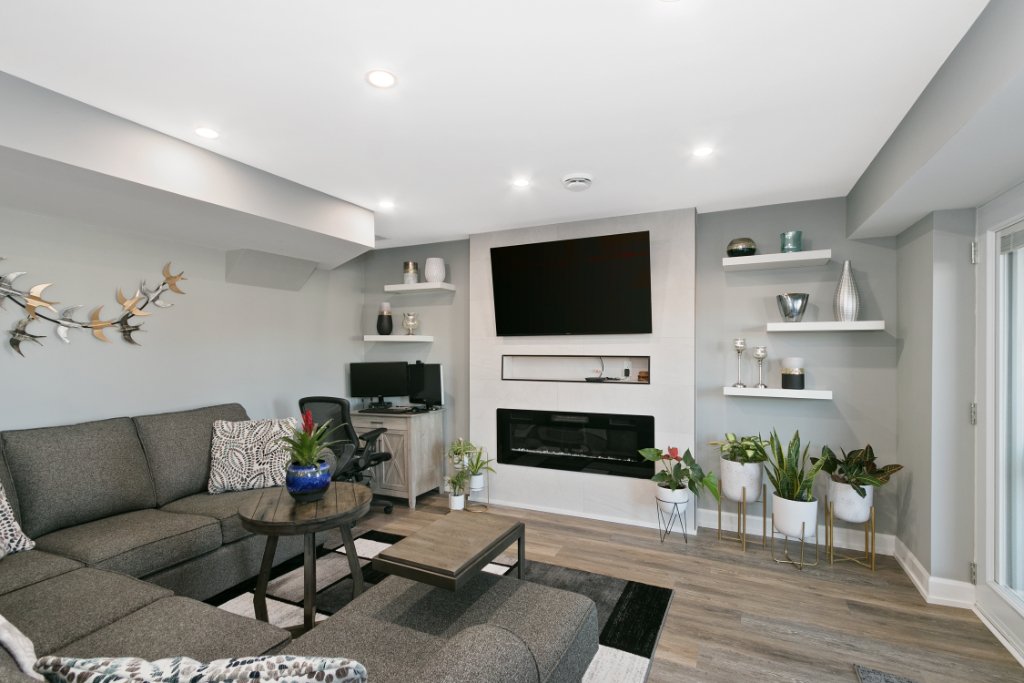
Maybe you've bought a house with a fantastic walkout basement. You can picture a family room, beautiful bathroom, home office, maybe even a wet bar someday.
Unfortunately, the basement currently looks like it hasn't changed since 1986 — because it hasn't.
And there simply isn't enough money to do everything.
Again, start with the eventual plan.
If the basement will eventually have a bathroom, where will it go?
Will you need plumbing below the concrete?
Where will walls eventually be built?
What electrical circuits will be needed?
Will the ceiling remain open or eventually be drywalled?
Are there moisture issues that should be dealt with before anything decorative happens?
A basement is a terrible place to spend money making something pretty before addressing what's happening behind, underneath or above it.
Water intrusion, foundation concerns, drainage issues, electrical deficiencies and plumbing requirements don't become less important because we'd rather spend the money on flooring.
The pretty stuff is much more fun.
The infrastructure is what protects the pretty stuff.
Don't Confuse “Cheaper Now” With “Cheaper Overall”
This is probably one of the biggest traps in phased renovating.
Suppose you have $15,000 available toward a kitchen that will eventually cost considerably more.
It can be tempting to ask:
“What can we finish for $15,000?”
Sometimes that's the wrong question.
A better question may be:
“What can we do with this $15,000 that moves us toward the finished kitchen without having to redo anything?”
Those aren't necessarily the same answer.
Maybe Phase One isn't visually dramatic.
Maybe it's structural work, electrical upgrades, plumbing changes and preparation.
That's not particularly exciting on Instagram.
But when Phase Two begins, every dollar you spent during Phase One is still contributing toward the final result.
That's what good phasing looks like.
Should You Buy Cheaper Materials Just So You Can Finish Everything Now?
Not necessarily.
There are certainly places where less expensive materials perform beautifully, and we're big believers in spending money where it matters rather than simply choosing the most expensive option.
But that's different from abandoning something that's genuinely important to you just to finish everything immediately.
If you've wanted a particular quartz countertop for years and the budget doesn't quite stretch far enough, perhaps the backsplash waits.
If the cabinetry you really want is well made and should serve you for decades, perhaps decorative lighting comes next year.
There's a big difference between value engineering and settling.
Sometimes a less expensive product is absolutely the smart choice.
Sometimes waiting is the smart choice.
Be Careful With Temporary Renovations
There's another temptation when money is tight:
“We'll just put something inexpensive in for now.”
Sometimes that's perfectly reasonable.
A coat of paint that makes an ugly room more pleasant for the next three years? Absolutely.
An inexpensive light fixture replacing something you hate, knowing it can easily be swapped later? Fine.
Spending several thousand dollars on something you already know will be ripped out during the real renovation?
That's where we'd want to have a conversation.
Ask yourself three questions:
How much will this temporary improvement cost?
How long am I realistically going to live with it?
Can any of it be reused in the eventual renovation?
A $300 improvement that makes you happy for four years may be money well spent.
A $7,000 improvement that gets demolished 18 months later probably isn't.
Can You Live Through a Renovation That's Done in Phases?
This is something people don't always consider.
Breaking a renovation into phases can make it much easier financially, but it can also mean living with renovation activity more than once.
Your kitchen might be disrupted this year and again next year.
Trades may have to return.
Furniture may have to move again.
There may be additional setup, protection, cleanup and mobilization costs each time.
So phasing isn't automatically cheaper in every respect.
The goal isn't necessarily to make the total renovation cost less.
The goal is to make the cash flow manageable while minimizing duplicated work and unnecessary expense.
That's an important difference.
How Far Apart Should Renovation Phases Be?
There isn't a magic number.
For one homeowner, Phase Two might happen six months later after they've rebuilt their savings.
For someone else, it might be two years.
That's okay.
Your house doesn't care whether your backsplash was installed six weeks or sixteen months after your countertop.
What matters is that the unfinished phase is safe, functional and planned properly.
And don't underestimate how much your financial situation can change over time.
You may receive a bonus. Finish paying off a vehicle. Build your savings. Get a raise. Pay down debt. Or simply have another year to put money aside.
A renovation doesn't have to happen all at once to be successful.
Tell Your Contractor What You Ultimately Want
This is one of those conversations we wish more homeowners would have.
Don't be embarrassed to say:
“This is my dream, but this is what I can afford right now.”
That's useful information.
If we only know about Phase One, we can only plan for Phase One.
If you tell us where you eventually want to end up, we can look for opportunities to make today's work compatible with tomorrow's renovation.
Maybe we run something inside a wall now.
Maybe we position something differently.
Maybe we recommend waiting on one particular purchase.
Maybe we tell you that something you thought had to happen immediately can easily be added later.
Or maybe we'll tell you that one particular item really does need to happen now because postponing it will make the later work much more expensive.
That's the value of having the whole conversation.
Your Budget Doesn't Have to Kill Your Dream Renovation
We think homeowners sometimes feel as though there are only two options:
Do the entire dream renovation now.
Or don't renovate.
There's a third option.
Plan the entire renovation now — and build it when you can.
Maybe the kitchen takes two years.
Maybe the basement takes three phases.
Maybe you live without the beautiful backsplash for a while.
Maybe those gorgeous pendant lights are your Christmas present to yourself next year.
Who says everything has to happen on the same Tuesday?
Having a limited renovation budget doesn't necessarily mean choosing a kitchen, bathroom or basement you don't really want.
Sometimes it simply means being patient.
Plan backwards from the finished space. Do the work that other work depends on first. Prepare behind the walls while they're accessible. Postpone the things that can easily be added later. Avoid spending significant money on anything you already know will eventually be removed.
And above all, don't think of a phased renovation as a collection of little unrelated projects.
Think of it as one renovation with a longer timeline.
Your champagne dreams are still allowed.
We may just have to serve them one glass at a time.
Your Dream Renovation Doesn’t Have to Happen All at Once
If you have a bigger vision for your home than your current budget allows, Multi-Trade Building Services can help you create a renovation plan that makes sense now and for the future. By looking at the whole picture from the beginning, we can help you determine what should happen first, what can wait, and how to avoid spending money on work that may need to be redone later.
Contact us today to start planning a renovation that can grow with your budget and your timeline.

Looking for more renovation ideas and practical advice? Explore the articles below for more tips to help you plan your next home project with confidence.










A great home office doesn’t require a huge dedicated room or an expensive renovation. With thoughtful planning, even a spare bedroom, awkward alcove or underused corner can become a comfortable, functional place to work. Learn what to consider when creating a workspace that supports your workday—without letting work take over your home.