
Working From Home? How to Create a Home Office That Actually Works
/
Working from home sounds wonderful in theory, doesn’t it?
No commute. Your own coffee. You can throw a load of laundry in between meetings, eat lunch in your own kitchen and, depending on your job, perhaps even get away with wearing slippers for most of the day.
But then you actually start working from home.
Your laptop ends up permanently parked on the dining room table. Papers start migrating across the kitchen counter. Your charging cord is stretched across the floor. The lighting is terrible. Your back hurts. Someone keeps moving your stuff because, apparently, they would like to use the dining table for dining.
And suddenly that wonderful home office you imagined looks nothing like reality.
If this sounds familiar, grab a coffee and let’s talk about it.
Because creating a home office that actually works isn't necessarily about having a beautiful dedicated room with custom built-ins and an enormous window overlooking the garden. Those spaces are lovely, of course, but most of us have to work with the home we already have.
The goal is to create a space that makes working from home easier, more comfortable and a little less stressful.
And yes—you can do that even if your house doesn't seem to have an obvious place for an office.
First, Stop Looking for the “Perfect” Home Office
This is probably the biggest hurdle for many homeowners.
You start looking online for home office ideas and suddenly you're seeing enormous rooms with floor-to-ceiling cabinetry, perfectly styled bookshelves and desks the size of dining tables.
Meanwhile, you're standing in your 1,400-square-foot house thinking, Well, that's not happening.
That's okay.
Instead of asking, “Where can I create a proper office?”, try asking:
“Where could I comfortably work for several hours?”
That's a very different question.
A home office can be:
a spare bedroom
part of a guest room
an unused dining room
a corner of a finished basement
an alcove
part of a larger bedroom
a converted closet
an underused sitting room
a section of a family room
or even a thoughtfully designed area at one end of your kitchen
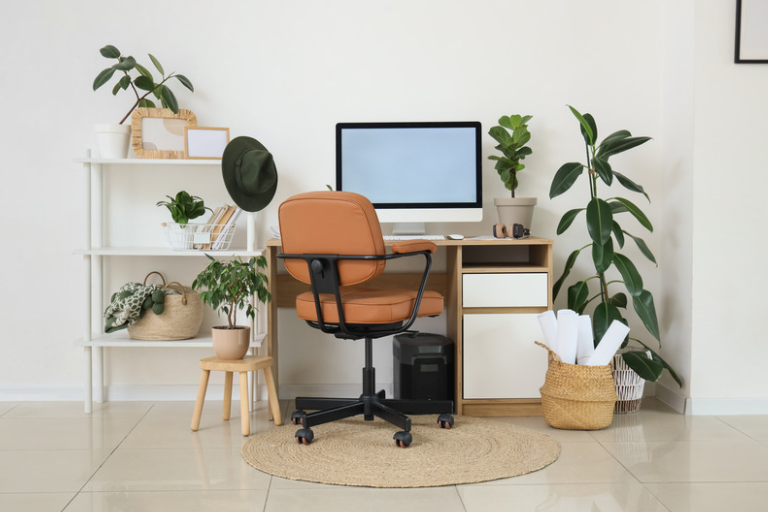
You don't necessarily need an entire room.
What you need is enough space for the way you actually work.
How Much Space Do You Really Need for a Home Office?
Before moving furniture around, think about what happens during your typical workday.
Do you work almost entirely from a laptop?
Do you need two or three monitors?
Do you regularly spread drawings, paperwork or files across your desk?
Do you meet with clients virtually?
Do you need a printer?
Do you need physical filing space?
Are you on the phone throughout the day?
Do you need privacy?
Someone who works primarily from a laptop may be perfectly comfortable with a relatively compact desk. Someone reviewing architectural drawings, managing paperwork or working with multiple screens will need considerably more room.
This is why we always come back to function when designing spaces in a home.
Design the space around what you do—not around what looks pretty in a photograph.
A gorgeous little desk tucked into an alcove isn't a great home office if you need two monitors, a printer and six files open beside you.
Where Is the Best Place to Put a Home Office?
There isn't one answer because every home—and every person—is different.
But there are a few things worth considering.
Natural light
If you have the option, being near a window can make a tremendous difference.
Natural light can make a workspace feel more pleasant and less confined, particularly if you're spending seven or eight hours there.
Just pay attention to where the sun hits your computer screen. A beautiful sunny window directly behind or in front of your monitor can create glare that becomes frustrating very quickly.
Sometimes positioning the desk perpendicular to the window works better.
Noise
This one gets overlooked.
That gorgeous little office nook beside the kitchen might be wonderful at 10:00 in the morning when you're home alone.
At 4:00 in the afternoon when someone is making dinner, the dishwasher is running and the rest of the family has arrived home?
Maybe not so wonderful.
If your work involves frequent phone calls, Zoom meetings or concentrated work, consider household traffic and noise before choosing your location.
Privacy
Ask yourself how much separation you need.
For some people, working in an open area is perfectly fine. Others find it incredibly difficult to concentrate when they can see laundry that needs folding, dishes that need washing or people wandering through the room.
And there is an emotional side to this too.
When your work is constantly visible, it can feel as though you're always at work.
That leads us to something we think is particularly important.
Your Home Office Should Allow You to Leave Work
One of the hardest parts about working from home isn't starting work.
It's stopping.
When your laptop is sitting three feet away from you, it's awfully tempting to answer one more email at 8:30 at night.
Then one email becomes three.
Suddenly you're working again.
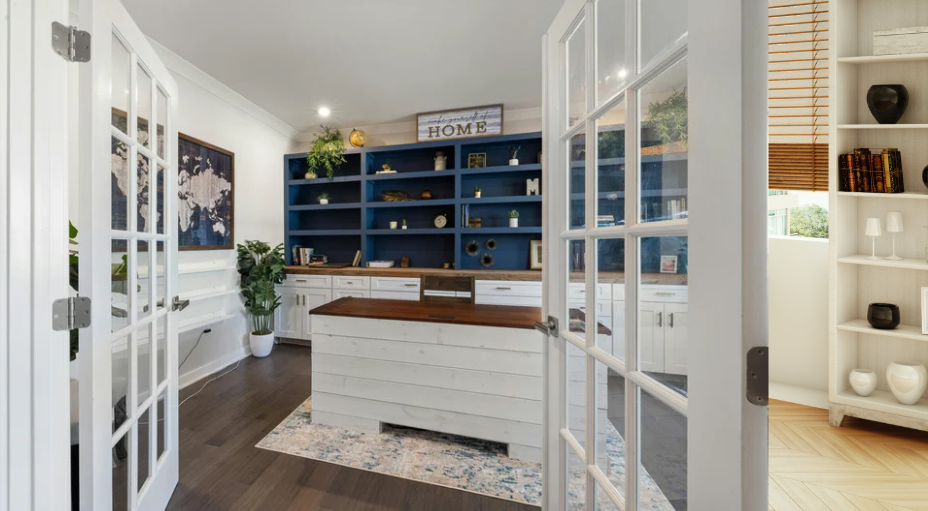
If possible, create some type of physical boundary between your work life and the rest of your home.
A door is ideal, but it isn't the only solution.
You might use cabinetry that allows equipment to be closed away, a screen separating your desk from the living area or even a designated drawer where the laptop and paperwork disappear at the end of the day.
There is something surprisingly powerful about being able to say:
Work is finished.
Your home still needs to feel like home.
Don't Forget About Electrical Needs
Here's something considerably less glamorous than choosing a desk—but much more important.
Where are you plugging everything in?
A modern home office can require power for:
computers
monitors
printers
chargers
lamps
speakers
docking stations
shredders
routers and other equipment

If your plan involves plugging three power bars into one receptacle and running an extension cord underneath a rug, that's a sign that your office setup needs another look.
Depending on the space and your equipment, additional receptacles may make the office significantly more functional.
You may also want receptacles placed where you actually need them, rather than wherever they happened to be installed when the house was built.
For example, adding power near or above desk height can eliminate the daily adventure of crawling underneath your desk looking for the charging plug that fell behind it.
Small detail.
Huge difference.
What About Internet and Wi-Fi?
You can have the nicest office in the world, but if your video freezes every time you join a meeting, you're not going to love working there.
Before committing to an office location, check the Wi-Fi signal.
This is especially important if you're converting part of a basement, a room at the opposite end of the house from your router or an addition.
Depending on your work and home setup, you may need improved Wi-Fi coverage or a wired internet connection.
It's much easier to think about that before you've finished renovating and decorating the room.
Thinking about creating a home office that works better for you? Whether you’re working with a spare room, an unused corner or a space that just isn’t living up to its potential, a few thoughtful changes can make a big difference. Multi-Trade Building Services can help you explore the possibilities and find a solution that works for your home and the way you live.
Lighting Matters More Than You Think
A single ceiling fixture isn't always enough for a home office.
Ideally, you'll have layers of lighting.
General lighting illuminates the room overall, while task lighting gives you additional light exactly where you're working.
A desk lamp can make an enormous difference, particularly during our shorter winter days here in Durham Region.
And if you're frequently on video calls, think about what your face looks like on camera.
A bright window directly behind you can leave you looking like a mysterious silhouette. Harsh overhead lighting isn't terribly flattering either.
You don't need a professional studio setup. You simply want comfortable, even lighting that works for both you and your computer screen.
Your Desk and Chair Are Worth Getting Right
If you work from home occasionally, almost any comfortable setup can work for a few hours.
If you work from home five days a week, that's a different story.
You're potentially sitting at that desk for 30, 40 or more hours every week.
Your chair matters.
Desk height matters.
Monitor height matters.
Leg room matters.
That doesn't mean you need to spend thousands of dollars on office furniture, but ergonomics shouldn't be an afterthought.
Your monitor should generally be positioned so you aren't spending your day looking sharply downward. Your keyboard and mouse should allow your arms and shoulders to remain comfortable, and your chair should properly support you.
A desk that's slightly too high or a chair that's slightly too low might not seem significant during a 20-minute test.
After six hours?
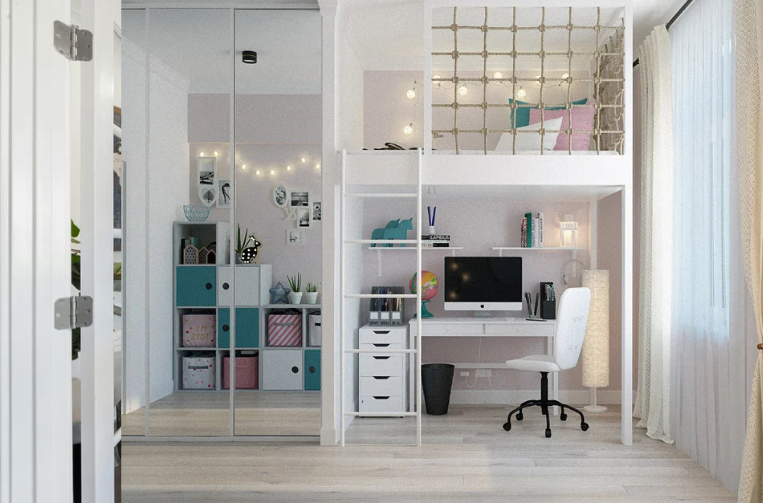
You'll notice.
Storage: You Probably Need More Than You Think
Here's where home offices can get messy very quickly.
At first, it's just a laptop.
Then comes a notebook.
Then a few files.
Then printer paper.
Then receipts.
Then chargers.
Then pens, envelopes, documents, equipment and that mysterious collection of cables nobody wants to throw away because we're all convinced we'll need one of them someday.
Think about storage from the beginning.
You don't necessarily need an entire wall of cabinetry. Sometimes a couple of drawers, a small filing cabinet and shelving are plenty.
Built-in cabinetry can be wonderful when you're creating a permanent office because it allows you to use vertical space and tailor storage to your needs.
The key is giving everything a home.
Otherwise your office slowly expands into the surrounding room.
And nobody wants to discover that their dining room has quietly become the accounting department.
Can You Combine a Home Office With a Guest Room?
Absolutely.
In fact, this is one of our favourite ways to make better use of a room that might otherwise sit empty for most of the year.
Think about it.
If your guest room is used ten nights a year but you're working from home 200 days a year, does it really make sense for the bed to get 90% of the room?
Probably not.
A Murphy bed can be an excellent solution. A daybed or sleeper sofa may work too.
You can also design cabinetry around both functions so the room looks like an office most of the time but can comfortably accommodate guests when needed.
The important thing is being realistic about which function happens most often.
Design the room primarily for everyday life, then figure out how to accommodate occasional needs.
What If You Truly Don't Have a Spare Room?
Then we get creative.
And honestly, some of the best home offices we've seen aren't traditional offices at all.
Look around your home for underused square footage.
Is there an oversized hallway?
An awkward alcove?
A closet filled with things nobody has touched since 2019?
A dining room that's used three times a year?
A finished basement corner?
A landing?
Part of a bedroom?
Sometimes removing closet doors and adding a desktop, lighting, receptacles and shelving can create a surprisingly functional little workstation.
Sometimes cabinetry can transform an unused wall into an office.
And sometimes the answer involves changing how an entire room is used.
Your house doesn't know that the builder labelled something “Dining Room” on a floor plan 25 years ago.
You're allowed to use it differently.
Think About What's Behind You
This is a relatively new home office consideration thanks to video meetings.
What does everyone else see?
You don't need a perfectly styled bookshelf with colour-coordinated books.
But you probably don't want your coworkers looking at your laundry hamper either.
When you're planning desk placement, sit in the chair and look at the room from your computer's perspective.
A simple painted wall, some shelving, cabinetry or even one piece of artwork can create a clean, pleasant background.
And yes, virtual backgrounds exist.
But it's nice when you don't have to depend on one.
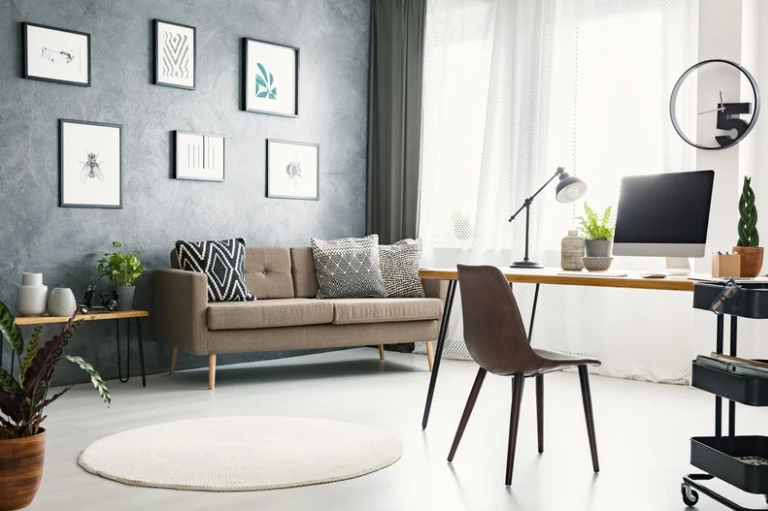
Colour Can Change How the Office Feels
There is no rule saying home offices have to be white, grey or beige.
It's your home.
If a deep blue makes you feel calm and focused, use blue.
If you love warm earthy colours, use them.
If you want something cheerful because you're spending half your waking hours in this room, that's perfectly reasonable too.
Just remember that very dark colours can change how much light you need, particularly in a room with limited natural light.
The best office colour is ultimately one that makes you feel comfortable spending time there.
Should You Renovate to Create a Home Office?
Sometimes you don't need to.
A new desk, better chair, additional lighting and a little organization may solve the problem.
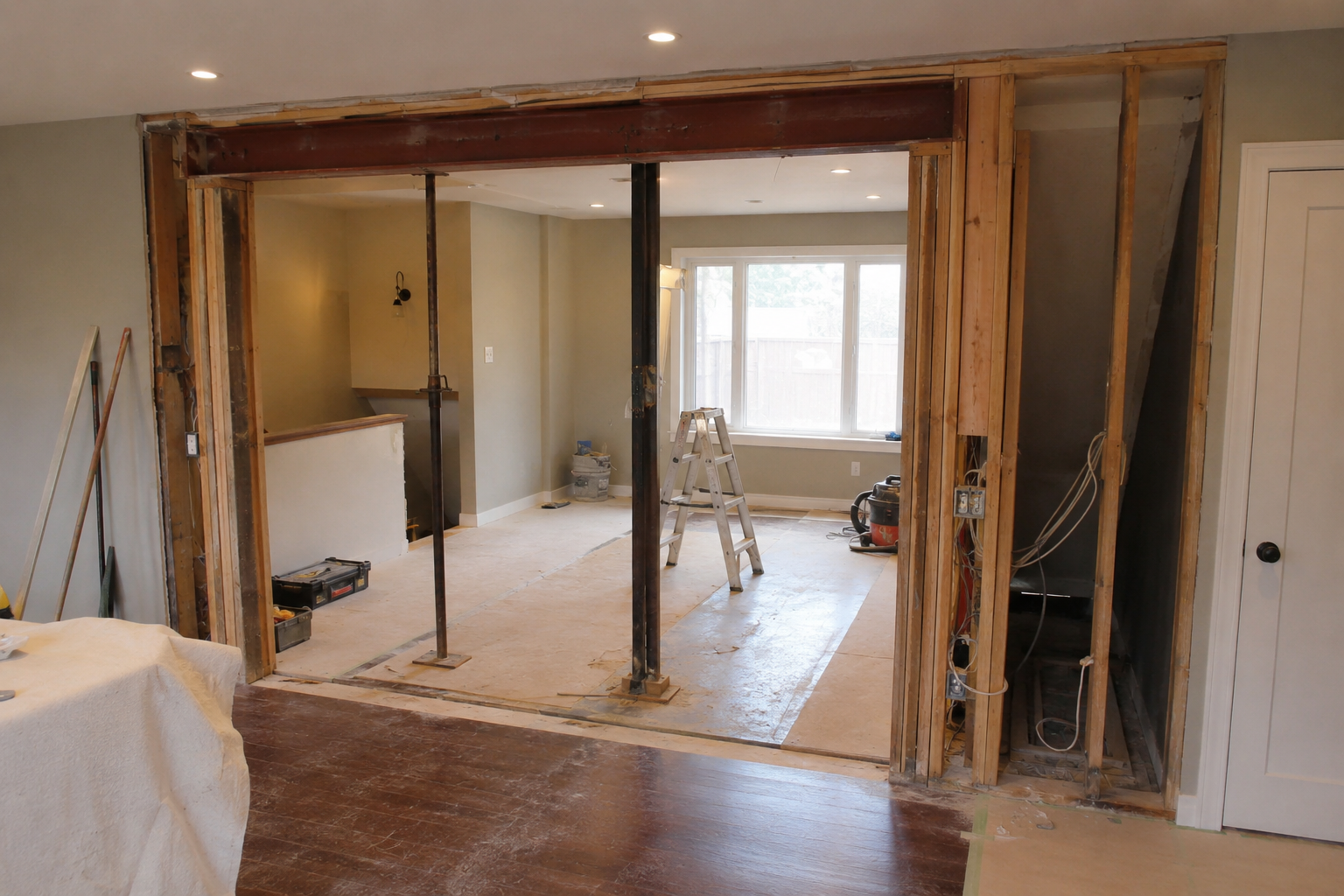
But sometimes a few renovations can turn an awkward or underused area into a genuinely useful part of your home.
That might mean:
adding electrical receptacles
improving lighting
installing built-in cabinetry or shelving
adding or changing a door for privacy
finishing part of a basement
converting a closet
improving insulation
adding soundproofing
repairing or replacing flooring
painting
improving internet connectivity
You don't necessarily need a massive renovation.
Sometimes relatively small changes solve the annoyances you've been putting up with every single day.
What Should You Spend Money on First?
If the budget isn't unlimited—and whose is?—start with the things that affect you every day.
We'd generally prioritize:
Comfort.
A good chair and proper desk setup.
Lighting.
You need to be able to work comfortably without straining your eyes.
Power and connectivity.
Your technology needs to actually work.
Privacy and noise control.
Particularly if you're on calls or sharing your home with other people during the day.
Storage.
Enough to prevent work from taking over the rest of the house.
Decorating can come afterwards.
It's much easier to add a beautiful plant than it is to fix the fact that your desk is six feet away from the only receptacle.
Don't Design Your Office for Instagram
This might be our most important advice.
Design it for Tuesday morning.
Design it for the day you have three meetings, two deadlines and 47 emails waiting for you.
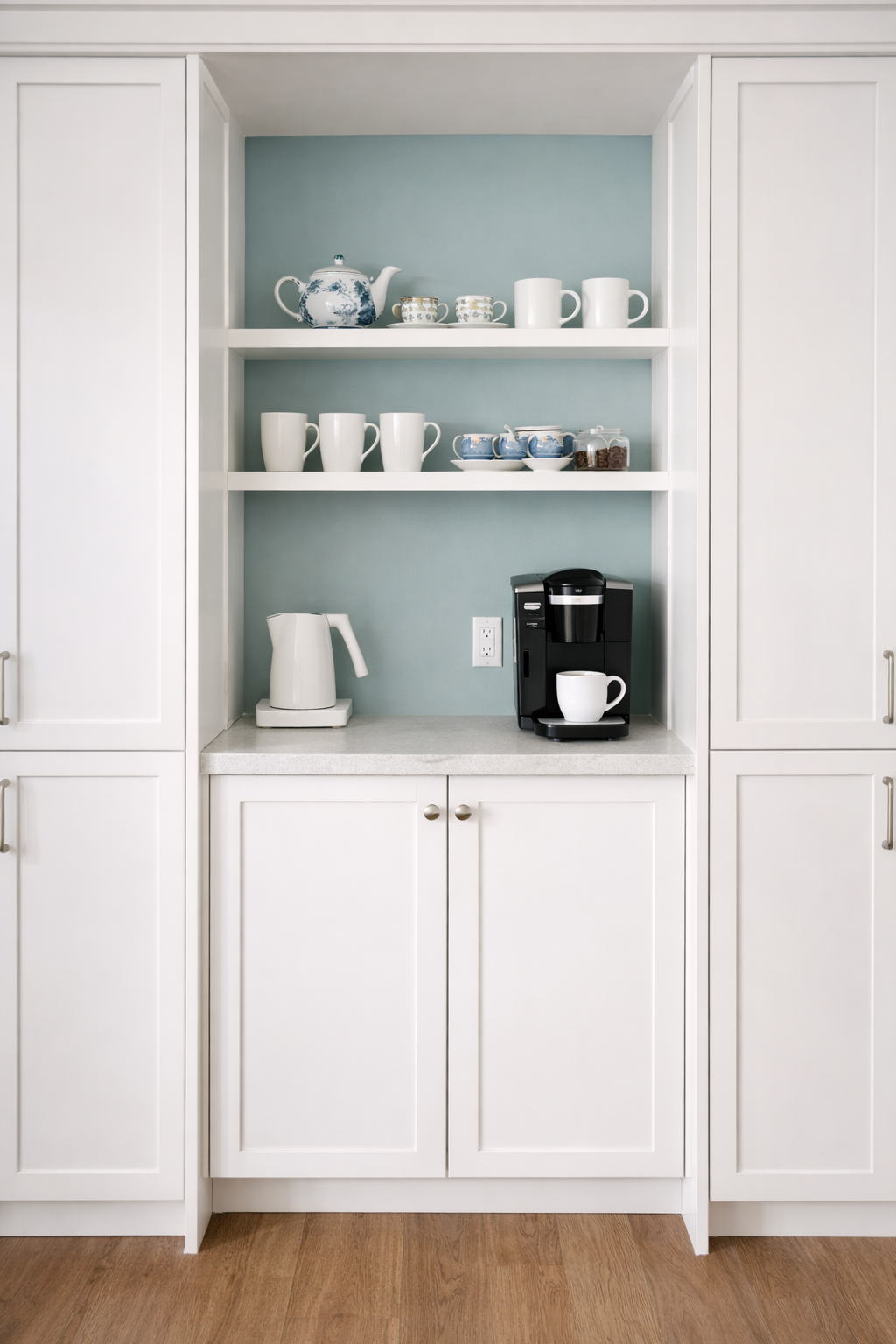
Where does your coffee go?
Where does your phone charge?
Where do you put the paperwork you're currently working on?
Can you reach a receptacle?
Is the printer accessible?
Can you close a door when you need quiet?
Does your chair still feel comfortable at 3:30 in the afternoon?
Can you shut everything down at 5:00 and feel like you've left work—even though you've only walked twenty feet?
Those are the questions that create a good home office.
You Don't Need a Huge House to Make Working From Home Work
If you're currently looking around your home thinking, I simply don't have anywhere to put an office, don't assume that's the end of the conversation.
Sometimes we're so accustomed to how our homes are currently arranged that it's difficult to imagine them working any other way.
That spare bedroom doesn't necessarily have to remain just a spare bedroom.
That dining room doesn't have to be a dining room.
That awkward closet might have more potential than you think.
And that unused corner of your basement might be able to become a comfortable, quiet workspace with a few thoughtful changes.
A good home office isn't measured by square footage.
It's measured by whether the space supports your day.
You should be able to sit down in the morning and have what you need within reach. You should feel comfortable. You should be able to concentrate. And, just as importantly, you should be able to finish your workday and enjoy your home again.
Because working from home should mean your home works better for you—not that your work takes over your home.
If you're trying to figure out where a home office could fit or how an existing space could work better, Multi-Trade Building Services can help you look at the possibilities. Sometimes all it takes is another set of eyes—and a little creative thinking—to find useful space you didn't realize you already had.
Ready to Make Your Home Office Work Better for You?
If your current workspace is uncomfortable, cluttered or simply not working for the way you spend your day, it may be time to rethink the space. Multi-Trade Building Services can help you turn an underused room, awkward corner or existing office into a comfortable, functional workspace that fits your home and your needs.
Contact us today to start the conversation about your home office project.

Want more ideas for home renovation projects? Check out the articles below!













A great home office doesn’t require a huge dedicated room or an expensive renovation. With thoughtful planning, even a spare bedroom, awkward alcove or underused corner can become a comfortable, functional place to work. Learn what to consider when creating a workspace that supports your workday—without letting work take over your home.