
Slippery When Wet: How to Choose Bathroom Flooring That’s Safe for Everyone
/
Bathrooms are funny little rooms.
They’re where we start our day, end our day, and do some of our best thinking. They’re also the only room in the house where water is supposed to be everywhere… on the floor, on the walls, sometimes even on the ceiling if the shower curtain goes rogue.
And yet, despite all that water, bathroom floors are still one of the most overlooked safety decisions in a renovation.
Until someone slips.
If you’ve ever stepped out of the shower with damp feet and felt that tiny heart-stopping skid under you, you already know why bathroom flooring matters. If you’ve got kids who treat bath time like a wave pool, aging parents who need sure footing, or your own joints that aren’t as forgiving as they used to be, then this decision goes from “design choice” to “non-negotiable.”
After over 3 decades in renovations, we’ve learned this: a beautiful bathroom means nothing if it isn’t safe. The good news? You don’t have to sacrifice style to get slip-resistant, practical, confidence-inspiring bathroom flooring.
Let’s walk through how to choose bathroom flooring that’s safe for everyone who uses it, without turning your bathroom into something that looks like a public pool change room.
Why Bathroom Flooring Safety Deserves More Attention
Bathrooms are one of the highest-risk areas in any home. Wet floors, smooth surfaces, bare feet, and quick movements create the perfect recipe for slips and falls.
And it’s not just seniors we’re talking about.
• Kids splashing during bath time
• Guests unfamiliar with your space
• Pets sneaking in for a drink
• Tired adults rushing through a morning routine
Most slips happen not because someone was careless, but because the floor wasn’t designed for water.
Understanding Slip Resistance (Without the Technical Headache)
You may hear contractors or tile stores talk about “slip ratings” or “COF.” That stands for Coefficient of Friction, which is a fancy way of saying how much grip a surface has.
Here’s the simple version:
• Higher friction = more grip = safer when wet
• Lower friction = smoother = higher slip risk
For bathrooms, especially around tubs, showers, and vanities, you want flooring that maintains traction when wet, not just when it’s dry.
This is where so many homeowners get tripped up. Literally.
That glossy tile that looks stunning in the showroom under perfect lighting can turn into an ice rink the moment water hits it.
Why Flooring That Feels Fine When Dry Can Be Dangerous When Wet
This is one of those things most homeowners don’t realize until after the fact.
A bathroom floor can feel completely safe when it’s dry. You walk on it in the showroom. You step on it at home before the first shower. Everything feels solid and secure.
Then water gets involved.
Here’s the important part: many flooring materials behave very differently when wet than they do when dry.
Showrooms are controlled environments. Clean floors. Bright lighting. No humidity. No puddles. No damp feet stepping out of a hot shower.
Bathrooms are the opposite.
Steam builds up. Water splashes. Towels drip. Feet are wet. And suddenly a surface that felt fine moments ago can become slick.
This is why we never evaluate bathroom flooring based on dry conditions alone. We always assume the floor will be wet, because at some point, it will be.
Textured finishes, matte surfaces, smaller tiles, and quality grout all play a role in maintaining traction once moisture is introduced. Glossy tiles and overly smooth finishes tend to lose grip quickly when water is present, even if they look beautiful.
The goal isn’t to make your bathroom feel rough or uncomfortable. It’s to choose materials that keep their footing when real life happens.
Because bathrooms aren’t showrooms. They’re lived in spaces.

Tile: Still the Most Popular Bathroom Flooring (But Choose Wisely)
Tile remains the most common bathroom flooring choice, and for good reason. It’s durable, water-resistant, easy to clean, and comes in endless styles.
But not all tile is created equal.
Porcelain vs. Ceramic Tile: What’s the Real Difference?
On the surface, porcelain and ceramic tiles can look identical. Same sizes. Same colours. Same patterns. Sometimes they’re even displayed right beside each other in the tile store, which makes the decision feel even more confusing.
But the difference between the two has very little to do with how they look and everything to do with how they’re made.
It All Starts with the Clay
Both porcelain and ceramic tiles are made from clay, but not the same kind.
Ceramic tile is made from standard red or white clay that’s fired in a kiln at a lower temperature. Because of that lower firing temperature, the clay doesn’t fully vitrify, which is just a fancy way of saying it doesn’t completely harden all the way through.
That leaves ceramic tile slightly more porous, meaning it can absorb more moisture over time. In dry areas of the home, that’s often not an issue. In a bathroom where water is part of daily life, it matters.
Porcelain tile, on the other hand, is made from much finer, more refined clay, often mixed with minerals like feldspar and fired at extremely high temperatures. That intense heat causes the tile to become incredibly dense and hard, with very little space inside for water to seep in.
In simple terms:
• Ceramic is baked
• Porcelain is fired
That extra heat makes a world of difference.
Why Porcelain Is Less Porous (And Why That Matters)
Because porcelain is fired hotter and longer, it absorbs far less water than ceramic. In fact, true porcelain tile absorbs less than 0.5% of water.
That’s huge in a bathroom.
Less water absorption means:
• Better resistance to moisture and humidity
• Less chance of long-term damage
• Better performance in wet areas
• Greater durability over time
Ceramic tile can still work in bathrooms, but it’s more forgiving in low-splash areas like walls. On floors, especially around tubs, showers, and vanities, porcelain is simply the tougher option.
Durability: Why Porcelain Stands Up Better Over Time
Porcelain’s density doesn’t just help with moisture. It also makes it stronger and more impact-resistant.
If something drops on a porcelain tile, it’s far less likely to chip or crack compared to ceramic. That’s especially important in bathrooms where things like hair tools, bottles, and toiletries inevitably hit the floor.
And because porcelain is often coloured all the way through the tile body, small chips (if they ever happen) are much less noticeable than with ceramic, which usually has a different-coloured core.
So How Do You Tell the Difference in a Tile Store?
This is the question most homeowners don’t think to ask, and tile stores don’t always volunteer the answer.
Here’s what to look for:
Check the Label or Spec Sheet
Porcelain tile will almost always be labelled as such. Look for wording like “porcelain tile” or water absorption ratings on the product tag.
Look at the Edge of the Tile
If you can see the edge, porcelain tile usually looks the same colour all the way through. Ceramic tile often has a different-coloured body underneath the glaze.
Ask About Water Absorption
You don’t need to memorize numbers. Simply ask, “Is this porcelain or ceramic?” and “Is it suitable for bathroom floors?” If the answer feels vague, that’s a red flag.
Weight Can Be a Clue
Porcelain tile is denser and often feels heavier for its size compared to ceramic.
Why We Usually Recommend Porcelain for Bathroom Floors
After decades of renovations, porcelain has proven itself again and again in bathrooms.
It handles moisture better. It lasts longer. It stands up to daily wear. And it gives homeowners peace of mind they don’t have to think about every time they step out of the shower.
Ceramic absolutely has its place, but when it comes to bathroom floors, especially in spaces that see a lot of water, porcelain is usually the smarter, safer investment.
Matte Finishes Are Your Friend
High-gloss tile looks sleek, but it’s often slippery when wet. Matte or satin finishes provide much better traction without sacrificing appearance.
Texture Matters
Tiles with a subtle texture or natural stone look add grip underfoot. You don’t need anything rough or uncomfortable, just enough variation to prevent slipping.
Smaller Tiles = More Grip
Here’s a design secret we share often.
Smaller tiles mean more grout lines, and grout adds traction. Large format tiles can look beautiful, but fewer grout joints means less grip. In bathrooms where safety is a concern, smaller format tiles often win.
And yes, that brings us to grout.
If this has you thinking differently about bathroom design or flooring choices, you might enjoy learning more about how we approach bathroom renovations as a whole. Our Bathroom Services page gives you a closer look at the kind of spaces we design and the care we bring to every detail.
Let’s Talk About Grout (Because It Deserves a Better Reputation)
Grout gets a bad rap.
We hear it all the time:
“I don’t want a lot of grout. It’s hard to clean.”
Here’s the truth: old grout was hard to clean. Modern grout is a completely different story.
We use high-quality grout that already contains sealant mixed right into it. That means:
• No separate sealing process
• Better stain resistance
• Easier cleaning
• Longer lifespan
When installed properly and cleaned regularly, grout is not the enemy. In fact, it’s part of what makes bathroom floors safer.
Grout lines create natural traction. They reduce slip risk and improve stability, especially when the floor is wet.
So when someone tells us they want “as little grout as possible,” we gently explain that in a bathroom, grout can actually be working for them, not against them.

Natural Stone: Beautiful, But Needs Careful Consideration
Natural stone floors can be stunning. Slate, limestone, and travertine all bring warmth and character to a bathroom.
But stone requires honest conversations.
Some stones are naturally more slip-resistant due to their texture, like slate. Others can be quite smooth and become slippery if honed or polished.
Stone also requires sealing and ongoing maintenance. If you love the look and are willing to care for it properly, it can be a great option. If you want low-maintenance peace of mind, there may be better choices.
This is where our experience really matters. We don’t just sell you on a material. We help you choose what actually fits your lifestyle.
Luxury Vinyl Tile (LVT): A Surprisingly Smart Bathroom Option
Luxury vinyl tile has come a long way.
Today’s LVT is waterproof, slip-resistant, warm underfoot, and incredibly realistic. It mimics wood, stone, and tile without the cold or hardness of traditional materials.
For many homeowners, especially those concerned about safety, comfort, or aging in place, LVT checks a lot of boxes.
It’s also forgiving. If you’re worried about joint pain, balance, or standing for long periods, vinyl provides a softer feel underfoot than tile or stone.
The key is choosing bathroom-rated, waterproof LVT, not just any vinyl product.
What We Typically Recommend (And Why)
After three and a half decades of seeing what works and what doesn’t, our recommendations often land in one of these camps:
• Matte porcelain tile with a subtle texture
• Smaller format tiles with sealed grout
• Bathroom-rated luxury vinyl tile for comfort and safety
We look at:
• Who uses the bathroom
• How often it’s used
• Whether it’s a main bath, ensuite, or powder room
• Long-term needs, not just today’s preferences
This is why no two bathrooms we renovate are ever the same.
Safety Isn’t Just the Floor. It’s the Whole System
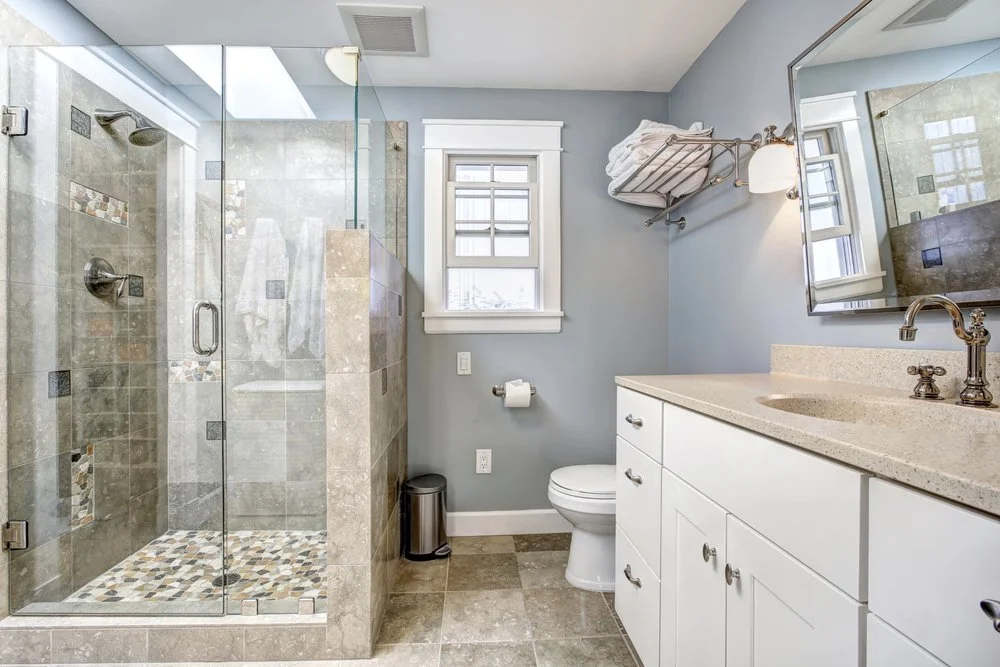
Flooring works together with other elements in the bathroom.
• Proper slope toward drains
• Well-placed bath mats that don’t slide
• Grab bars that don’t look institutional
• Thoughtful layout planning
Safety isn’t one decision. It’s a series of smart, intentional choices that add up to peace of mind.
Designing for All Ages (Without Designing for a Hospital)
One of the biggest fears homeowners have is ending up with a bathroom that feels clinical.
You don’t need to sacrifice style to create a safe bathroom.
Modern slip-resistant flooring comes in beautiful colours, patterns, and finishes. We’ve installed bathrooms that are magazine-worthy and safe for toddlers, teens, adults, and grandparents alike.
The key is experience. Knowing which products actually perform well in real homes, not just in showrooms.
The Biggest Bathroom Flooring Mistakes We See
Let’s save you from learning these the hard way.
• Choosing tile based solely on looks
• Going too smooth or too glossy
• Ignoring grout quality
• Installing large format tile without considering traction
• Assuming “waterproof” means “slip-proof”
Bathrooms demand a little more thought. When done right, they reward you every single day.
Thinking Ahead: Flooring Choices You Won’t Regret Later
Most people renovate a bathroom with today in mind.
What they don’t always think about is how that bathroom will be used five, ten, or even fifteen years from now.
And no, this isn’t about designing for worst-case scenarios or turning your bathroom into something clinical. It’s about making smart choices now so you don’t have to revisit them later.
Life changes.
Kids grow. Bodies change. Balance isn’t always what it used to be. Even something as simple as stepping out of the shower can feel different over time.
Choosing slip-resistant, well-designed flooring from the start means:
• You’re less likely to need changes down the road
• Your bathroom remains comfortable and confident to use
• You can enjoy the space without second-guessing it
We’ve seen homeowners regret flooring choices not because they disliked the look, but because the floor stopped feeling safe as time went on.
When you choose bathroom flooring with both beauty and long-term use in mind, you’re investing in peace of mind. And that’s something you appreciate more with every passing year.
Why Experience Matters More Than Trends
Trends come and go.
Safety doesn’t.
We’ve seen design cycles repeat themselves, but the fundamentals remain the same. Bathrooms should feel calm, comfortable, and secure.
When you work with a renovation team that prioritizes function and beauty, you get a bathroom that supports you, not one you have to tiptoe through.
Final Thoughts: Confidence Underfoot Changes Everything
A safe bathroom floor gives you something you don’t think about until it’s missing.
Confidence.
Confidence stepping out of the shower. Confidence for your kids. Confidence for your parents. Confidence that your beautifully renovated bathroom works just as hard as it looks good.
That’s what thoughtful renovation is all about.
If you’re planning a bathroom renovation and want help choosing flooring that’s safe, stylish, and suited to your real life, we’re always happy to talk it through. No pressure. No jargon. Just honest advice from people who’ve been doing this a long time.
Because loving your home starts with feeling safe in it. 💙

If you’re thinking about a bathroom renovation, flooring is just one piece of the puzzle. We’ve shared more bathroom renovation insights below to help you feel confident, informed, and prepared before you ever start planning.
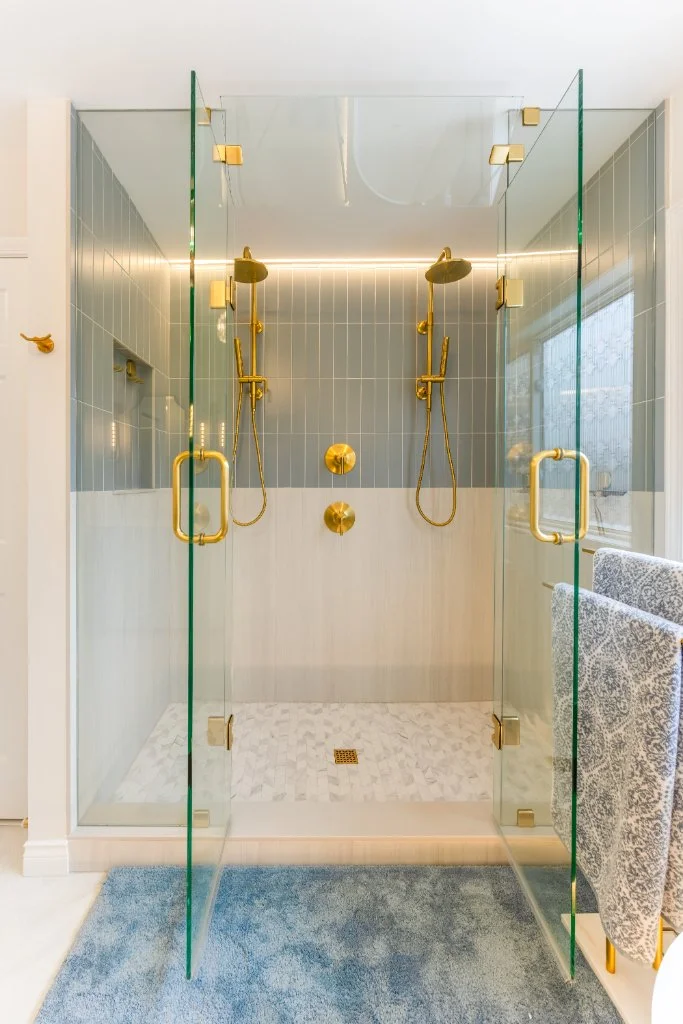
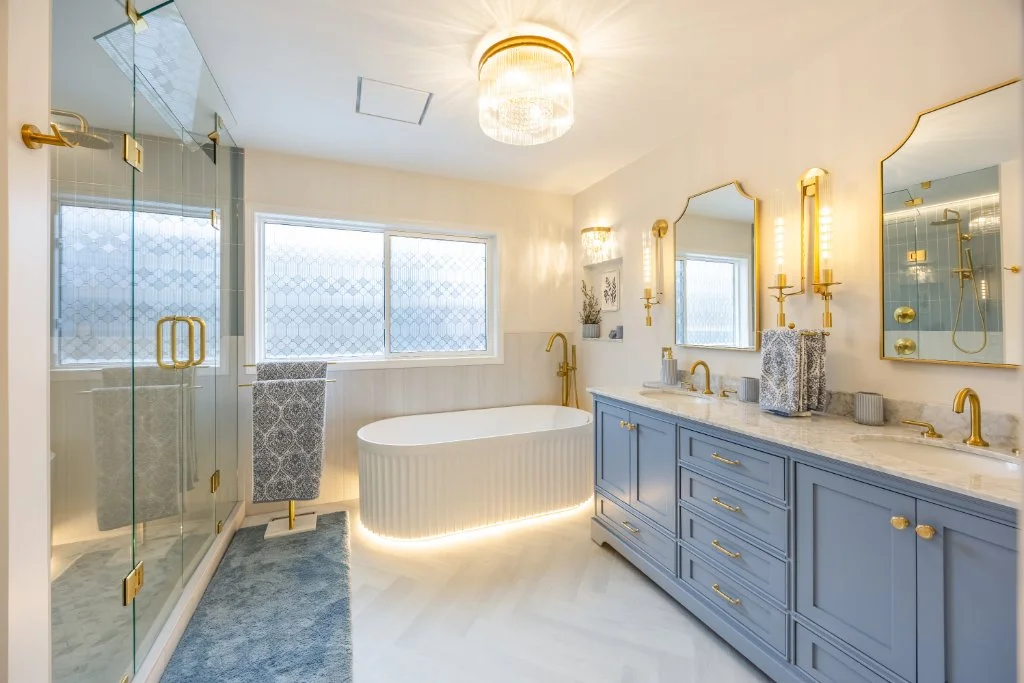
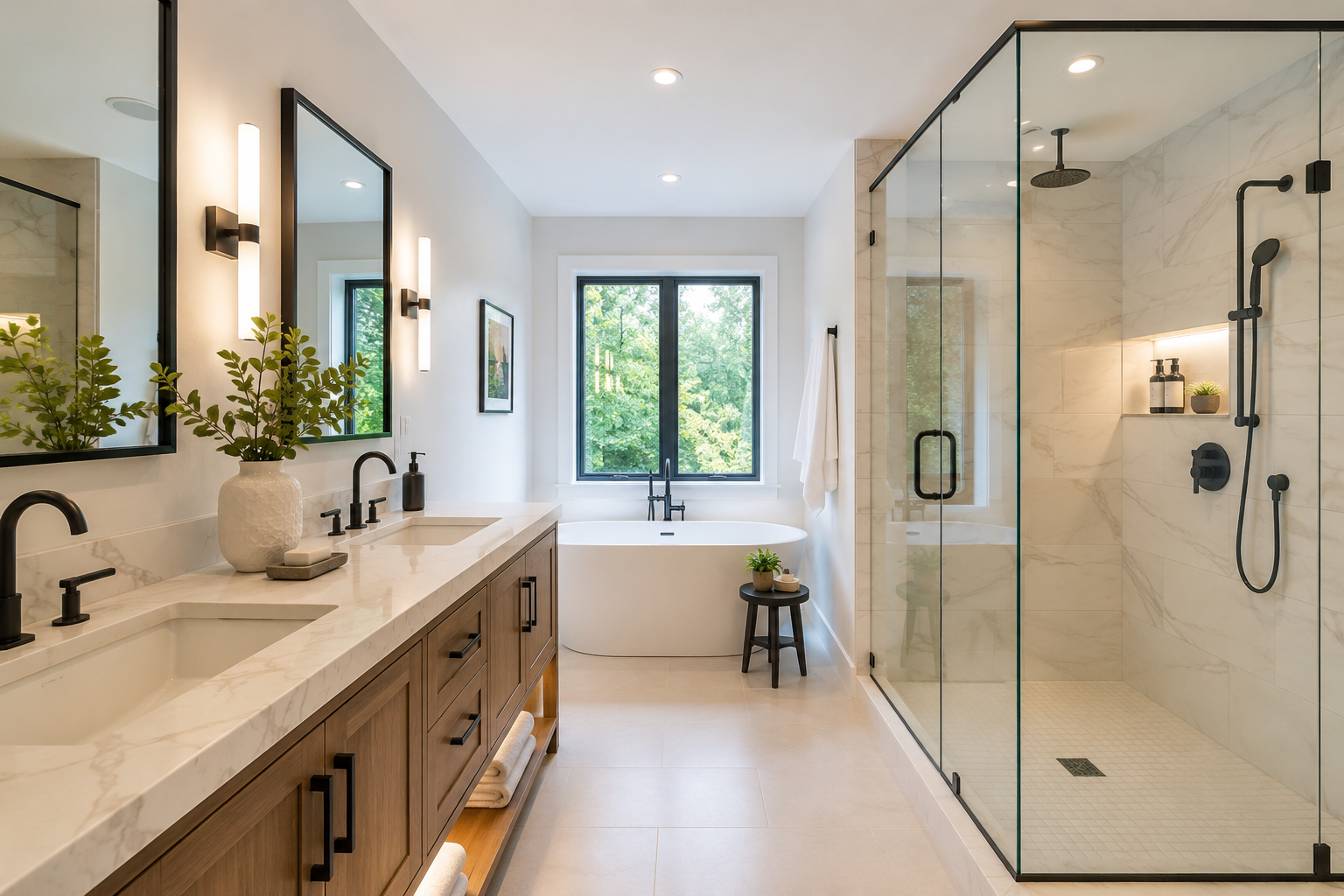




A double sink vanity might look like a must-have for a primary bathroom—but is it really? Before giving up valuable counter space and storage for that second sink, let’s look at the pros, cons and the questions you should ask before deciding if two sinks actually make sense for your bathroom.